





A New Contender
While the race to the stars often highlights headline-grabbing achievements, the competition for critical space contracts is equally fierce. Blue Origin,
a company frequently seen as a strong competitor in the private space sector, is making significant strides that could reshape NASA's ambitious lunar exploration plans. Recent developments indicate a potential shift in the landscape of lunar lander development, with the company's recent success in rigorous testing environments fueling optimism about their capabilities. This advancement is particularly noteworthy as NASA seeks reliable systems to return humans to the lunar surface.
Testing the Endurance
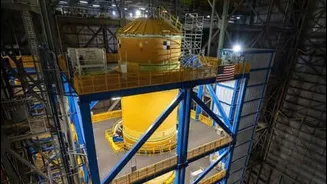
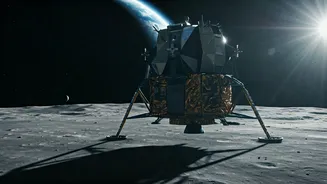
A pivotal moment for Blue Origin's lunar aspirations arrived with the successful completion of critical tests for its cargo lander, named Endurance Mk1, within NASA's specialized vacuum chamber. This trial was instrumental in validating the lander's resilience against the harsh conditions of space, including the extreme temperature fluctuations caused by direct solar radiation. Such testing is fundamental to ensuring that any spacecraft venturing beyond Earth's protective atmosphere can withstand the unforgiving vacuum and thermal stresses inherent in space travel and lunar operations. The insights gained from this cargo lander's performance are directly applicable to their more advanced crewed lander designs, bringing them closer to meeting stringent NASA requirements for future missions.
Contractual Dynamics
The pathway to the current competitive scenario for NASA's Human Landing System (HLS) contract has been dynamic. Initially, the significant contract was awarded to SpaceX, based on projected timelines for the development of a manned lunar lander. However, as timelines began to slip, NASA exercised a clause in the contract that linked its exclusivity to meeting these critical milestones. This reassessment led to NASA reopening the bidding process, creating an opportunity for other entities, including Blue Origin, to present their lunar landing solutions and vie for this prestigious and essential contract for deep space exploration.
Overcoming Challenges
Concerns have been raised regarding the progress of lunar lander development, with a notable watchdog report highlighting potential issues with the initial SpaceX-based plans for the HLS program. This report specifically pointed out that SpaceX's proposals might not adequately support the demanding timelines for the crewed Artemis missions, potentially leaving astronauts in vulnerable situations on the Moon. In contrast, Blue Origin, while starting from a later position, appears to be adopting a strategic approach by first focusing on and proving the viability of a less complex cargo lander. This methodical progression allows them to build experience and refine technologies, creating a strong foundation for their more ambitious crewed lander project, Blue Moon Mk2.
Future Capabilities
The ongoing development and testing of Blue Origin's lunar lander technology are geared towards demonstrating crucial capabilities essential for lunar missions. Future in-space demonstrations are planned to showcase precision landing techniques, efficient cryogenic propulsion systems, and sophisticated autonomous guidance, navigation, and control functionalities. By validating these mission-critical attributes through an uncrewed cargo lander, Blue Origin is not only advancing the overarching goals of the Human Landing System program but also concurrently developing valuable and practical technologies that can be utilized in various space exploration endeavors. This dual approach allows for parallel progress in both proving fundamental technologies and developing deployable assets.