




Alternative Space Propulsion
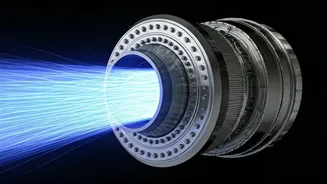
Plasma engines constitute a departure from conventional space propulsion systems. These engines work by accelerating plasma—an ionized gas composed of
ions and electrons—to generate thrust. Instead of using chemical reactions, plasma engines employ electromagnetic fields to propel the plasma, providing enhanced efficiency and control. This method is considered particularly useful for deep space missions, where continuous, efficient propulsion is crucial. Researchers are investigating the possibilities plasma propulsion provides compared to traditional rocket designs, focusing on how these engines can reduce the need for large amounts of fuel and improve operational flexibility. The key advantage lies in their potential to deliver sustained thrust over extended periods, making them ideal for long-duration missions and challenging space environments.
Testing and Performance Claims
The testing of plasma engines involved a careful examination of various performance parameters under controlled conditions. Scientists closely observed engine performance, efficiency, and durability. These tests offer critical data for evaluating the feasibility and effectiveness of plasma propulsion. Initial performance claims highlighted improvements in fuel efficiency over standard rocket engines. Additionally, the ability of plasma engines to operate across a broad range of thrust levels gives them flexibility, which is beneficial for complex space missions. While specific numbers and detailed test results are not in the context, the focus on these aspects demonstrates the meticulous method of assessment used by the researchers. The results of the tests can indicate the technology's readiness for more elaborate spaceflight applications and help improve the design of these engines.
Engineering Challenges Addressed
The development of plasma engines confronts significant engineering hurdles, mainly related to containing and managing the high-temperature plasma. The materials used in engine construction need to withstand extreme heat and radiation, ensuring the longevity and reliability of the engine. Moreover, scientists must overcome issues related to the power supply needed to create and maintain the plasma. There are also important considerations on how to integrate these engines with the spacecraft. These difficulties necessitate continuous innovation in materials science, electrical engineering, and plasma physics to guarantee that plasma engines function effectively and dependably in the harsh conditions of space. Solving these challenges is important for the technology's success.
Plasma Engine's Design Principles
Plasma engines employ varied designs, but all generally rely on the same essential principles. In most designs, a gas (often xenon) is ionized to form plasma. Electromagnetic fields then accelerate this plasma through a nozzle, producing thrust. Different engine designs vary based on how the plasma is generated and accelerated. Some engines utilize radio waves, while others use electric fields. The specifics of each design influence the engine's efficiency, thrust level, and operating characteristics. Understanding these design principles allows for the development of engines tailored to particular mission needs. Innovation in plasma engine design is ongoing, with researchers working towards better propulsion systems for space exploration.
Space Use Application Scenarios
Plasma engines are particularly well-suited for a variety of space applications. Their high efficiency and ability to produce sustained thrust make them perfect for long-distance missions, such as travel to Mars or other planets in our solar system. The engines would also be beneficial for satellite propulsion and station-keeping, allowing satellites to maintain their orbit with more accuracy and less fuel. Moreover, they can be used for space debris removal, an increasingly important need for the sustainability of space activities. The adaptability of plasma engines renders them important for future space activities, providing versatile solutions for a broad array of challenges. The deployment of these engines promises to improve the economics and capabilities of space exploration and other space-based operations.