







Fiscal Overview & Strategy
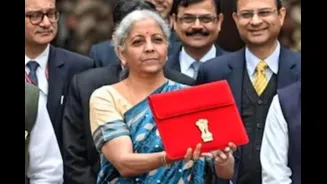
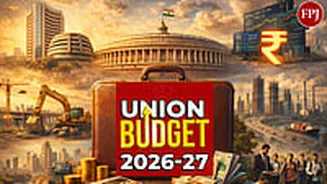
The Fiscal Year 2026-27 budget, presented by the Finance Minister, totaled Rs 53.47 lakh crore. A key focus of the budget was on fiscal consolidation and
fostering economic expansion. The government aimed to create an environment conducive to investment and job creation. Fiscal management strategies were implemented to balance growth initiatives with responsible financial planning. The budget included a substantial capital expenditure allocation of Rs 2.77 lakh crore for Railways. Additionally, the Centre anticipated Rs 3.16 lakh crore in FY27 from RBI dividends. Several announcements reflected a commitment to long-term economic stability and sustainable development. The budget emphasized the importance of a 'Viksit Bharat' vision, signaling a forward-looking approach to national progress.
Market Reactions & Impacts
The stock market initially reacted to the budget announcements with mixed signals. The Sensex saw an initial gain of 221 points, marking the third consecutive day of market gains. However, a hike in the Securities Transaction Tax (STT) dampened market sentiment. Investors experienced a loss of Rs 9.4 lakh crore. The increase in excise duty on cigarettes led to a surge in prices, prompting reactions from various stakeholders, including Delhi traders. PSU bank stocks saw a decline following the budget's announcement, underscoring the dynamic impact of fiscal policies on market dynamics. The government's strategies, including fiscal targets and an emphasis on AI, aimed to influence investor confidence and drive long-term market stability. The STT hike and its consequent effects underscore the significance of market sensitivity towards fiscal policies.
Sector-Specific Allocations
Several sectors received specific attention and allocations in the budget. The Skill Ministry's budget saw a jump to Rs 9,886 crore. The manufacturing sector was given a boost through various initiatives. The budget emphasized the manufacturing sector with rare earth corridors to promote self-reliance. Significant investments were directed towards the infrastructure sector, with a focus on affordable housing. The government also proposed rationalization of employer contributions to PF trusts. The allocation for the UDAN scheme, aimed at regional air connectivity, was increased. A new scheme for chemical parks was announced. The space budget received a significant allocation of Rs 13,705 crore, demonstrating a focus on technological advancement and innovation. The EV sector was targeted for growth and enhanced competitiveness. The budget also included provisions for mental health and cancer drug development.
Industry & Stakeholder Views
Industry leaders and various organizations responded to the budget with varied perspectives. The PHDCCI highlighted the budget's emphasis on growth, MSMEs, and job creation. The ICAI acknowledged the stable regulatory environment. Kerala's business community welcomed the Union Budget. IOB saw a roadmap for growth and MSME support. Wipro's CFO highlighted the focus on AI and fiscal targets. Sunil Mittal spoke on growth and inclusion. The reactions showcased a spectrum of opinions, ranging from optimism to concerns regarding specific policies. The budget's impact on key sectors, such as textiles, manufacturing, and healthcare, was thoroughly evaluated by numerous stakeholders. The reactions of entities such as the Bengal Inc and Delhi traders were also recorded.
Future-Ready Bharat Vision
The budget underscored a vision for a 'Future-Ready Bharat', emphasizing exports and manufacturing. The initiative to boost the textile sector through mega textile parks was a prominent aspect of this vision. The farm sector also received a tech boost, with expansion in veterinary services. The government introduced the Bharat-VISTAAR AI tool for the agriculture sector. The extension of the N-plant import exemption to 2035 showed a commitment to long-term strategies. The overall focus was on building a self-reliant India ('Atmanirbhar Bharat') through strategic investments, technological advancements, and supportive policies for key sectors. The budget positioned India for sustained economic growth and competitiveness on a global scale.