



Mughlai Origins & Persian Roots
Nargisi Kofta, a jewel of Mughlai cuisine, boasts a history deeply intertwined with the culinary traditions of the Mughal era and significant influences
from Persia. The very concept of 'kofta,' which refers to minced meat formed into balls, did not originate in India but rather journeyed from Persia and Central Asia, regions where such preparations were already established. As these culinary techniques arrived in the Indian subcontinent, they were embraced and elaborated upon in the royal kitchens of the Mughal emperors. Over time, these adaptations evolved into sophisticated dishes, characterized by the use of fragrant spices, rich gravies, and intricate presentations that became the hallmarks of Mughlai food. The dish's association with Awadhi cuisine in Lucknow further cemented its status as a delicacy, frequently gracing royal banquets and festive occasions, showcasing a sophisticated blend of imported techniques and local ingredients.
The Floral Inspiration
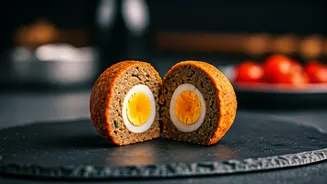
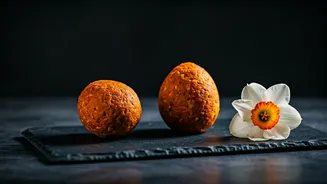
The captivating name 'Nargisi Kofta' finds its origin in a beautiful Persian word for a specific flower. The term 'nargisi' is derived from 'nargis,' the Persian name for the narcissus flower. This etymological link becomes strikingly clear when one observes the dish in its sliced form. At the heart of the kofta lies a perfectly boiled egg, its golden yolk ensconced by the white of the egg. This visual composition strongly evokes the appearance of the narcissus flower, with its distinct yellow center and pale surrounding petals. This striking resemblance is widely acknowledged by culinary historians and is even highlighted by official tourism platforms like Incredible India. The poetic resonance of the nargis flower, often used in Persian literature and poetry as a metaphor for captivating eyes, is also thought to have contributed to the name's appeal within the refined cultural milieu of Mughal courts, adding a layer of romantic imagery to this culinary creation.
Scotch Egg Connection?
An intriguing aspect of Nargisi Kofta's history is its potential link to a popular British snack: the Scotch egg. Both dishes share a fundamental structure: a boiled egg enveloped in a layer of seasoned minced meat, which is then cooked, typically by frying. Some food historians propose that the Scotch egg may have been inspired by Nargisi Kofta. The theory suggests that British travelers or soldiers stationed in India during the colonial period might have encountered this Mughlai delicacy. Upon their return to Britain, they could have adapted the concept, leading to the development of the Scotch egg. While the visual and structural parallels are undeniable, and this theory has been discussed in various food history publications, it's important to note that the definitive origins of the Scotch egg remain a subject of debate among historians. The exact historical thread connecting the two dishes has not been conclusively established, leaving room for speculation and further research.
Crafting Nargisi Kofta
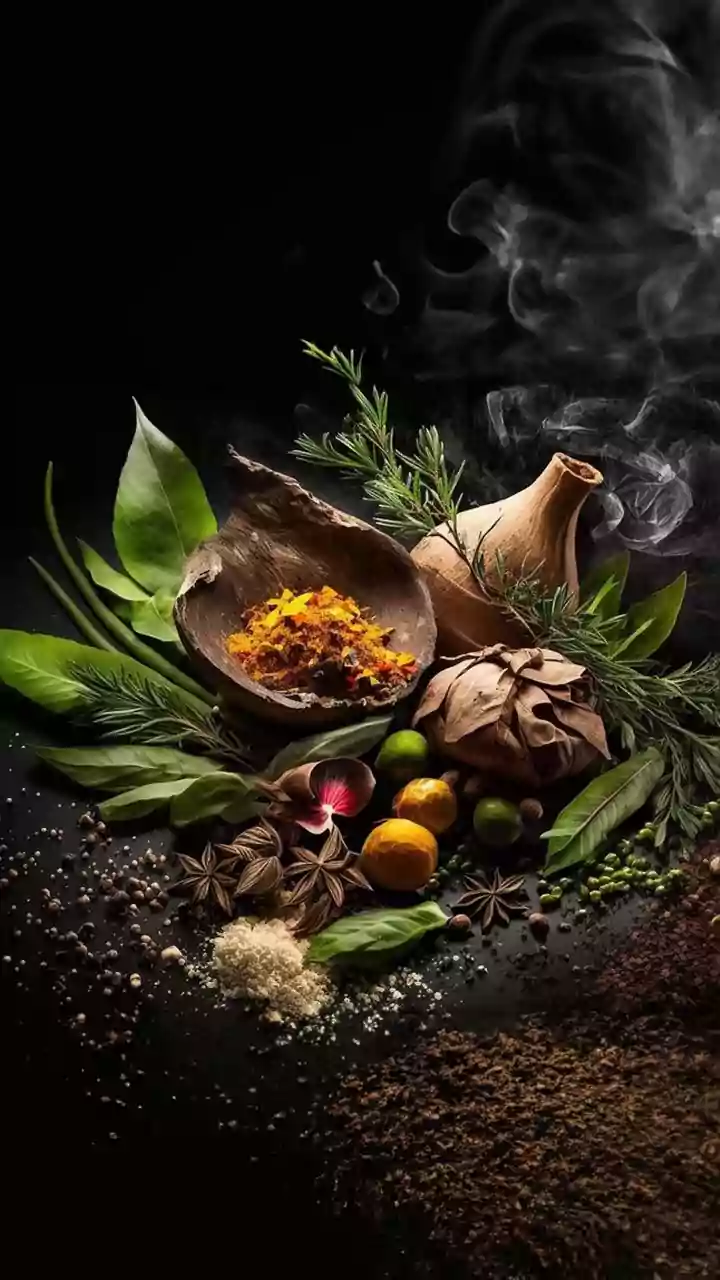
The essence of crafting authentic Nargisi Kofta lies in its deceptively simple yet visually impactful construction. The foundational step involves carefully encasing a fully boiled egg in a well-seasoned mixture of minced meat, traditionally mutton or lamb. This meat-wrapped egg is then typically deep-fried until it achieves a golden-brown exterior, providing a delightful crispness. The cooked koftas are often then gently simmered in a rich, aromatic gravy. This gravy is usually prepared with a base of sautéed onions, ginger-garlic paste, pureed tomatoes, and a blend of traditional Indian spices such as turmeric, red chili powder, coriander powder, and garam masala. Yogurt is often incorporated to add creaminess and tang. When presented, the koftas are usually cut, revealing the striking layered interior of the egg and meat, which is the very feature that lends the dish its name. While modern interpretations might include vegetarian variations using ingredients like paneer or potatoes, the original Mughlai Nargisi Kofta was a meat-based dish celebrated for both its exquisite flavor and its captivating presentation.