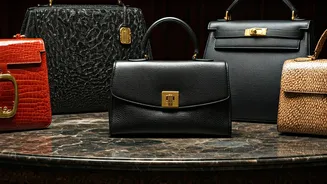

The Birkin's Reign
For a significant period, the Birkin bag epitomized the pinnacle of luxury and aspirational style. More than just an accessory, it represented an exclusive
realm of craftsmanship and enduring elegance. Possession of one was an immediate signal of elevated taste, capable of transforming even the most understated attire into a declaration of sophistication. Its desirability was intrinsically linked to its exclusivity, making it a coveted item that spoke volumes about the owner's status and appreciation for fine design. This particular bag became synonymous with a certain kind of quiet opulence, a testament to meticulous construction and timeless aesthetic appeal that transcended fleeting trends. It was, and remains, a symbol of achievement and impeccable fashion sense.
Chanel's 2.55 Innovation
The introduction of the 2.55 bag by Coco Chanel marked a revolutionary shift in how women interacted with their accessories. Prior to this design, handbags were predominantly carried by hand. Chanel's genius lay in integrating a sleek, metallic shoulder chain, liberating women's hands while maintaining an air of undeniable grace. This innovation perfectly married the burgeoning need for practicality in a modern woman's life with an enduring sense of high fashion. The chain strap became an instant hallmark, symbolizing a newfound freedom and a sophisticated approach to everyday carrying. It was a design that understood the dynamic lifestyle of women, proving that functionality and high-end style could coexist beautifully, setting a new standard for handbag design.
Fendi Baguette's Rise
The Fendi Baguette bag dramatically shifted the perception of smaller handbags, elevating them to the status of bold fashion pronouncements. Gaining immense popularity during the late 1990s and spilling into the early 2000s, it swiftly became a prominent figure in popular culture, deeply entwined with the fashion of its time. This compact accessory demonstrated that a bag's influence was not dictated by its dimensions. Its distinctive, short-strap design, meant to be tucked snugly under the arm like a baguette loaf, became instantly recognizable. The Baguette's ubiquity and its association with fashionable characters solidified its status as a must-have item, proving that a smaller profile could command significant attention and define a look.
Gucci Bamboo's Subtlety
The Gucci Bamboo bag showcased the powerful impact of understated design elements. Its defining feature, a handle expertly crafted from curved bamboo, lent the bag a unique character without resorting to ostentatious branding. This characteristic appealed to a discerning clientele who valued a more discreet form of luxury. The bamboo offered an organic, tactile element that was both visually intriguing and sophisticated, setting it apart from other bags of its era. It represented a form of quiet power, signifying elegance through detail and material rather than overt logos. This approach resonated with individuals seeking recognizable quality and distinctive style that spoke a language of subtle confidence and refined taste.
Dior Saddle's Silhouette
The Dior Saddle bag disrupted conventional handbag forms with its distinctive, curved silhouette reminiscent of a horse's saddle. This unique shape immediately distinguished it from other designs, making it a standout piece that quickly garnered attention. It became inextricably linked with the fashion trends of the early 2000s, capturing the era's adventurous spirit in accessory design. The bag's memorable shape and its significant cultural impact were so profound that its subsequent reintroduction years later served as a powerful testament to its enduring appeal and iconic status within the fashion landscape. Its ability to remain relevant and desirable across different fashion cycles highlights its timeless design.
Telfar's Inclusive Vision
The Telfar shopping bag revolutionized the concept of a fashion statement by championing inclusivity and accessibility. Offering an affordable and unisex design, it directly challenged the established norms of the luxury goods market. This approach resonated deeply, turning the bag into a symbol of modern community and shared style rather than exclusivity. Its widespread availability and its appeal across diverse demographics cemented its status as a cultural phenomenon. The Telfar bag became more than just an accessory; it represented a movement towards democratizing fashion, making coveted style attainable for a broader audience and redefining what it means for a bag to be a statement piece in contemporary times.