






What is Déjà Vu?
Déjà vu, a French phrase meaning 'already seen,' describes that peculiar instant when a novel situation strikes us with an intense sense of familiarity,
as if we've encountered it previously. Scientific definitions describe it as an 'inappropriate sense of familiarity for something that we know to be unfamiliar.' This means our brain generates a signal of having lived through something before, even though our conscious awareness confirms it's a brand-new experience. Research indicates that a significant majority of individuals, around two-thirds of the population, have experienced déjà vu at least once. While documented for centuries, serious scientific inquiry into this phenomenon only began in the 19th century. Early theories explored ideas ranging from supernatural influences to simple sensory processing errors, like slight delays in signals reaching the brain, which could be misinterpreted as a prior event.
The Science Behind It
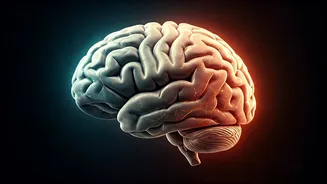
Contemporary scientific understanding of déjà vu centers on the intricate interplay of different brain regions, rather than supernatural causes. A key area involved is the medial temporal lobe, crucial for memory formation and the subjective feeling of familiarity. Simultaneously, the frontal cortex, located at the front of the brain, plays a vital role in fact-checking and decision-making. The prevailing theory suggests that the medial temporal lobe might mistakenly generate a premature sense of familiarity for a current event. This false signal is then detected by the frontal cortex, which acts as a monitoring system. Upon recognizing this mismatch – the feeling of familiarity conflicting with the knowledge that the situation is new – the frontal cortex flags it as an error. This entire rapid-fire process, where familiarity is generated and then corrected, is believed to be the basis of the fleeting déjà vu experience.
Age and Frequency
Research into déjà vu reveals a distinct pattern related to age. Individuals typically begin experiencing this phenomenon around the age of five. The frequency of déjà vu tends to increase notably during the teenage years, reaching its peak in the early to mid-20s. Following this peak, the occurrence of déjà vu generally declines as people get older. This age-related trend is thought to be connected to the developmental stages and activity levels of the brain's memory systems. As our brains mature and memory processing evolves, the likelihood of experiencing these brief memory-awareness mismatches appears to shift, becoming less common in adulthood.
Déjà Vu: Not a Problem
Contrary to what some might believe, experiencing déjà vu is not indicative of a memory disorder or a sign of an unhealthy brain. In fact, scientific perspectives suggest the opposite. Experts like Dr. O’Connor indicate that déjà vu is often a sign of a robust and well-functioning brain and mind. The very occurrence of déjà vu implies that the brain's internal error-checking mechanisms are actively engaged. When the brain detects a discrepancy – such as a false sense of familiarity – it initiates a correction process. This ability to identify and signal such errors is considered a testament to a healthy cognitive system. Therefore, rather than a glitch, déjà vu can be viewed as evidence of the brain's sophisticated self-monitoring capabilities at work.
The Related 'Jamais Vu'
Beyond déjà vu, another intriguing memory-related experience is 'jamais vu,' which translates from French to 'never seen.' This phenomenon is essentially the inverse of déjà vu. Instead of a new situation feeling familiar, jamais vu involves a familiar experience or object suddenly feeling strange and unfamiliar. Dr. O’Connor and his colleagues have explored this effect, even receiving an Ig Nobel Prize for their work on it. Their research highlighted that repetition can be a significant trigger for jamais vu. For instance, repeatedly reading or writing a common word can make it appear incorrect or alien. Notably, the study found that the most frequently used words were most susceptible to eliciting this feeling of unfamiliarity, with words like 'the' being prime examples.