







Kutch's Riverine Surprise
India, renowned as a land graced by majestic rivers like the Ganga and Brahmaputra, holds a geographical secret that often stumps even seasoned trivia
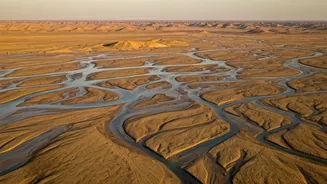
enthusiasts. This secret lies within Gujarat’s Kutch district, a place surprisingly endowed with approximately 97 rivers. This remarkable concentration of waterways, far exceeding what one might expect in a region often associated with desert conditions, forms a critical part of its hydrological identity. These rivers are not mere trickles; they are significant channels that either culminate in the Arabian Sea or vanish into the vast expanses of the Rann of Kutch, thereby establishing a distinctive and intricate natural drainage network. This phenomenon beautifully illustrates nature's resilience and its capacity to foster complex water systems even in seemingly inhospitable environments, with the rivers becoming most active and visible during the annual monsoon season.
Seasonal Flow Dynamics
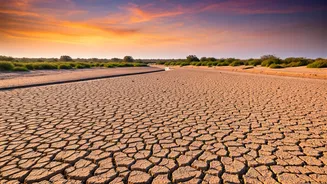
The rivers of Kutch are characterized by their predominantly seasonal nature, a direct consequence of the region’s arid climate. While the Rann of Kutch is famously known for its salt flats, a closer look reveals a sophisticated web of ephemeral rivers and streams that come to life with the onset of the monsoon rains. Official reports indicate that out of the roughly 185 rivers found across the state of Gujarat, a substantial majority, around 97, are intrinsically linked to the Kutch district. These rivers are ephemeral, meaning they typically flow with significant volume only during the monsoon months. The rest of the year, they often appear as dry beds or mere vestiges of their former selves. This cyclical existence means that water availability is highly dependent on rainfall patterns, making the landscape transform dramatically between the wet and dry seasons.
Notable Waterways
Within Kutch's extensive network of nearly 97 rivers, several have gained prominence due to their size and significance. Among these are the Rukmavati, Suvi, Malan, Saran, Sakar, Mithi, Ghurud, Vekhdi, Chang, Khari, Nara, Panjora, Kharod, Kotri, Kali, Kanakavti, and Rudramata. Beyond these named rivers, a multitude of smaller streams emerge during periods of heavy rainfall, only to gradually recede and disappear as the dry season sets in. The ultimate destination for many of these waterways is either the Arabian Sea, providing a vital connection to the larger oceanic system, or the expansive salt desert of the Rann of Kutch, where they contribute to the unique inland drainage. Rivers such as Banas, Saraswati, Rupen, Luni, Machhu, Ghodadhroi, Brahmani, Khari, Phalki, Nara, Suvi, Pur, and Bhurud are integral components of this multifaceted drainage system that defines Kutch's hydrology.
Challenges and Resilience
The seasonal nature of Kutch's rivers presents distinct challenges, particularly concerning water usage. Many of these rivers flow for a limited duration, carrying water only for short periods before their channels dry up. Furthermore, the water in several of these rivers can become saline, especially as the water levels decrease and evaporation increases. This salinity often restricts their suitability for domestic consumption or extensive agricultural use, necessitating alternative water management strategies for the local population. Nevertheless, this intricate system of seasonal rivers underscores Kutch's remarkable ecological resilience. Despite the harsh desert climate and arid conditions, the district vividly demonstrates how nature ingeniously crafts and sustains multiple water flow pathways, even in regions facing significant environmental constraints, continually drawing fascination and study.