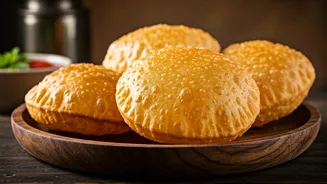








Dough: The Foundation
The journey to crafting the perfect bhature starts with the dough itself. The recipe calls for a careful blend of ingredients to achieve the desired texture
and puffiness. Begin by selecting your preferred type of flour. Incorporate a generous amount of yogurt into the flour mixture, which will help create a soft and slightly tangy base. Then, add a touch of semolina. This is key to achieving the distinctive texture of bhature. It will contribute to the airy, crispy quality that makes them so delightful. It is important to remember, keep the dough slightly firm. A firm dough is essential for bhature that will puff up perfectly when fried. The key is to avoid making it too soft, which can result in flat or dense bhature. Knead the dough until it's smooth and cohesive, ensuring all ingredients are well-combined. Cover it and allow it to rest for about 2-3 hours. This allows the gluten to relax, which will further enhance the puffiness and overall texture of the bhature.
Oil: Essential Heat
Next, focus on the oil, a crucial element in achieving that golden-brown crispiness. Select a good quality oil or ghee for frying. You'll need enough oil to fully submerge the bhature during frying, allowing them to expand freely. Heat the oil thoroughly before you begin. The oil's temperature is a critical factor in determining how well your bhature will puff up. If the oil isn't hot enough, the bhature will absorb too much oil and become greasy and flat. On the other hand, oil that's too hot can result in bhature that cook unevenly, burning on the outside before they're cooked through. So, get the oil to the right temperature. Carefully lower a small piece of dough into the oil. It should rise immediately and puff up, indicating the oil is ready. This is where you test before adding the full batch of bhature.
Rolling: Proper Thickness
The next step is rolling the dough to the correct thickness, a detail that greatly influences the final texture. After the dough has rested, gently take a portion of the dough and roll it out into a disc or oval shape. Be mindful of the thickness, and make sure it is not too thick. Overly thick bhature can remain doughy inside, while those that are too thin may become too crispy and hard. Aim for a thickness of about half an inch to get the perfect balance of fluffiness and crispiness. Try to keep a consistent thickness throughout the entire bhature, which will ensure even cooking and puffing during frying. Once rolled, they are ready for the final step: frying.
Frying: The Final Touch
The last step is frying, where the magic happens and the bhature transforms into the puffy delights we love. With the oil at the perfect temperature, gently slide the rolled-out bhature into the hot oil. Be careful not to overcrowd the pan. Each bhature needs enough space to puff up freely. As the bhature hits the hot oil, watch for it to start rising. Use a slotted spoon or spatula to gently press down on the center. This helps encourage the bhature to puff up evenly. The key is to press gently. Once it's puffed up and golden brown on one side, flip it over. Fry the other side until it's also golden brown and crispy. Remove the fried bhature from the oil, allowing the excess oil to drain. Serve them hot, and watch them disappear!