


Origins of Cream Snow
Malai Baraf, literally translating to "cream snow" or "cream ice," is a remarkable traditional Indian dessert hailing from the mountainous regions of Jammu,
Himachal Pradesh, and northern Punjab. What sets it apart is its unique creation process, which relies solely on heat and patience, completely eschewing freezing. This culinary paradox emerged from areas where abundant buffalo milk and steady wood fires were commonplace, and the cool, dry air played a role in its setting. The name 'baraf' in these hill communities often alluded to a cooling sensation and refreshing mouthfeel rather than a frozen state, making Malai Baraf an elegant example of culinary wordplay. Its existence challenges modern gastronomic logic by proving that a dessert can mimic the experience of ice cream without a single ice crystal. The focus is on the concentrated milk solids and rich fat content, creating a dense, almost solid form through slow boiling rather than freezing techniques.
The Art of Heat Creation
The creation of Malai Baraf is an intricate process of reducing full-fat buffalo milk over a slow, steady wood fire. Artisans begin by pouring large quantities of this milk, rich in cream, into wide iron vessels called kadhais. The choice of local wood for the fire is crucial, providing consistent heat to simmer the milk for hours without scorching it. The maker must continuously stir the milk, diligently scraping the sides of the kadhai where the cream and milk solids begin to stick and caramelize. This constant agitation prevents separation and ensures the development of a thick, luscious texture. Over several hours, the milk significantly reduces in volume as water evaporates. During this slow reduction, the natural milk sugars, lactose, undergo a subtle Maillard reaction, resulting in a characteristic pale golden hue and a deep, nutty flavor profile. This gentle caramelization is the heart of Malai Baraf's distinct taste, differentiating it from simpler milk-based preparations like rabri or khoya.
Danedar Texture Explained
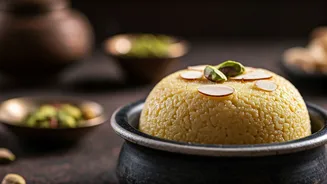
Malai Baraf possesses a distinctive textural quality that sets it apart from typical frozen desserts. It doesn't instantly melt upon serving, instead retaining its form and allowing for a leisurely enjoyment of its richness. The mouthfeel is often described as 'danedar,' an Indian confectionery term signifying a desirable, fine-grained consistency. This unique graininess arises from the milk solids that gently clump together during the prolonged reduction process. This formation provides a satisfying, almost chewy bite that is entirely different from the smooth, often oily finish of mass-produced ice creams. The serving tradition further enhances its appeal. Traditionally, the thick, dense cream is scooped onto fresh leaves, such as those from Sal or Banyan trees. The subtle tannins in these leaves are believed to interact with the Malai Baraf, adding a slight astringency that complements and cleanses the palate, offering a practical and poetic biodegradable serving solution.
Malai Baraf vs. Kulfi
While both Malai Baraf and Kulfi are traditional Indian milk-based desserts, they differ significantly in their preparation and final form. Kulfi, often called Indian ice cream, is traditionally frozen using a concentrated milk base set in moulds, often with the aid of a salt-and-ice brine, resulting in a dense, solid dessert with a firm, icy texture. Its origins trace back to the Mughal era, with common flavorings like pistachios and saffron. Malai Baraf, conversely, is never frozen. Its solid structure is achieved solely through prolonged heat reduction and the natural density of milk fats, yielding a soft, grainy texture akin to a very thick rabri. Regulatory standards for kulfi dictate specific fat and protein content, whereas Malai Baraf exists more within the realm of culinary tradition without formal regulations. While kulfi typically offers a sweeter, more aromatic flavor, Malai Baraf's taste profile is more understated, focusing on the pure, caramelized essence of the milk itself, providing a quiet yet profoundly satisfying experience.
Homestyle Malai Baraf
Creating Malai Baraf at home is achievable without specialized equipment, though it requires significant time and patience. The core ingredients are simple: 2 liters of full-fat buffalo milk or cow's milk, sugar to taste (approximately 3-4 tablespoons), and 3-4 crushed green cardamom pods. For added flavor and color, saffron soaked in warm milk can be included, and crushed pistachios or almonds can be used for garnish. Begin by pouring the milk into a wide, heavy-bottomed vessel to facilitate quicker evaporation. Heat the milk over a medium flame until it boils, stirring to prevent a skin from forming. Reduce the heat to low-medium and let it simmer, stirring and scraping the sides frequently. This step is crucial as the cream layer continuously forms and needs to be folded back into the milk for richness. After about 45 minutes to an hour, the milk should reduce to approximately one-third of its original volume. At this stage, add sugar, saffron milk, and crushed cardamom, stirring for another 10-15 minutes until the mixture thickens and turns a pale gold. Remove from heat and allow it to cool to room temperature. While refrigeration for an hour can provide a firmer texture, the traditional experience is enjoyed at room temperature, often served on fresh leaves.