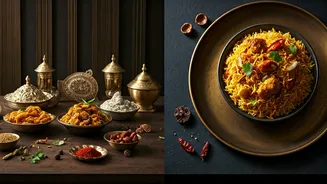




Saffron's Golden Touch
Saffron, celebrated for its vibrant hue and subtle fragrance, was far more than just a flavour enhancer; it was an emblem of prosperity and exclusivity.
Its judicious use in both sweet and savoury preparations lent an air of festivity and prestige to the dishes it graced. Historically, saffron was a prized commodity, its expense necessitating its use in only the most special occasions, making any dish it touched immediately stand out as a symbol of wealth and refinement, transforming the ordinary into the extraordinary with its mere presence.
Basmati: Fragrant Status
Basmati rice, distinguished by its elongated grains and unmistakable aroma, was not merely a filling accompaniment but a deliberate choice for significant feasts. Its selection signified an elevated dining experience, where visual appeal and olfactory pleasure played as crucial a role as taste. The very act of serving Basmati rice transformed a meal from a simple necessity into a memorable event, a conscious display of having the finest ingredients available for guests, underscoring a level of sophistication and abundance.
Kheer: Slow-Cooked Luxury
Kheer, a dessert epitomizing delicate indulgence, owes its royal past to the meticulous, slow-cooking process and the richness of its components. Simmering milk and rice together for extended periods, enhanced with saffron and nuts, created a treat reserved for important festivals and sacred rituals. The time invested and the precious ingredients required meant kheer was a tangible representation of devotion and affluence, a sweet conclusion to feasts befitting nobility.
Shahi Tukda's Regal Roots
The name 'Shahi Tukda' itself hints at its noble origins, translating to 'royal piece.' This dessert ingeniously transforms simple fried bread, softened in sweetened milk and adorned with saffron and nuts, into a decadent experience. It perfectly embodies the royal penchant for elevating humble ingredients into opulent creations, offering a rich and satisfying finale that is deeply rooted in its regal past and exquisite taste.
Dry Fruits: A Royal Accent
Almonds, pistachios, and raisins were once considered rare luxuries, often found gracing the tables of royal households and elaborate celebratory feasts. Their inclusion in any dish was a clear indicator of affluence and sophisticated culinary practice, imbuing even basic recipes with an air of grandeur and exclusivity. These additions weren't just for texture or flavour; they were a deliberate statement of abundance and refinement.
Ghee: Symbol of Prosperity
While now a pantry staple, ghee historically symbolized purity and economic well-being. In eras when dairy preservation was a significant challenge, ghee's stable and rich nature made it a valuable commodity. Its ability to enhance both sweet and savoury dishes with its distinctive flavour and luxurious mouthfeel made every meal feel like a special occasion, a testament to the prosperity of the household.
Kebabs: Culinary Artistry
Influenced by Central Asian and Persian traditions, kebabs initially emerged as a dish of distinction. Within royal courts, their preparation was elevated to an art form, involving careful marination, precise spice blends, and slow cooking over open flames to achieve unparalleled tenderness. This meticulous attention to detail and the resulting exquisite flavour profile cemented kebabs as a hallmark of exceptional culinary skill and elite taste.
Biryani: A Feast Layered
Though a beloved comfort food today, biryani's genesis lies within the opulent kitchens of royalty, significantly shaped by Persian culinary influences. It evolved into a complex, layered dish featuring aromatic rice, fragrant spices, and choice meats, meticulously crafted to impress. Far from being a simple meal, biryani was designed to be a grand, celebratory experience, reflecting the richness and celebratory spirit of its royal heritage.