



Understanding Fibre's Role
Dietary fibre is a crucial nutrient, essential for maintaining robust digestive function, stabilizing blood sugar levels, preventing constipation, and
reducing cholesterol. It plays a significant role in lowering the risk of developing various chronic health conditions. Health authorities recommend a daily fibre intake of approximately 14 grams for every 1,000 calories consumed for individuals aged two and above. For adults, this translates to a target of 25 to 35 grams daily, highlighting its importance in a balanced diet. Ensuring adequate fibre intake is key to overall health and disease prevention.
Tiny Seeds, Big Fibre
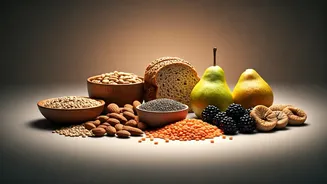
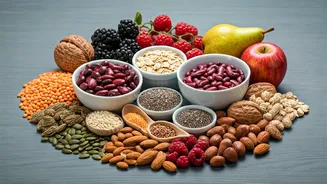
Leading the charge in non-vegetable fibre sources are chia seeds. Just two tablespoons of these tiny powerhouses can deliver a substantial 10 grams of fibre, making them incredibly efficient. Following closely are black seeds, also known as nigella seeds, which offer a respectable 5 to 6 grams of fibre per two tablespoons. These seeds are easily sprinkled onto yogurt, oatmeal, or incorporated into smoothies, providing a significant fibre boost without altering the flavour profile drastically. Their versatility makes them an excellent addition to any meal or snack for enhanced fibre consumption.
Legumes: Fibre Powerhouses
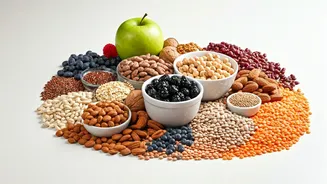
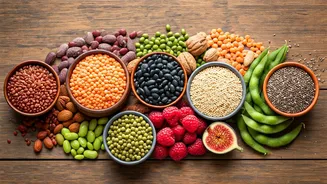
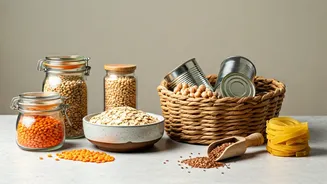
Lentils and chickpeas stand out as exceptionally fibre-rich legumes, offering substantial benefits for your digestive system. A modest half-cup serving of cooked lentils provides an impressive 8 grams of fibre. Similarly, half a cup of cooked chickpeas contributes 6 grams of fibre. These staples are incredibly versatile, fitting into a wide array of dishes, from hearty soups and stews to flavourful salads and dips. Incorporating them regularly can significantly increase your daily fibre intake while adding protein and other essential nutrients to your meals.
Berries & Pears
When it comes to fruits, berries and pears offer a delightful and fibre-rich alternative. A cup of raspberries alone can provide about 8 grams of fibre, while blackberries come in slightly behind with 7.5 grams per cup. These berries are not only packed with fibre but also brimming with antioxidants. For pears, the key is to enjoy them with their skin on, as this is where much of the fibre resides. A medium-sized pear, eaten with its skin, delivers 5 to 6 grams of fibre, making it a satisfying and healthy snack option.
Oats and Quinoa
Whole grains like oats and quinoa are fantastic sources of dietary fibre, easily integrated into daily meals. Specifically, steel-cut or rolled oats are recommended. Half a cup of dry oats contains approximately 5 grams of fibre, making it an excellent breakfast staple. Quinoa, another complete protein and fibre-rich grain, offers about 5 grams of fibre per cup when cooked. Both can be used in various ways, from breakfast porridges and granolas to side dishes and grain bowls, providing a sustained release of energy and aiding digestive health.
Black Beans: A Versatile Choice
Black beans emerge as a highly beneficial and fibre-dense legume. Just half a cup of cooked black beans offers a significant 7.5 grams of fibre. Their mild flavour and creamy texture make them incredibly adaptable to various culinary creations. Whether mashed into dips, incorporated into salads, used as a base for vegetarian burgers, or added to chili, black beans are a convenient way to boost your fibre intake. Their nutrient profile, combined with their high fibre content, makes them a valuable addition to a health-conscious diet.