





A Monumental Chipmaking Alliance
A groundbreaking collaboration has been announced between Intel, a titan in semiconductor manufacturing, and Elon Musk's constellation of ambitious companies:
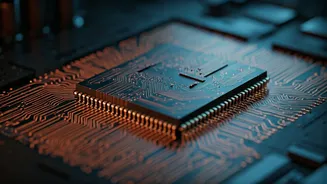
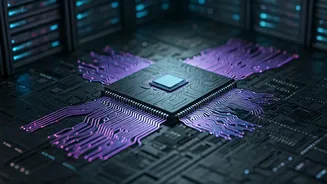
SpaceX, xAI, and Tesla. This partnership centers on the development of the Terafab project, an immense undertaking focused on constructing a series of colossal semiconductor fabrication plants. The primary objective of these advanced facilities is to produce specialized chips essential for a wide array of cutting-edge applications. These include powering autonomous vehicles and sophisticated humanoid robots developed by Tesla, as well as creating a specialized, space-optimized chip designed to support SpaceX's vision for vast networks of AI-driven data centers in orbit. Intel's involvement signifies a major step in bringing this visionary plan to fruition, leveraging its expertise in designing, fabricating, and packaging high-performance silicon at a massive scale to accelerate the Terafab's ambitious target of delivering 1 terawatt of annual compute power, a critical component for future advancements in artificial intelligence and robotics.
Transforming AI and Space Compute
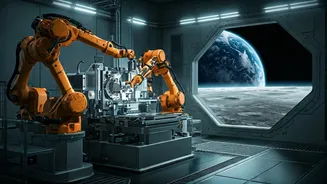
The core ambition of the Terafab project, now bolstered by Intel's participation, is to dramatically increase the availability of high-performance computing power for transformative technologies. Intel's contribution is expected to significantly accelerate the project's goal of producing a staggering 1 terawatt of compute capacity per year. This immense power is earmarked for critical applications such as powering the complex algorithms required for Tesla's robotaxis and its Optimus humanoid robot, enabling unprecedented levels of autonomy and functionality. Furthermore, a specialized chip optimized for the harsh environment of space will be manufactured, destined for SpaceX's ambitious plan to deploy up to a million AI data centers in orbit. This initiative represents a paradigm shift in how we approach chip production and its application in areas like advanced AI and establishing a robust digital infrastructure beyond Earth.
Overcoming Manufacturing Hurdles
The undertaking of building semiconductor fabrication plants is notoriously complex and resource-intensive, a challenge historically managed by only a select few global companies, including Intel and TSMC. Elon Musk's Terafab plan amplifies this complexity due to its unprecedented scale and the ambitious goal of producing 1 terawatt of AI compute annually. To put this into perspective, consistently running 1 terawatt of AI compute for an entire year would consume roughly double the total annual electricity usage of the United States. Adding further to the engineering challenge, Musk has stated that Terafab will integrate every stage of chip development, from initial design and production to final validation, all within the same facility. This consolidation of logic and memory chip manufacturing in a single location deviates significantly from standard industry practices, presenting a unique set of hurdles. Despite the formidable nature of these obstacles, Musk's determination, born from the current limitations of semiconductor suppliers in meeting his company's burgeoning chip demands, signals a commitment to pushing the boundaries of what is technologically achievable in chip manufacturing.