






Preparation is Key
Before embarking on your deck's rejuvenation, a crucial first step involves clearing the space completely. Remove all furniture, planters, outdoor rugs,
and any other items that might obstruct a thorough cleaning. Next, sweep away loose debris like lingering leaves and dirt. For stubborn buildup between deck boards, a putty knife or screwdriver can be gently employed to dislodge it. If you have delicate plants or landscaping adjacent to the deck, take precautions by covering them with plastic tarps to prevent accidental exposure to cleaning agents. Conclude this preparatory phase with a light, preliminary rinse of the entire deck surface using a standard garden hose to dampen the wood and loosen surface grime.
Cleansing and Scrubbing
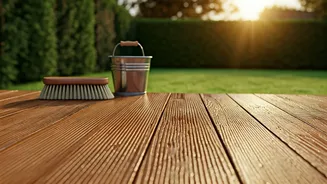
For most situations, a simple yet effective approach involves warm, soapy water and a soft-bristle brush. This gentle method is often sufficient to restore a deck's pristine appearance. However, if your deck is made of wood, a more specialized cleaner is recommended. Opt for an oxygen bleach-based deck cleaner, which effectively lifts dirt and eradicates mildew without compromising the wood's natural integrity, specifically by avoiding damage to the lignin, the crucial natural adhesive within the wood fibers. Apply this cleaner using a pump sprayer and allow it to penetrate for approximately 10 to 15 minutes, ensuring the deck remains consistently wet during this period. Following the soak time, use a stiff-bristle synthetic brush attached to a pole to vigorously scrub the deck boards, always moving in the direction of the wood grain to avoid creating unwanted texture or damage.
Wood Deck Treatment
For wooden decks, a valuable professional technique involves applying an oxalic acid treatment after the washing and scrubbing phase, but before the final rinse. This specialized treatment is particularly beneficial for restoring the luster of decks, fences, and other timber surfaces. Its primary function is to neutralize the pH balance of the wood, which can become alkaline after using typical cleaning agents. Furthermore, it's highly effective at removing unsightly dark water stains or tannin marks, helping to reveal the wood's inherent bright and natural aesthetic. Incorporating this step ensures that the wood is not only clean but also visually revitalized and prepared for its protective finish.
Thorough Rinsing Process
The method for rinsing your deck is significantly influenced by its existing finish. Finishes such as solid stains, penetrating stains, and semi-transparent stains are susceptible to damage or lifting if subjected to excessive pressure washing. If your deck's finish is compatible with pressure washing, employ a wide-angle spray tip, specifically a 40° tip, and maintain a pressure below 1500 PSI, especially for softer woods like cedar or pine. Composite decking, being more robust, can tolerate higher pressure, but it is critical not to exceed 3100 PSI. Regardless of the material, the pressure washer wand should be kept in constant motion, held approximately 8 to 12 inches from the surface, and directed with the wood grain. In many cases, a regular garden hose provides an adequate and safer rinsing solution. When using a hose, hold it about 6 to 12 inches above the deck and spray in sections, moving forward a few feet at a time.
Consequences of Neglect
Failing to clean your deck properly deprives it of its primary defense against the elements and degradation, impacting both its longevity and visual appeal. Seemingly benign substances like pollen can inadvertently feed mold and mildew, which, in turn, can gradually erode the wood's structural integrity, leading to significant decay. Moreover, accumulations like bird nests in crevices or under the deck's structure can trap moisture and attract damaging secondary pests, such as carpenter ants and termites, exacerbating structural issues. It's important to note that improper cleaning methods can be as detrimental as outright neglect. A frequent oversight is relying solely on high-pressure washing without the aid of appropriate cleaning solutions. Using extreme pressure to forcibly remove dirt, rather than allowing a cleaner to dissolve it, can physically tear apart the wood fibers. This action raises the grain, causes severe splintering, and leaves the wood more porous and susceptible to accelerated deterioration.