





Curvilinear Forms Embrace
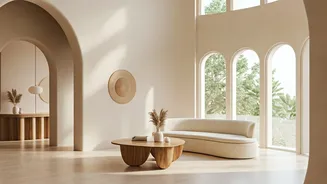
In 2026, the dominance of sharp angles in home design is predicted to wane, making way for the allure of curves. Think of rounded sofas, egg-shaped armchairs,
and walls subtly reshaped with gentle arcs. This shift isn't just about aesthetics; it’s about creating spaces that feel more inviting and comfortable. The human eye naturally gravitates towards curves, finding them less jarring and more soothing. Curved furniture helps in softening the overall rigidity of a space. Consider integrating a curved sectional sofa in your living room to promote a more open and inclusive environment, encouraging conversation and relaxation. Furthermore, curved architectural elements, like arched doorways or rounded window frames, can transform a room, making it feel less boxy and more fluid, adding a touch of elegance and visual interest.
Organic Shapes Invigorate
Alongside curves, the incorporation of organic shapes will be a defining trend in 2026 interior design. This means embracing forms inspired by nature, such as biomorphic furniture, irregular-shaped mirrors, and organically designed lighting fixtures. Organic shapes introduce a sense of natural harmony and visual interest, steering away from the uniformity of straight lines. Incorporating elements like a coffee table with a free-form shape or a mirror that mirrors a leaf can soften the harsh lines of a modern interior. These elements introduce a sense of visual variety, which can prevent a space from appearing cold and sterile. Think of natural materials like wood with visible grains, stone with unique textures, or lighting shaped like delicate flower petals. These organic forms don't just add aesthetic appeal, they also connect us to the natural world, fostering a sense of well-being within the home.
Spatial Arrangements Innovate
The layout of our homes is also set to evolve, with soft geometry influencing spatial arrangements. Open-plan layouts, enhanced with curved dividers or strategically placed organic-shaped screens, will become more commonplace, as they help define different zones without cutting off space entirely. This promotes a feeling of flow and flexibility. Consider using a curved bookshelf to subtly separate the living room from the dining area. Similarly, multi-functional furniture with rounded edges will become more popular. These designs prioritize adaptability and encourage versatile living. The aim is to create spaces that can easily transform depending on needs, from entertaining guests to providing private sanctuaries. The result is a home that is both aesthetically pleasing and highly practical, allowing you to maximize the use of your living space while maintaining a sense of openness and airiness.
Materiality and Texture Enrich
Soft geometry extends beyond shapes, encompassing the materials and textures used in home décor. In 2026, expect to see a surge in soft, tactile materials that complement the curved forms and organic designs. Think plush velvets, smooth bouclé, and natural linens for upholstery. These materials not only enhance the aesthetic appeal of a space but also contribute to its sensory experience, creating a more inviting atmosphere. When selecting finishes, opt for materials with gentle textures and subtle variations, such as hand-glazed tiles, textured wallpapers, or rugs crafted from natural fibers. These materials play a key role in making a space feel more comfortable. Furthermore, the interplay of light and shadow on these textured surfaces will add depth and visual interest, making your home feel cozy and welcoming. The emphasis is on creating a space that stimulates the senses and promotes relaxation.