





The Luna Ring Vision
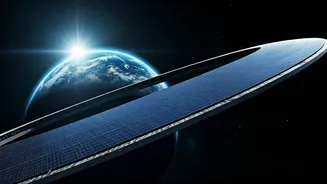
A groundbreaking proposal once envisioned encircling the moon's equator with an immense solar infrastructure, dubbed the Luna Ring. This ambitious project
aimed to create a continuous source of solar power, unaffected by Earth's weather or nighttime. The envisioned belt would span approximately 11,000 kilometers and could be anywhere from a few kilometers to a staggering 400 kilometers wide. If an average width of 100 kilometers were realized, it would cover an area around 1.1 million square kilometers, comparable in size to both Texas and California combined. This lunar power station's primary function was to capture sunlight 24/7, converting it into electricity. This generated power would then be transmitted via cables to the side of the moon facing Earth. From there, it would be converted into microwave or laser beams and directed towards receiving stations on our planet, promising abundant energy for a sustainable future.
Power Transmission & Lunar Resources
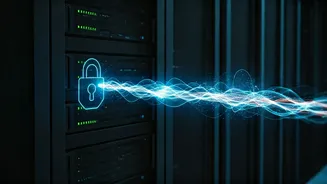
The Luna Ring concept relied on sophisticated wireless transmission technologies, specifically microwave and laser beam systems, to deliver energy back to Earth. Upon arrival, countries would utilize specialized antenna arrays, known as rectennas, to capture these microwave signals and convert them back into usable direct current electricity for distribution. A critical aspect of this colossal undertaking was the proposed utilization of resources found directly on the moon. Lunar regolith, or moon sand, composed of oxide compounds, could be processed. By combining it with hydrogen brought from Earth, water and oxygen could be produced. Furthermore, this lunar sand could serve as a base material for creating cement, ceramics, glass, and even the solar cells themselves, manufactured on-site. The logistical backbone of this project would involve advanced robotics; large automated machines would be responsible for preparing the lunar surface, leveling softer ground and drilling into harder subsurface layers, all managed remotely from Earth, significantly reducing the risk to human workers.
Manufacturing and Construction Approach
The construction of the Luna Ring was envisioned as a highly automated process, minimizing the need for direct human intervention in the harsh lunar environment. A key component of this plan involved self-propelled solar cell manufacturing plants. These mobile units would traverse the lunar equator, continuously producing and installing solar panels as they moved. This systematic approach would ensure the gradual but steady expansion of the solar belt. The civil engineering aspects were also designed with automation in mind, with large robots tasked with site preparation. They would undertake the heavy-duty work of leveling the terrain and drilling, effectively preparing the ground for the vast solar infrastructure. This entire construction phase was planned to be orchestrated and controlled remotely from Earth, leveraging cutting-edge robotics to overcome the immense challenges of building on another celestial body.
Challenges, Costs, and Doubts
Despite its visionary scope, the Luna Ring proposal has faced significant skepticism and struggled to gain traction due to substantial practical and economic challenges. When first introduced in 2010, it garnered little public interest. However, the aftermath of the Fukushima nuclear disaster in 2011 prompted a reevaluation of Japan's energy strategy, bringing renewed attention to the concept. Even with this renewed interest, concrete cost estimates for the project remained elusive, casting a long shadow over its feasibility. Experts have voiced concerns that the immense cost of such an endeavor outweighs its theoretical benefits, suggesting alternative energy sources like geothermal power might be more practical. The sheer scale of engineering required to build a solar belt longer than Earth's diameter in a vacuum, coupled with the current non-existence of the advanced robots needed for construction, makes the project appear more as a futuristic concept than an immediate solution. The lack of detailed costings and technological readiness continues to fuel debate about its viability as a genuine energy roadmap.