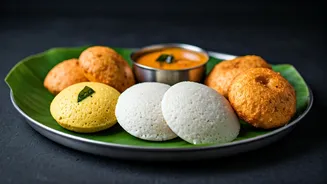

Idli: A Staple
Idli, a South Indian staple, is a light and fluffy steamed cake. It’s made from fermented batter of rice and urad dal (black lentils). The fermentation
process gives it a slightly tangy taste and makes it easily digestible. Idli is usually served with sambar (a lentil-based vegetable stew) and chutney (a variety of dips). Each bite offers a combination of textures and flavors. It is a popular breakfast choice across India because it's both healthy and easy to eat. The versatility of idli is also a key factor in its popularity; it can be enjoyed by people of all ages and dietary preferences.
Dosa: Versatile Pancake
Dosa is a thin, crispy crepe made from a fermented batter of rice and lentils, similar to idli. This South Indian delicacy comes in numerous variations, including plain dosa, masala dosa (with a spiced potato filling), and paper dosa (thin and extra crispy). The fermentation process is critical, as it contributes to the dosa's characteristic texture and flavor. Dosa is often paired with sambar and chutney. It is a common breakfast in many homes and eateries, and its widespread availability has made it a favorite among food lovers. Dosa’s adaptability makes it easy to customize according to individual preferences.
Uttapam: Savory Pancake
Uttapam is a thick, pancake-like dish, also made from a fermented rice and lentil batter. Unlike dosa, uttappam is cooked with toppings like chopped onions, tomatoes, chilies, and coriander leaves. The toppings are mixed into the batter before cooking, adding to the flavor. Uttapam is softer than dosa and has a slightly savory taste. It's often served with sambar and chutney, providing a hearty and fulfilling breakfast. The ingredients can be easily adapted to include other vegetables, making it a flexible and nutritious choice. This makes it a great option for people who prefer a dish that is filling and loaded with different flavors in every bite.
Puttu: Cylindrical Delight
Puttu is a steamed rice cake from Kerala. It is made by steaming layers of rice flour and grated coconut in a cylindrical mold. This creates a fluffy, layered texture. Puttu is traditionally served with kadala curry (black chickpea curry) or grated coconut and sugar. The simplicity of puttu makes it an easily customizable and satisfying breakfast. The texture is soft, which, combined with the coconut, offers a unique culinary experience. Puttu is a favorite among Keralites and is often enjoyed during special occasions and festivals. Its straightforward preparation also makes it a convenient option for a quick and nutritious breakfast.
Dhokla: Gujarati Snack
Dhokla, a steamed savory cake, originates from Gujarat. It is made from a fermented batter of gram flour (besan) and is known for its light, spongy texture. The fermentation process gives it a slightly sour taste. Dhokla is often tempered with mustard seeds, curry leaves, and green chilies. It’s a popular breakfast and snack option. It can be served with green chutney and a sweet tamarind chutney. Dhokla’s fluffy, light texture makes it easy to eat. It is a beloved dish across Gujarat. Its preparation often varies by household, making it a source of local pride.
Modak: Sweet Dumplings
Modak is a sweet dumpling, especially popular in Maharashtra. It’s often made during the Ganesh Chaturthi festival. The outer shell is made from rice flour, and the filling typically consists of grated coconut and jaggery. These dumplings are steamed, resulting in a soft texture and a blend of sweet flavors. The sweetness comes from jaggery, a traditional, unrefined sugar. Modak is an important offering to Lord Ganesha, and this association adds to its cultural significance. The preparation and enjoying of modak is a family affair, linking the dish to festive joy and tradition.
Momos: Tibetan Influence
Momos are steamed dumplings that have become a popular breakfast and snack. Originally from Tibet, they've gained widespread popularity across India. They are usually made with a dough wrapper filled with a mixture of vegetables or minced meat. Momos are typically steamed, resulting in a soft and juicy texture. They are often served with a spicy chutney. The versatility of momos, and their growing popularity, has led to numerous variations. These can range from vegetarian options, to various meat fillings. This means there is something for everyone. Momos' widespread appeal has made them a go-to choice.
Khaman: Spongy Gujarati Treat
Khaman is another popular Gujarati steamed snack, very similar to dhokla. It is typically made from a batter of chana dal (split chickpeas) that is fermented, giving it a fluffy texture. The batter is then steamed and tempered with mustard seeds, green chilies, and coriander leaves. Khaman has a light, savory taste. It is commonly served with green chutney and a sweet tamarind chutney. Its preparation involves the fermentation of the dal, contributing to its distinct flavor and texture. Khaman is a favorite breakfast choice across Gujarat, and its ease of preparation makes it a convenient option for many households. The toppings add to its flavors.
Idiyappam: String Hoppers
Idiyappam, also known as string hoppers, is a South Indian breakfast dish made from rice flour. The rice flour dough is pressed into thin noodles and then steamed. This process creates a delicate, string-like texture. Idiyappam is usually served with vegetable stew, or with sweetened coconut milk and sugar, depending on the region and personal preference. The preparation requires a unique tool to create the thin noodle strands. Idiyappam is a light and easily digestible breakfast. This quality, combined with the subtle taste, makes it a favored choice, especially in South India.
Bati: Marwari Specialty
Bati is a specialty from the Marwar region of Rajasthan. These are hard, baked or steamed wheat flour dumplings. They are often served with dal (lentil) and churma (sweet crumbled bread). The steaming process ensures that the bati is soft inside. The traditional combination of dal-bati-churma is a rich, flavorful, and filling meal. It reflects the culinary heritage of Rajasthan. It is a popular and nutritious breakfast. The preparation may require some effort, but the result is a satisfying dish that offers a unique culinary experience. It is a staple food in many Rajasthani homes.