
A Culinary Legacy Reimagined
The Burnt Sugar Cake is experiencing a significant resurgence, not merely as a fleeting trend, but as a vital part of a broader movement to recognize and
celebrate the often-overlooked contributions of Black American culinary traditions. For an extended period, the rich tapestry of Black foodways was unfortunately oversimplified, reduced to narrow stereotypes. This marginalization led to the neglect of dishes like the Burnt Sugar Cake, which are not only delicious but also possess considerable genuine skill and profound cultural significance. This cake, with its complex flavor profile and intricate preparation, embodies a history that deserves to be remembered and honored. Its return signifies a reclamation of culinary heritage, pushing back against decades of underrepresentation and bringing a cherished piece of American history back into the spotlight for its artistry and depth.
Echoes from the Past
Dating back to the 1800s, the Burnt Sugar Cake holds a distinguished place in Black Southern culinary history, particularly flourishing in the post-emancipation era. Ingenious Black cooks, with an innate understanding of sugar production, mastered the art of caramelization. They ingeniously transformed simple granulated sugar into a deeply flavored, bittersweet syrup, especially when brown sugar was less accessible. This necessity evolved into a sophisticated culinary practice. By the mid-20th century, this exceptional cake had become a staple at community gatherings and church events, gracing the pages of cookbooks compiled for special occasions. While attempts were made to adapt it for broader appeal, such as Betty Crocker's version in the 1950s, these often missed the nuanced essence of the original creation. Over time, its prevalence in public awareness waned, with its legacy preserved primarily through cherished family recipes, its intricate preparation becoming a whispered secret among generations, often referred to as 'lost' due to the difficulty in precisely replicating its unique flavor balance from memory alone.
Distinguishing Flavors
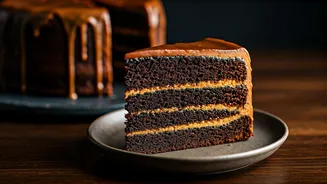
It is important to distinguish the Burnt Sugar Cake from its often-confused counterpart, the caramel cake, as their flavor profiles and preparation methods diverge significantly. In many contemporary caramel cakes, the sweetness is predominantly concentrated in the frosting, leaving the cake sponge relatively plain and understated. In contrast, the Burnt Sugar Cake achieves its distinctive character by infusing the caramelized sugar syrup into both the cake batter and the frosting. This integral incorporation ensures that every single bite, not just the icing, is imbued with a profound, deeply caramelized flavor. The cake itself delivers a consistent caramel taste from its core to its exterior. Furthermore, the flavor experience is more nuanced than that of a standard caramel cake. While caramel offers a straightforward sweetness, burnt sugar introduces a complex interplay of sweet notes with undertones of toffee and a subtle, sophisticated bitterness that develops and lingers with each chew, elevating it beyond simple confectionery sweetness to a more intricate and developed taste.
Crafting the Syrup
The cornerstone of the Burnt Sugar Cake's unique flavor lies in its meticulously prepared burnt sugar syrup. This essential component requires careful attention and patience, as it cannot be substituted with readily available caramel sauce without compromising the authentic taste. To begin, ½ cup of granulated sugar is placed in a heavy-bottomed skillet or saucepan, preferably cast iron, and heated over low-medium heat. It is crucial not to walk away from the pan, as the sugar needs constant observation. Initially, the sugar will begin to melt around the edges; gently shaking the pan helps to redistribute the melting sugar evenly without direct stirring. Once approximately half the sugar has liquefied, gentle stirring can commence. The process continues until the sugar fully melts and achieves a medium brown hue, resembling dark amber or mahogany rather than a light caramel color. At the precise moment this ideal color is reached – a stage that occurs rapidly – the pan must be removed from the heat. Immediately, ½ cup of boiling water is added; this step will cause a dramatic bubbling and steaming, so it is imperative to stand back and stir cautiously. The mixture is then returned to low heat, and stirred until any solidified sugar lumps dissolve completely. Finally, the syrup is measured, and water is added to ensure a total liquid volume of exactly 1 cup. This syrup must then be allowed to cool completely before being used in the cake batter or frosting. A critical tip for success is to use a light-colored pan to easily monitor the sugar's color transformation, and to remember that 'burnt' refers to a deep amber, not a black, acrid char. The addition of boiling water, while dramatic, is indispensable for a smooth syrup, and making extra syrup to drizzle over servings is highly recommended for an intensified flavor.
Assembling the Cake
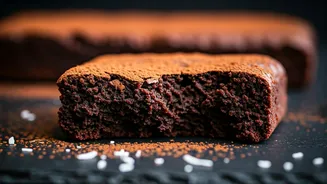
With the foundational burnt sugar syrup prepared, the focus shifts to constructing the cake itself, a process requiring precise measurements and specific techniques. The recipe yields a two-layer 8-inch or 9-inch cake designed to serve 10-12 individuals. The oven should be preheated to 175°C (350°F), and two round cake pans, either 8 or 9 inches in diameter, should be thoroughly greased and floured, with parchment paper lining their bottoms. In a large mixing bowl, 2¼ cups of all-purpose flour are sifted together with 1 cup of granulated sugar, 3 teaspoons of baking powder, and 1 teaspoon of salt. Next, ½ cup of softened butter or shortening is added, along with ⅔ cup of the cooled burnt sugar syrup. These ingredients are then beaten with an electric mixer on medium speed for precisely 2 minutes, ensuring the sides of the bowl are scraped down to incorporate all elements evenly. Following this, the remaining ⅓ cup of burnt sugar syrup, along with 2 large eggs and 1 teaspoon of vanilla extract, are incorporated. The mixture is beaten for another exactly 2 minutes on medium speed, aiming for a smooth batter with a lighter hue. This batter is then divided equally between the prepared cake pans. Baking times vary slightly: 25-30 minutes for 9-inch pans and 30-35 minutes for 8-inch pans. The cake is ready when a toothpick inserted into the center comes out clean. After baking, the cakes are cooled in their pans for 10 minutes before being inverted onto wire racks to cool completely, a vital step before frosting.
The Luscious Frosting
The creation of the Burnt Sugar Frosting is the final, crucial step in completing this classic dessert, providing a rich and complementary topping. To begin this process, a small, fresh batch of burnt sugar syrup is required. This is made by following the same initial syrup-making procedure, using ¼ cup of granulated sugar and ¼ cup of boiling water, and then allowing it to cool. The frosting begins by melting ½ cup of butter in a saucepan over medium heat. Once melted, the prepared ¼ cup of cooled burnt sugar syrup is added and stirred to combine thoroughly. This mixture is then removed from the heat. In a separate step, 3 cups of powdered sugar are gradually beaten in, alternating with 3-4 tablespoons of milk or cream, until the frosting achieves a spreadable consistency. Subsequently, 1 teaspoon of vanilla extract is stirred in for an aromatic finish. To achieve the perfect texture, the saucepan containing the frosting is placed into a bowl of ice water. Constant beating is then required for approximately 5-7 minutes, until the frosting thickens to a point where it can be spread onto the cake. If the frosting becomes too thick during this process, a minuscule amount of additional milk can be added, whereas if it is too thin, more powdered sugar can be incorporated. The frosted cake should be assembled and iced immediately once the frosting reaches its ideal spreading consistency, as it begins to set rather quickly.
Keys to Perfection
Achieving the quintessential Burnt Sugar Cake requires meticulous attention to detail throughout the preparation process, with several key tips ensuring authentic flavor and texture. Foremost is the paramount importance of the syrup; rushing the sugar caramelization is detrimental. Utilizing low heat and unwavering attention during this stage is where the cake's magic is truly born. It's vital to understand that 'burnt' sugar should achieve a deep amber hue, akin to strong tea or molasses, not a black, acrid taste. The addition of boiling water to the hot caramel is critical; using cold water will cause the caramel to seize into unmanageable lumps, whereas boiling water ensures a smooth, integrated syrup. Furthermore, allowing the syrup to cool completely before incorporating it into the batter is essential, as hot syrup can lead to tunneling and an undesirable texture in the cake. Precision in measurement is non-negotiable; this is not a recipe that tolerates guesswork, so using proper measuring cups and leveling flour is imperative. The specified two-minute beating intervals for the batter are deliberate, contributing to the cake's structural integrity. Frosting timing is also crucial, as the frosting sets rapidly, demanding swift work once it reaches the correct consistency. For best results, consider making the cake the day before serving, as it improves in flavor after a day; wrap it well and frost just before presenting. Drizzling additional burnt sugar syrup over individual slices significantly intensifies the flavor. Finally, serving the cake at room temperature is recommended, as chilling can mute the complex burnt sugar notes.
A Flourishing Revival
The current renaissance of the Burnt Sugar Cake is intrinsically linked to a significant cultural movement focused on honoring and elevating overlooked Black culinary contributions. Historically, Black American food traditions were frequently relegated to simplistic stereotypes, resulting in the neglect and near-forgotten status of dishes like the Burnt Sugar Cake, which demands both considerable skill and deep cultural relevance. Platforms like TikTok and Instagram have become instrumental in this revival, enabling descendants of original bakers to share cherished family recipes and personal narratives, effectively reclaiming and celebrating their heritage. Food creators like Sonja Norwood are not simply sharing recipes; they are actively engaged in reviving and perpetuating long-standing traditions. The authentic rendition of this cake, characterized by its true burnt sugar syrup, offers a flavor profile often described as akin to a sophisticated caramel crème brûlée, a testament to the nuanced results achievable through patient and skilled methods that modern shortcuts often cannot replicate. Consequently, the Burnt Sugar Cake transcends its identity as mere dessert, standing as a symbol of edible history, technical mastery, and the enduring legacy of love and memory passed down through generations. Baking and enjoying this cake is an act of participating in and preserving a culinary tradition that has persevered against neglect, a tribute to the ingenuity of Black Southern cooks who transformed everyday ingredients into edible art, commanding respect, attention, and care.