






Strategic Mountainous Location
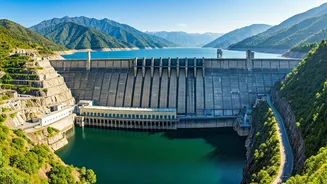
Nestled in the breathtaking Tehri Garhwal district of Uttarakhand, the Tehri Dam commands a formidable presence within the dramatic Himalayan foothills.
This region, characterized by its steep valleys and susceptibility to seismic activity, was chosen for its unique geographical advantages. Situated approximately 70 kilometers from Dehradun, the dam's placement at the convergence of swiftly flowing rivers and challenging mountainous terrain underscores the ambitious engineering required for its construction. The site selection highlights a careful balance between harnessing natural power and managing environmental complexities in a seismically sensitive area.
Monumental Height Achieved
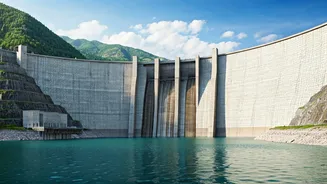
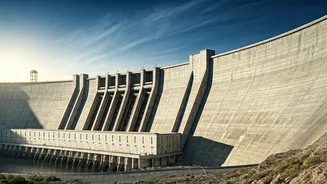
Reaching an astonishing elevation of 260.5 meters (855 feet), the Tehri Dam proudly holds the title of Asia's tallest dam and ranks among the world's most imposing structures of its kind. This extraordinary height is instrumental in its capacity to impound an immense volume of water, thereby creating the vast Tehri Lake. This expansive reservoir extends significantly into the surrounding hills, showcasing the sheer scale of the project and its impact on the local topography. The dam's vertical stature is a testament to its engineered prowess and its ability to manage substantial water resources.
A Powerhouse of Resources
The Tehri Dam transcends its identity as merely a barrier for water; it functions as a critical source of energy and sustenance for a vast region. This multi-purpose project is a significant contributor to India's power needs, generating over 1,000 MW of hydroelectric power, with further pumped-storage capabilities anticipated. Beyond electricity generation, the dam plays a pivotal role in securing essential drinking water supplies for major metropolitan areas, including Delhi and Uttar Pradesh. Furthermore, it significantly bolsters agricultural productivity by supporting irrigation for thousands of hectares of land, making it a vital component of the region's infrastructure and economy.
Engineering Against Earthquakes
Constructed within a zone prone to significant seismic events, the Tehri Dam incorporates advanced engineering principles to ensure its robustness and safety against high-magnitude earthquakes. The design prioritizes resilience, addressing the inherent challenges posed by its location near the sensitive Himalayan fault lines. Employing a rock and earth-fill construction methodology, the dam exhibits a degree of flexibility crucial for mitigating the stresses associated with tectonic activity. These carefully implemented safety features and the innovative structural design are pivotal in rendering the dam capable of withstanding considerable seismic forces.
Challenges and Debates
The development of the Tehri Dam has not been without its share of significant challenges and public discourse. A major point of contention was the submergence of the historic town of Tehri, leading to the displacement of thousands of inhabitants. Environmental advocates and social activists voiced considerable concerns regarding the potential ecological ramifications, the amplified seismic risks, and the profound social impact associated with such large-scale infrastructure projects. These multifaceted issues transformed the Tehri Dam into one of India's most debated and closely scrutinized development initiatives.
Remarkable Project Insights
The realization of the Tehri Dam was a long-term endeavor, spanning over three decades from its initial conception through to its final execution. It stands as a key achievement under the umbrella of the Tehri Hydro Development Corporation (THDC) initiative. The sheer scale of the reservoir created by the dam has transformed it into a popular destination for water sports and tourism. Importantly, the dam is designed to provide a substantial 2400 MW of hydroelectric power, highlighting its significant contribution to the nation's energy grid and its multifaceted utility.