





Embrace the Night
Running beneath the vast expanse of the night sky transforms a simple jog into a profound, sensory experience. The usual visual distractions of daylight
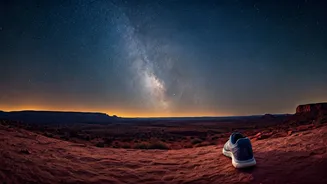
recede, replaced by the subtle soundtrack of the wind and the awe-inspiring spectacle of celestial bodies. This form of running, often referred to as 'dark sky running,' emphasizes the beauty of minimal light pollution and the tranquility of the nocturnal environment. It’s an opportunity to connect with nature on a deeper level, turning a physical activity into a meditative journey. Imagine traversing trails where the Milky Way paints a luminous band across the heavens, or where the soft glow of the moon illuminates your path, allowing for a truly immersive experience that sharpens other senses and fosters a unique connection with the cosmos and the surrounding landscape. This approach prioritizes environmental respect, encouraging runners to tread lightly and preserve the darkness for both personal enjoyment and the well-being of nocturnal wildlife.
Prime Dark Sky Havens
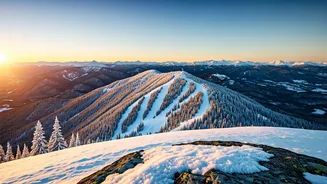
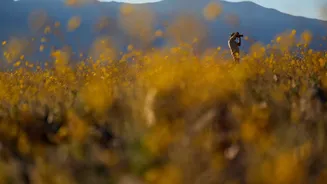
The quest for exceptional dark sky running destinations predominantly leads to regions with minimal light pollution, low humidity, and sparse forest cover, with the American Southwest's high desert serving as a prime example. Parks like Nevada’s Great Basin National Park, Big Bend in Texas, and Utah’s Bryce Canyon Amphitheater offer unparalleled views, often boasting 'Bortle 1' skies, the darkest on Earth, where the Milky Way is so vivid it can cast a shadow. California's Death Valley salt flats act as a vast reflective surface for starlight, while Joshua Tree National Park presents uniquely surreal silhouettes under the night sky. On the East Coast, where light pollution is more prevalent, creative choices are necessary. Maine's 100-Mile Wilderness is a rare International Dark Sky Park where the boreal forest's openness permits moonlight navigation. For a coastal experience, the undeveloped beaches of North Carolina's Cape Lookout National Seashore offer reflective waters under calm nights. The Midwest also holds treasures, such as Wisconsin's Newport State Park and Michigan's Keweenaw Dark Sky Park, benefiting from the darkness buffer provided by the Great Lakes. Minnesota's Boundary Waters offer extensive, albeit remote, dark trails. For an even more profound void, New Mexico’s Gila National Forest features the Cosmic Campground, an International Dark Sky Sanctuary, while Idaho’s Craters of the Moon lava flows absorb light, creating an intensely dark environment, and Florida's Big Cypress National Preserve provides a swampy dark sky experience.
Timing and Technique
Optimizing your dark sky running experience hinges significantly on timing and technique, especially concerning lunar cycles and seasonal conditions. For the most profound cosmic displays, aiming for a new moon period, or a few days before or after, will maximize the visibility of stars and the Milky Way, though this often necessitates reliable headlamp use. Conversely, a full moon, while obscuring some fainter celestial details, offers enough ambient light to potentially run without artificial illumination, creating a surreal, almost ethereal, running sensation. Seasonally, winter's crisp, dry air generally provides superior atmospheric clarity for stargazing, but runners must be prepared for potentially colder temperatures, which can be extreme in high desert environments where temperature swings of 40 degrees Fahrenheit in a short period are common. Therefore, layering clothing is crucial for comfort and safety. It's also vital to adjust your pace and expectations, as depth perception is inherently reduced at night. Utilizing the red-light setting on headlamps is highly recommended to preserve night vision and minimize disturbance to nocturnal wildlife. Safety is paramount; avoid aggressive descents and ensure you have downloaded offline maps and a satellite messenger due to the likelihood of remote locations with no cell service. If possible, scouting sections of the trail in daylight beforehand can reveal potential hazards like loose scree or roots.
Essential Night Run Gear
Equipping yourself properly for dark sky running is crucial, as the margin for error shrinks considerably after sunset. Standard daytime running gear might not suffice when the cosmos is your primary light source. A high-quality headlamp is non-negotiable; one that is bright, durable, and offers adjustable beams is ideal, with a rechargeable battery that lasts for extended periods. For example, a headlamp providing around 4 hours of use on its maximum setting, with an automatic dimming feature to conserve power, is highly effective. Given that even summer nights in elevated or desert environments can become surprisingly cold, a lightweight, packable insulated jacket is essential. Such a jacket should compress easily to fit into a running pack and offer excellent warmth retention, even when slightly damp. A reliable GPS watch is beneficial for tracking progress on longer runs, monitoring pace, and ensuring proper fueling, especially as being in remote areas often means missing your pickup if you misjudge time. Features like a bright screen, offline mapping capabilities, and even a built-in LED flashlight for backup illumination are invaluable. Footwear choice is also critical; versatile trail running shoes that offer a good balance of cushioning, durability, and stability on varied terrain will provide increased confidence and sure-footedness on challenging night trails. Finally, a subscription to a reliable GPS mapping service, with the ability to download high-resolution offline maps, is a critical safety and navigation tool, especially since unfamiliar trails can appear dramatically different in the dark. Always carry an external battery pack, as cold temperatures significantly accelerate battery drain on electronic devices.