

Barsana's Lathmar Charm
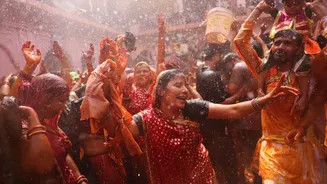
Barsana, revered as the birthplace of Radha Rani, sets the stage for the iconic Lathmar Holi, a tradition steeped in Braj folklore. Days before the main
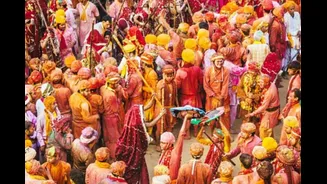
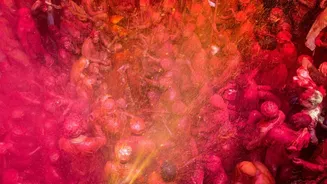
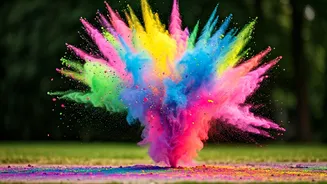
festival, the town pulsates with devotional music and age-old customs. The Radha Rani Temple, majestically situated atop a hill, becomes the focal point where priests conduct special rituals, adorning the deity with 'gulal' at her divine feet. The pinnacle of the celebration is the playful reenactment of Lord Krishna's visit from Nandgaon, where women playfully engage men with 'lathis' within the temple courtyard, a symbolic representation of divine love and whimsical 'leelas'. Attendees partake in traditional Holi songs, known as 'samaj gayan', accompanied by rhythmic drumming, creating an electrifying cultural ambiance. The temple complex further bursts with fragrance and melody through Flower Holi, Laddoo Holi, and continuous 'kirtans'. Ascending the temple steps during this period is an experience akin to a spiritual pilgrimage, with the sacred chant of "Radhe Radhe" resonating throughout the area. This celebration masterfully blends vibrant energy with profound devotion, making Barsana an unparalleled Holi experience deeply rooted in living Braj heritage.
Nandgaon's Krishna Lore
Nandgaon, widely believed to be the ancestral home of Nanda Baba and the very place where Lord Krishna spent his formative years, embraces Holi with immense emotional depth and time-honored traditions. The focal point of these celebrations is the Nand Bhavan Temple, where the presiding deity is adorned in exquisite festive garments and participates in a ceremonial offering of colors. On the primary day of the festivities, the residents of Barsana make a reciprocal visit to Nandgaon, essentially reversing the Lathmar Holi tradition. The temple courtyard then transforms into a jubilant arena alive with vibrant colors, captivating music, and spirited devotional dances. From the temple balconies, priests shower devotees with 'gulal' and fragrant flower petals, while the congregants collectively sing Braj 'bhajans' that recount the charming childhood escapades of Lord Krishna. The atmosphere here, while perhaps more intimate than in Barsana, resonates with an equally potent spiritual energy, and the locals warmly welcome visitors into their community fold. Throughout the day, traditional confections, refreshing 'thandai', and blessed temple 'prasadam' are generously distributed. As dusk descends, the evening 'aarti', performed amidst swirling clouds of color, offers a profoundly moving spectacle, symbolizing the beautiful confluence of unwavering devotion and joyous celebration.
Vrindavan's Divine Bloom
Vrindavan stands as the epicenter of Holi celebrations, and the spiritual tone for the entire Braj region is significantly set by the festivities at the Banke Bihari Temple. The celebrations commence with 'Phoolon Ki Holi', or Flower Holi, where temple priests joyfully shower devotees with petals inside the temple premises, cultivating an atmosphere that is both fragrantly divine and deeply spiritual. The deity is dressed in resplendent Holi attire, and special offerings of 'bhog' are made throughout the day. The temple resonates with an unending stream of 'kirtan', the percussive beats of the 'mridanga', and traditional Braj Holi songs that narrate the playful interactions between Radha and Krishna. Beyond the temple walls, the streets of Vrindavan extend the celebratory spirit, becoming vibrant extensions of the temple's divine energy. 'Ras Leela' performances, communal 'satsangs', and devotional processions animate the 'ghats' and 'ashrams'. Pilgrims and devotees from across the globe converge here, not merely to participate in the play of colors, but to immerse themselves in devotion in its most expressive and exhilarating form.
ISKCON Dwarka's Grandeur
The Sri Sri Rukmini Dwarkadhish ISKCON Temple, prominently known as ISKCON Dwarka Delhi, is home to Sri Sri Gaura-Nitai, Sri Sri Rukmini Dwarkadhish, and Sri Sri Jagannath Baldev Subhadra Maharani. This esteemed temple orchestrates an expansive two-day celebration on March 3rd and 4th, effectively transporting the spiritual essence of Vrindavan to the nation's capital. The inaugural day is dedicated to observing Gaura Purnima, featuring profound 'Gaura Katha', an 'abhishek' ceremony for Gaura-Nitai, a vibrant 'kirtan mela', and the offering of 'Chhappan Bhog'. The subsequent day amplifies the festive spirit with 'Phoolon Ki Holi', a spirited 'Lathmar Holi' reenactment, and a dramatic 'Matki Phod' event, all taking place within a vast and meticulously managed pandal. The event gains an international devotional resonance with the presence of Grammy-nominated Gaur Mani Mataji, who leads a live 'kirtan'. This grand celebration is thoughtfully designed to cater to devotees of all age groups, incorporating elements such as flower palanquin processions, a diverse food carnival, dedicated selfie zones, and comprehensive security arrangements.
Jaipur's Regal Holi
Nestled within the historic City Palace complex, the Govind Dev Ji Temple hosts a Holi celebration marked by a regal splendor that beautifully echoes Jaipur's noble heritage. The deity, deeply revered by the royal family as their personal divine being, is elaborately attired in special Holi ensembles and receives the significant 'Rajbhog' offering. The festivities commence with 'Phoolon Ki Holi', a highly organized and devoutly celebrated event within the temple courtyard. Here, priests gently sprinkle colors and flowers upon the assembled devotees, while live performances of classical 'bhajans' and 'kirtans' fill the air. What distinguishes Holi at this venue is the seamless fusion of sacred temple traditions with the grandeur of royal culture. As evening approaches, the 'aarti' ceremony, conducted amidst heartfelt chants and the soft, luminous glow of the temple lamps, brings the celebration to a profoundly spiritual and serene conclusion.