







From Nuclear Threat to Tech Hub
In a remarkable transformation, a former nuclear missile silo, originally built in 1959 for $47 million (over $350 million today), is shedding its Cold
War past to embrace the future of artificial intelligence. Entrepreneur Nik Halik acquired this sprawling 200,000-square-foot underground complex near Denver, Colorado, for over $10 million. This titan silo, designed to house and potentially launch three 4.5-megaton nuclear missiles, represents a significant pivot from global annihilation to technological advancement. Halik, a venture capitalist with a penchant for unique ventures, sees immense value in repurposing such formidable structures, aiming to harness the silo's robust and secure environment for a cutting-edge AI data center. His vision is to imbue this relic of a bygone era with new life, making it a crucial component in the burgeoning field of artificial intelligence.
Titan I Legacy and Resilience
The facility is a testament to mid-20th-century engineering prowess, specifically the Titan I Intercontinental Ballistic Missile (ICBM) program. Developed in the mid-1950s, the Titan I missiles stood approximately 98 feet tall and were capable of delivering nuclear warheads over 6,000 miles. Eighteen such silos were constructed across the United States, with Halik's being one of them. These silos were powered by four massive diesel engines, allowing them to operate independently of the electrical grid. Each of the three diesel tanks could hold around 50,000 gallons of fuel, enough to power approximately 2,000 homes for two weeks. Despite their impressive capabilities, the Titan I program was short-lived, with all missiles decommissioned by January 1965 due to rapid technological advancements leading to newer missile systems. After decommissioning, the U.S. government removed valuable components and sold off many facilities, with Halik's silo later serving defense contractors and DARPA.
Renovation and Safety Challenges
Embarking on a $30 million renovation, Halik has dedicated over four years to transforming the silo, located in a secluded Colorado area. The process is fraught with significant dangers, as the complex is riddled with hazardous materials such as cyanide, lead paint, mercury, and asbestos, particularly on its lower levels. Halik actively participates in the renovation, documenting his journey on his YouTube channel, 'Nuclear Bunker Living.' His hands-on approach highlights the risks involved; he has narrowly avoided electrocution from a live wire within a rusty pipe, underscoring the unforgiving nature of the environment. The silo descends 165 feet underground, comprising 17 distinct chambers connected by 4,500 feet of tunnels, including launcher rooms, control domes, and a power dome. The sheer scale and inherent dangers necessitate meticulous planning and execution for the safety of all involved.
Fortress-Like Security Features
At its core, this former nuclear silo possesses exceptional structural integrity, designed to withstand extreme conditions. One specific chamber boasts walls constructed with 'Hoover Dam-type engineering,' featuring multiple layers of steel-reinforced concrete. Each square inch of these walls can withstand approximately 15,000 pounds of pressure, offering unparalleled protection. This robust design was essential for housing missile operators who were on standby to launch nuclear warheads, with the fate of the Western world resting on their decisions. The control room, where these critical launches would have been initiated, still contains remnants of its past, including desks and even recently discovered papers with launch codes and protocols. Halik plans to preserve a portion of this historical space as a museum, allowing visitors to connect with this critical period in history.
Innovative AI Data Center Vision
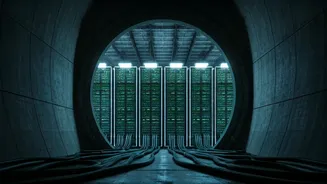
Halik's primary objective for the silo is to establish a cutting-edge data center to support the exponential growth of AI. Underground facilities like this offer a unique advantage due to their stable, cool temperatures, typically around 52 degrees Fahrenheit, which is ideal for preventing server overheating. This ambient coolness can significantly reduce the energy needed for cooling, as some data centers use over 30% of their electricity for this purpose. The silo's original power dome, which once supported its military functions, is slated to be repurposed. To ensure a constant and reliable power supply, Halik plans to integrate small nuclear reactors, eliminating the reliance on the external electrical grid and the logistical challenges of refueling diesel engines. This initiative has already attracted interest from various tech and AI companies, reflecting a growing trend toward securing data in robust, subterranean locations.
Creative Repurposing and Future Events
Beyond its primary function as an AI data center, Halik envisions other creative uses for the expansive silo complex. One notable plan is to transform a section into a vibrant nightclub, complete with a DJ booth, bar, consumption lounges, and entertainment inspired by Cirque du Soleil performances. This concept echoes a growing movement to repurpose decommissioned military sites for unconventional events. For instance, the Twistflower Nuclear Missile Silo in Roswell, New Mexico, has already hosted festivals that blend immersive art, music, and thoughtful exploration. Halik himself promotes such gatherings, describing them as experimental events that foster deep inquiry and powerful experiences. The silo also offers opportunities for unique venues, as seen with companies like Iron Mountain, which utilizes a former limestone mine for data storage, showcasing the diverse potential of these secure, underground spaces.