


Foundational Strength Unleashed
Many dismiss bodyweight training as insufficient for building raw strength, overlooking its profound benefits. Strength coach Brad Kolowich Jr. asserts
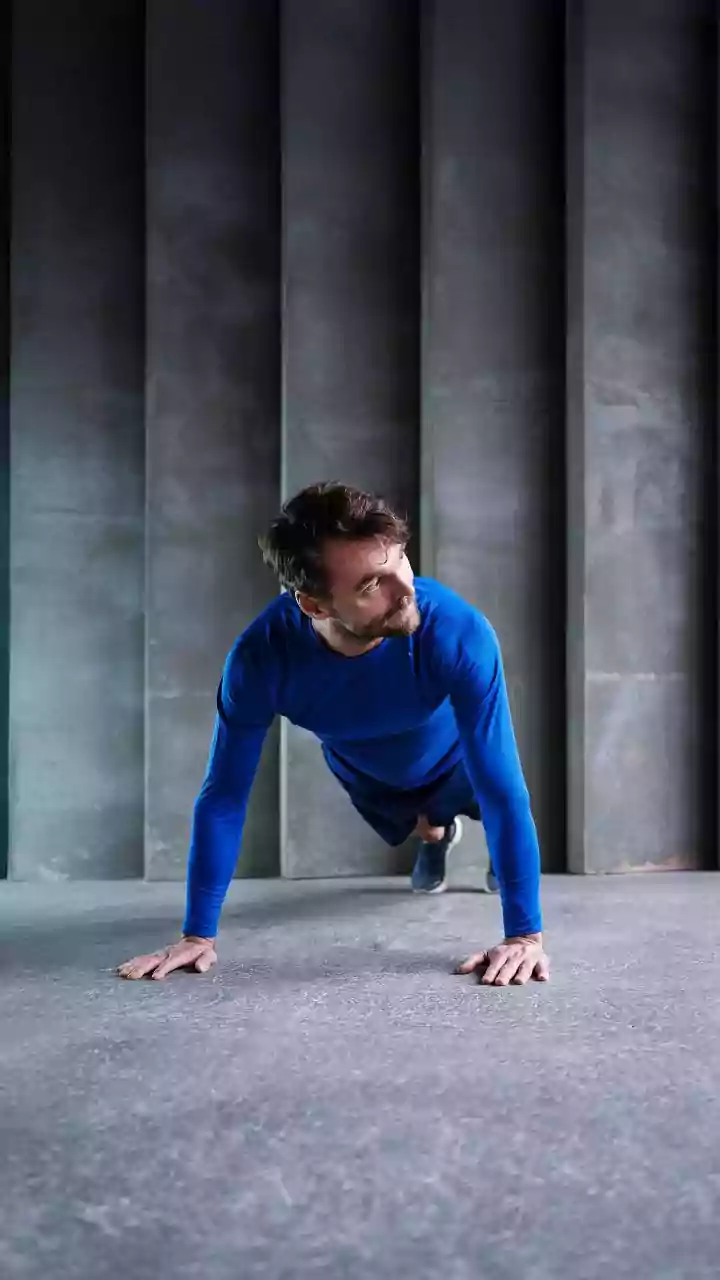
that true strength is rooted in the ability to control one's own body. Before adding external loads, mastering fundamental movements like perfect push-ups, squats, and lunges is crucial. This approach emphasizes movement quality, resilience, and consistent performance over merely chasing personal bests. Kolowich, who has trained notable figures, advocates for bodyweight training as the essential bedrock for all athletic endeavors, arguing that without this foundational control, an athlete's strength is incomplete and potentially detrimental. His philosophy stems from personal experience, including a knee surgery that highlighted the consequences of strength without control and balance.
Debunking Common Myths
Contrary to popular belief, advanced bodyweight exercises like single-arm push-ups and pistol squats demand immense skill and strength, dispelling the notion that they are solely for beginners. True mastery requires strict control, full range of motion, and dynamic variations. Furthermore, the idea that muscle growth is exclusive to weightlifting is a misconception. Kolowich explains that hypertrophy is achieved through resistance and tension, which can be effectively generated with bodyweight by manipulating leverage, time under tension, and training density. Common myths addressed include the necessity of a gym, the inevitability of plateaus (which are overcome by progressive programming, not the equipment itself), and the inability of bodyweight exercises to enhance athletic performance, while explosive movements like plyometrics are vital for power and agility.
Client Transformation Insights
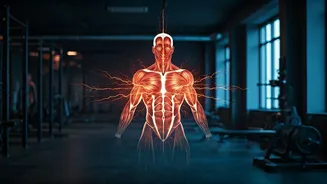
Kolowich's approach, even within well-equipped gyms, prioritizes bodyweight mastery. He explains to clients that adding external weight without mastering body control can mask underlying weaknesses. By focusing on bodyweight exercises, individuals develop a deeper mind-muscle connection, learning to engage the correct muscles and brace their core effectively for every repetition. This conscious control leads to improvements in traditional weightlifting, reduces joint pain, and promotes long-term training longevity. High-profile clients benefit significantly, building resilient and athletic physiques crucial for demanding schedules and performances without incurring excessive physical wear and tear, preparing them for elite competitions or demanding film roles.
Progressive Overload Techniques
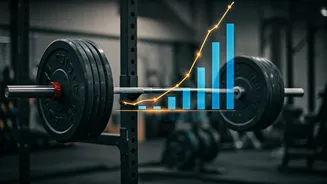
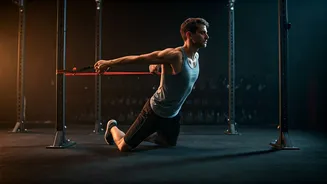
Applying progressive overload to bodyweight training involves manipulating variables beyond just adding weight. Kolowich emphasizes intentional progression through techniques like tempo manipulation, where slowing down repetitions, particularly the eccentric phase, increases time under tension and muscular endurance. Pausing at challenging points also builds strength. Adjusting body position relative to gravity, moving from incline to decline variations, alters the load distribution. Introducing instability through unilateral exercises and balance challenges enhances core and joint stabilizer strength, progressing from regular squats to Bulgarian split squats or push-ups to one-arm variations. Complexity is also increased through neurologically demanding movements like grasshopper or skater squats, and external tools like suspension trainers amplify the challenge without adding weight.