






Built for Harsh Seas
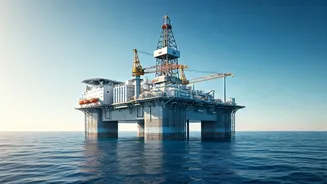
Offshore oil platforms possess inherent strengths making them prime candidates for a new life in space exploration. Their robust construction is engineered
to endure the rigors of extreme marine environments and support substantial mechanical payloads, qualities directly transferable to the demands of rocket recovery. Specifically, semi-submersible and jackup rigs present expansive, stable deck surfaces capable of withstanding immense static and dynamic forces. Furthermore, these platforms often come equipped with integrated systems for ballasting, mooring, and power generation, which can significantly streamline the adaptation process and reduce the upfront investment needed to establish a functioning rocket landing zone. The critical engineering challenge lies in certifying that these legacy structures can safely handle the concentrated, powerful compressive loads exerted by a descending rocket booster during its powered deceleration and touchdown, a scenario far more intense than their original operational design parameters.
Mobile Launchpads
The strategic advantage of a mobile sea-based recovery platform is its unparalleled ability to enhance orbital access. Unlike fixed terrestrial launch sites, which are geographically constrained and limit the range of achievable orbital inclinations, a repositionable marine platform offers remarkable flexibility. By moving to different ocean coordinates, such a facility could theoretically facilitate a broader spectrum of trajectory profiles, including crucial polar and sun-synchronous orbits that are currently difficult to achieve from established U.S. launch sites due to overflight restrictions. While SpaceX has already proven the efficacy of sea-based rocket landings with its purpose-built Autonomous Spaceport Drone Ships, the Air Force's concept focuses on adapting existing infrastructure. This approach promises potential cost efficiencies but also introduces engineering complexities tied to the original design limitations of the repurposed oil rigs.
Navigating Marine Logistics
Operating rocket recovery infrastructure at sea introduces a layer of logistical complexity absent from land-based operations. Essential tasks like handling propellants, including the secure transfer and storage of cryogenic fuels and oxidizers, demand specialized containment and venting systems capable of withstanding the corrosive effects of saltwater and the constant motion induced by wave action. Following recovery, boosters require thorough inspection, potential refurbishment, and secure transportation back to shore, all operations contingent upon favorable weather windows and sea state conditions. Corrosion remains an ever-present threat for any offshore structure, and the intense thermal and acoustic stresses generated by a landing rocket's engines represent a load profile fundamentally different from the drilling operations for which these platforms were originally conceived. Rigorous structural fatigue analyses would need to account for these repeated, high-impulse events, diverging significantly from the more static loading cycles typically analyzed for oil extraction. Additionally, operations conducted in international waters fall outside conventional FAA commercial launch licensing, necessitating the establishment of clear governmental authority for safety oversight, range control, and emergency response protocols.
Future of Reusability
This forward-thinking initiative by the Air Force is intrinsically linked to its overarching strategy to reduce the cost of delivering payloads to orbit and to broaden the infrastructure supporting national security space objectives. Reusable launch vehicles are the cornerstone of this strategy, driving down per-kilogram delivery costs. For those interested in the military's evolving approach to space logistics, understanding the ongoing reusable rocket programs within the U.S. Space Force provides essential context for the operational imperatives behind these innovative infrastructure decisions. The ultimate progression of the oil rig conversion concept, whether it evolves into a formal acquisition program or remains a subject of study, will hinge upon thorough structural assessments, detailed cost-benefit analyses, and effective inter-agency collaboration required for such a novel infrastructure transition.