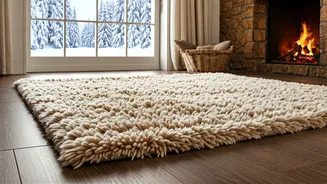








Insulation's Secret Weapon
Rugs and carpets serve a crucial purpose beyond mere decoration: they provide insulation. When placed on floors, especially over hard surfaces like wood
or tile, they create a thermal barrier. This barrier helps trap heat, preventing it from escaping into the colder air below. This is particularly beneficial during the winter months, when the ground is often colder. By retaining warmth, rugs and carpets allow a home to feel cosier without necessarily raising the thermostat. This simple yet effective strategy can lead to significant energy savings and create a more comfortable living environment. The right rug can make a room feel noticeably warmer, enhancing the overall comfort of the space during the colder seasons.
Material Matters Significantly
The type of material used in rugs and carpets directly affects their insulation capabilities. Wool is a well-regarded natural choice, known for its excellent heat-retaining properties and durability. Its fibers trap air, forming an effective barrier against the cold. Synthetic options, such as polyester and nylon, can also offer good insulation, often at a more affordable price point. These materials are also resistant to stains and wear, making them a practical choice for high-traffic areas. When selecting a rug or carpet, consider the climate and the specific needs of the room. Thicker, denser rugs generally provide better insulation than thinner ones, regardless of the material. Furthermore, the backing of the rug or carpet also plays a role. A good backing can further enhance insulation by preventing heat loss through the floor.
Placement for Optimal Warmth
Strategically placing rugs and carpets is key to maximizing their insulating benefits. Covering a large surface area of the floor is a good starting point. Consider the areas in your home that feel the coldest. These are usually the rooms that are exposed to drafts, such as those with large windows or doors. Placing rugs in these areas will make the biggest impact on warmth. In living rooms and bedrooms, where people spend a significant amount of time, a large area rug can make the space feel much more comfortable. Additionally, consider layering rugs for even greater insulation. Placing a smaller, thicker rug on top of a larger, thinner one can create an extra layer of warmth and visual interest. Be sure to consider the furniture placement. Position rugs so that furniture legs rest on them, further preventing heat loss through the floor.
Styling for Cosy Vibes
Rugs and carpets not only provide warmth but also contribute significantly to the overall aesthetic of a room. Choosing the right style and colour can enhance the cosy atmosphere. In winter, opt for warm tones and textures. Earthy colours like deep reds, oranges, and browns can create a sense of comfort. Consider rugs with thicker piles and plush textures, which feel warm and inviting underfoot. Layering different textures can also enhance the effect. Combining a wool rug with a faux fur throw or a velvet cushion can amplify the feeling of cosiness. When choosing a rug, be mindful of the overall design scheme of the room. Choose a rug that complements the existing furniture and decor to create a cohesive and inviting space. The right rug can turn any room into a warm winter haven.