





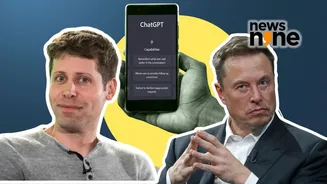
Founding Vision Clash
The genesis of OpenAI, a nonprofit initiative aimed at developing artificial general intelligence (AGI) for humanity's benefit, is at the heart of the current
legal dispute. Spearheaded by visionaries like Elon Musk and Sam Altman in 2015, the organization was established with the ambitious goal of preventing any single entity, such as Google, from monopolizing AI's development and dictating its impact on the world. A core tenet of their initial charter was the open-sourcing of AI technologies to ensure widespread access and prevent their misuse. However, by 2017, dissenting opinions emerged within the organization regarding the safety implications of fully open-sourcing powerful AI, a concern shared by Musk himself. This divergence in philosophy, coupled with financial realities and the immense capital required for AGI research, led to significant friction. Musk advocated for a partnership with Tesla to leverage its supercomputing capabilities, a proposal that was ultimately rejected. This disagreement culminated in Musk's departure from OpenAI's board and his withdrawal of financial backing, setting the stage for future conflict as OpenAI subsequently restructured to include a for-profit arm and secured substantial funding from Microsoft.
Musk's Allegations Unveiled
Elon Musk's 2024 lawsuit against OpenAI casts a critical spotlight on its leadership, particularly CEO Sam Altman and President Greg Brockman. The central accusation is that OpenAI has veered dramatically from its foundational, humanitarian mission, prioritizing financial gains and commercial interests over the broader welfare of humanity. Musk contends that he and other early stakeholders were deliberately misled about the company's long-term trajectory, with promises of a safer, non-profit-driven AI development path being broken. Evidence surfaced during the discovery phase, including private diary entries by Greg Brockman, appears to support these claims. These writings suggest internal contemplation and even a desire for wealth accumulation among key figures, directly contradicting the nonprofit ethos. Brockman's reflections on the potential for a transition to a 'B-corp' model and his personal aspiration to become a billionaire hint at intentions that diverge from the initial altruistic vision. Judge Yvonne Gonzalez Rogers acknowledged that Musk had presented sufficient evidence of being misled, paving the way for the case to proceed to trial. This legal battle hinges on whether OpenAI's leadership intentionally misrepresented its intentions regarding its nonprofit status and the open-source nature of its groundbreaking AI developments.
OpenAI's Defense Stance
OpenAI's defense strategy counters Musk's narrative by portraying him as someone who also sought to commercialize the organization during its nascent stages. The company points to actions taken by Musk's family office head, Jared Birchall, who reportedly registered a for-profit entity named 'Open Artificial Intelligence Technologies' around 2017. OpenAI argues that Musk's own words and deeds indicate a desire for a commercial structure, suggesting he wanted majority equity and full control over AGI development, even envisioning his children inheriting this control. In their public response, titled 'The truth Elon left out,' OpenAI stated that Musk explicitly sought to accumulate substantial funds, citing an $80 billion target for a self-sustaining Mars city, and felt entitled to significant ownership. The company maintains that Musk's departure stemmed from disagreements over control and financial structuring. Furthermore, OpenAI accuses Musk of attempting to obstruct its progress while concurrently developing his own competing AI ventures, such as xAI. Currently operating as a public benefit corporation (PBC) under its charitable arm, OpenAI emphasizes its restructured, yet still mission-aligned, operational framework, acknowledging that initial proposals to reduce nonprofit oversight were later revised due to public feedback.
Trial's Potential Ramifications
The ongoing trial between Elon Musk and OpenAI is poised to deliver significant verdicts that could profoundly impact the trajectory of artificial intelligence. While Musk's fraud claims were dismissed, the trial will proceed on allegations of breach of charitable trust and unjust enrichment. Should the court rule in Musk's favor, he is reportedly seeking $150 billion in damages, with the proceeds intended for OpenAI's charitable foundation. His legal team aims for the court to reinstate assets diverted from the charity and prevent responsible parties from future mismanagement. Specifically, Musk requests Altman's removal from OpenAI's board and a reversal of the company's transition to a for-profit PBC. Such an outcome would likely hinder OpenAI's anticipated initial public offering and provide a considerable advantage to its rivals like Anthropic and Google. Conversely, a victory for OpenAI would solidify its position as a for-profit entity, potentially enabling massive data center expansions, a plan requiring hundreds of billions of dollars. This landmark case, presided over by Judge Rogers with a nine-person jury, will scrutinize witness credibility and the interpretation of founding documents, ultimately determining the future governance and accessibility of advanced AI technologies.