




A Milestone Achieved
The Lucknow manufacturing facility has reached an incredible production mark of 10 lakh commercial vehicles. This significant achievement, celebrated recently,
underscores the plant's enduring operational success and its contribution to the Indian automotive landscape. This milestone also signifies three and a half decades of dedicated operations within Uttar Pradesh, a testament to a long-standing and fruitful presence in the state. The rollout of the 10th lakh vehicle was not just a number; it represented a culmination of extensive manufacturing expertise and a forward-looking approach to vehicle production. This event is a proud moment, reflecting the state's growing industrial capabilities and the talent pool it possesses, fostering an environment where large-scale manufacturing can thrive and excel.
State's Economic Vision
The Chief Minister of Uttar Pradesh lauded the plant's achievement, calling it a source of pride for the entire state and a validation of its industrial potential and skilled workforce. He reiterated the state's ambition to become a trillion-dollar economy, emphasizing the crucial role of industry and entrepreneurship in this transformative journey. Uttar Pradesh is actively cultivating a business-friendly atmosphere, offering a vast consumer base, a youthful and capable workforce, and excellent connectivity networks to support scalable enterprises. The success witnessed at this manufacturing hub is a clear demonstration of this supportive ecosystem, reinforcing the state's dedication to promoting responsible industrial expansion, generating employment opportunities, enhancing skill development, and advancing sustainable societal progress.
Pioneering Green Mobility
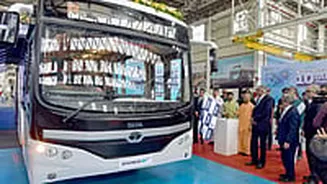
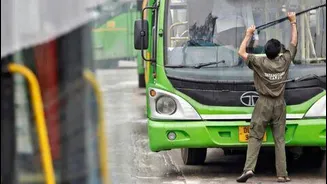
Notably, the landmark 10th lakh vehicle to roll off the production line was a cutting-edge, zero-emission electric bus. This choice powerfully symbolizes the shared dedication of both Uttar Pradesh and the manufacturing entity towards embracing and promoting sustainable transportation solutions. This aligns seamlessly with the state's ambitious target of achieving net-zero emissions by 2070 and the company's own commitment to reaching net-zero by 2045. This strategic focus on electric mobility highlights a forward-thinking approach, aiming to contribute significantly to environmental conservation and the development of cleaner transportation infrastructure for the future.
Enduring Partnership Strength
The Chairman of Tata Sons expressed that the production of the 10th lakh commercial vehicle from the Lucknow plant exemplifies the robust and enduring partnership established with Uttar Pradesh. This collaboration, spanning over three decades, has consistently demonstrated the synergistic potential of industry, government, and local communities working in unison. Together, they have successfully driven industrial excellence, created numerous employment opportunities, and built substantial capabilities at a large scale. As India's commercial vehicle sector undergoes a significant shift towards more sustainable, intelligent, and efficient mobility options, this milestone unequivocally reinforces the company's leadership role in shaping the future trajectory of transportation.
Plant's Operational Prowess
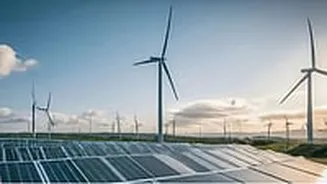
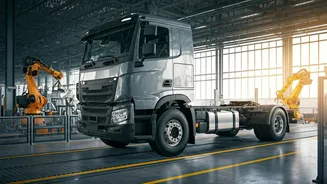
Established in 1992, the expansive Lucknow facility covers approximately 600 acres and boasts an impressive annual production capacity exceeding 100,000 vehicles. Beyond its manufacturing output, the plant significantly contributes to the local economy by supporting over 8,000 livelihoods. It actively cultivates industry-relevant skills through its flagship training initiatives. Furthermore, the facility operates as a water-positive site, exclusively powered by 100% renewable energy sources, showcasing a strong commitment to environmental stewardship and operational efficiency. The plant is equipped to produce a comprehensive array of cargo and passenger commercial vehicles across various powertrain options, including advanced zero-emission electric buses and trucks, as well as emerging fuel cell electric vehicles (FCEVs).