





Salt's Essential Role
Salt, a fundamental component of our diets, does more than just elevate food's taste. It plays a critical role in maintaining essential bodily functions,
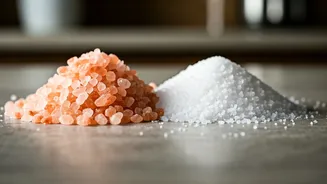
including regulating fluid balance and ensuring proper nerve signal transmission. While white, iodized salt has been a staple in Indian kitchens for generations, pink salt has steadily climbed in popularity. This shift has led to widespread confusion about which type of salt truly offers superior health benefits, prompting a closer look at their distinct compositions and impacts on our physiology.
Expert Views on Iodine
Nutrition expert Dajmeet offers a crucial perspective, suggesting a correlation between the widespread adoption of pink salt and an observed increase in thyroid-related issues. She emphasizes the vital role of iodine, a key component of white salt, in supporting healthy thyroid function and preventing iodine deficiency disorders like goitre. Without adequate iodine intake, which pink salt typically lacks in significant amounts, the thyroid gland may struggle to produce essential hormones, leading to various health complications. Dajmeet advocates for the continued use of white salt for cooking due to its iodine content, recommending pink salt primarily as a finishing salt for dishes like salads.
Mineral Content Explained
Both conventional table salt and pink salt are primarily composed of sodium chloride. However, pink salt boasts the presence of up to 84 additional minerals and trace elements, ranging from commonly recognized nutrients like potassium and calcium to more obscure ones such as strontium and molybdenum. Despite this impressive list, the quantities of these minerals are incredibly minute. To illustrate, one would need to consume approximately 1.7 kilograms of pink salt to meet the daily recommended intake for potassium. This means the purported health advantages derived from these trace minerals are, in practice, negligible and unlikely to contribute significantly to one's overall health.
Debunking Pink Salt Claims
Many assertions about the exceptional health benefits of pink salt lack robust scientific backing. Often, the claimed advantages are simply standard functions of sodium chloride itself, which can be obtained from any salt variety. The confusion surrounding pink salt stems from these widespread, often misleading, health claims circulating online. While pink salt is a natural alternative if one wishes to avoid the additives found in some processed table salts, it's essential to manage expectations regarding its health-boosting potential. It's crucial to remember that regular table salt is a significant source of iodine, and switching entirely to pink salt necessitates finding alternative dietary sources like seaweed, dairy products, and fish to maintain adequate iodine levels and prevent deficiencies. Furthermore, pink salt generally comes with a higher price tag than standard table salt, making it a less economical choice for everyday cooking.