







Pioneering Lunar Robotics
Lunar Outpost, a company based in Colorado, is at the forefront of lunar exploration and development, with a name that clearly states its ambitious goals.
They have already achieved significant milestones, including the creation of a sophisticated lunar rover named Eagle and the deployment of a compact robotic explorer, the MAPP mini-rover, on a commercial lunar mission. The inspiration from these creations has even extended to a popular Lego kit. This month marks a crucial step forward as the company secured essential funding to advance the development of a new, smaller rover designated Pegasus. Conceptual designs reveal Pegasus to be a more agile and streamlined vehicle compared to the larger, SUV-like Eagle. Its design draws parallels to the iconic "moon buggies" utilized by NASA during its past lunar missions. Lunar Outpost is working towards having the Pegasus rover ready for delivery by the close of 2027, with a projected launch to the Moon in 2028. This timeline strategically aligns with NASA's updated schedule for the Artemis 4 mission. Notably, Lunar Outpost already possesses a greater number of lunar rovers assigned to missions than all other commercial entities in the field combined, underscoring their leading position.
Building a Lunar Ecosystem
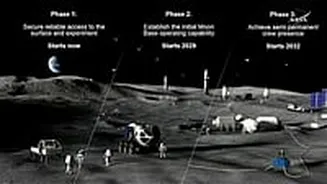
Beyond just rovers, Lunar Outpost harbors a grander vision: to establish a comprehensive infrastructure on the Moon, powered by an autonomous robotic workforce. Michael Moreno, the company's Vice President of Strategy, emphasized that the construction of a lunar base will not solely rely on astronauts. Instead, he highlighted that their core expertise lies in developing autonomous robotic systems that will undertake the heavy lifting. During an interview in April 2026 at the Space Foundation's annual Space Symposium, Moreno detailed Lunar Outpost's forward-thinking approach to autonomous technologies. These systems are designed to operate seamlessly alongside human astronauts, constructing the essential infrastructure required for a long-term human presence on the lunar surface. The company's rovers are engineered for diverse tasks, including autonomous construction of infrastructure, improving the lunar terrain, assisting in the creation of launch and landing pads, establishing energy storage solutions, and building habitats. Essentially, Lunar Outpost is committed to developing, maintaining, and operating the systems that will enable humanity's sustained presence on the Moon.
Missions and Future Prospects
While Lunar Outpost's initial robotic MAPP mini-rover, intended for the Intuitive Machines Athena lunar lander, did not fulfill its mission due to the lander's unfortunate tip-over upon landing in March 2025, the company remains undeterred. Lunar Outpost has four additional MAPP missions already in development. A significant upcoming mission is slated for NASA's Artemis 4, which is anticipated to mark humanity's return to the lunar surface, assuming all plans proceed as scheduled. Moreno confirmed that a MAPP rover will be paired with an astronaut on Artemis 4, a historic first where a human and a rover will collaborate directly. This collaboration will involve the MAPP rover working alongside Artemis astronauts, analyzing the characteristics of the lunar regolith. The objective is to study the regolith's properties, which will be instrumental in achieving both scientific goals and paving the way for future exploration endeavors. The competition for designing and developing the next generation of lunar vehicles is substantial, with NASA's new lunar terrain vehicle contracts extending through 2039, highlighting the significant economic opportunities in this sector. However, Lunar Outpost's drive to build lunar infrastructure transcends mere economic gain. The company is fueled by a profound aspiration: to facilitate humanity's expansion and settlement across other planets, viewing the Moon as a critical stepping stone for deeper space exploration and the realization of a multi-planetary human species.