





Samosa's Global Journey
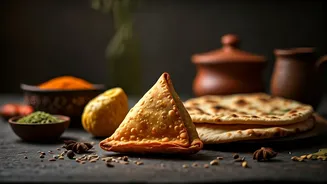
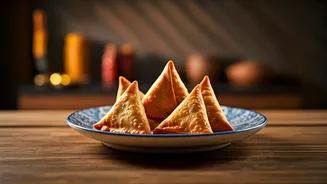
The much-loved samosa, a crisp pastry often filled with spiced potatoes and peas, boasts a lineage that stretches far beyond the Indian subcontinent. Its
precursors can be traced to the Middle East and Central Asia, where variations known as 'sambusak' were enjoyed centuries ago. These savory parcels made their way to India through the routes of ancient traders and nomadic travelers. Upon arrival, the dish was embraced and adapted, gradually evolving into the distinctively spiced and shaped snack that has become synonymous with Indian street food and household kitchens today. This transformation highlights India's remarkable ability to absorb and reimagine culinary influences from across the globe, making the samosa a perfect example of cultural culinary fusion.
Chicken Tikka Masala Mystery
While Chicken Tikka Masala is a global sensation and a frequent order in Indian restaurants worldwide, its origins are not rooted in traditional Indian cooking. The prevailing belief among culinary historians and chefs is that this creamy, spiced chicken dish was actually conceived in the United Kingdom. It's widely credited to South Asian chefs working in Britain, who created it to cater to the palates of British diners. By adjusting the spice levels and introducing a rich, tomato-based sauce, they crafted a dish that offered familiar Indian flavors in a format more appealing to Western tastes. Thus, Chicken Tikka Masala stands as a prime example of a British-Indian fusion creation, rather than an authentic Indian classic.
Chilli Chicken's Indo-Chinese Roots
Chilli Chicken, a vibrant and spicy stir-fry that holds a special place in the realm of Indo-Chinese cuisine, was not originally brought from China. Instead, its genesis lies within the Indian Chinese community, particularly in the bustling city of Kolkata. This culinary innovation emerged from the ingenious fusion of traditional Chinese cooking methodologies with the bold and aromatic spices characteristic of Indian flavors. The community developed this dish as a unique culinary expression, blending their heritage with their adopted home's palate. The result is a testament to the vibrant multicultural food landscape of India, where distinct culinary traditions intermingle to create entirely new and beloved dishes.
The Persian Naan Connection
Naan, the soft, leavened flatbread that has become an indispensable accompaniment to countless Indian meals, traces its ancestry to Persia, the region now known as Iran. Introduced to the Indian subcontinent during the influential Mughal era, this bread quickly integrated into the local culinary traditions. Its unique texture and flavor profile, especially when baked in a tandoor (clay oven), made it immensely popular, particularly in the northern parts of India. Over centuries, naan transitioned from a foreign import to a cornerstone of North Indian cuisine, a beloved staple that showcases the enduring impact of historical cultural exchanges on the food we enjoy today.
Rajma: An American Bean
The humble rajma, or kidney beans, a staple in many North Indian households and a key ingredient in the popular dish 'Rajma Chawal,' has a fascinating transatlantic origin. These protein-rich legumes are not native to India; they originally hail from Central and South America. They were introduced to the Indian subcontinent by European traders who brought them across the seas. Through their introduction, rajma found a fertile ground in Indian cuisine. Indian cooks adapted them, incorporating them into their culinary repertoire and transforming them into a cherished part of regional diets, particularly in North India, where they are now deeply ingrained in the food culture.
Biryani's Diverse Heritage
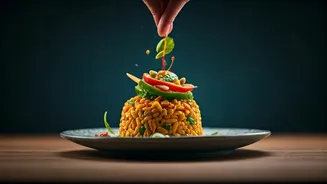
While Biryani is often lauded as a quintessential Indian dish, its origins are complex and debated, with strong influences pointing towards Central Asia and Persia. Many culinary historians suggest that the dish, in its various forms, was brought to India by the Mughals, who were known for their rich and elaborate cuisine. The term 'Biryani' itself is believed to be derived from the Persian word 'biryan,' meaning to fry or roast, hinting at its cooking methods and origins. Over centuries, as it traveled and settled across different regions of India, biryani absorbed local flavors, spices, and ingredients, leading to the myriad of regional variations we see and savor today, each telling a unique story of adaptation and cultural fusion.