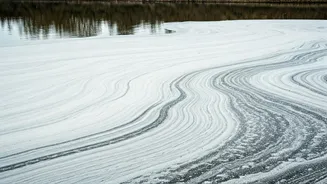









Froth's Unwanted Return
The Yamuna River in Delhi has once again been covered in a thick layer of toxic froth, causing concern among the city's residents. This visual reminder
of pollution highlights the challenges faced by Delhi in managing its waterways. This reappearance is a sign of an ongoing struggle with pollution, a problem that has been persistently affecting the river. The layers of toxic foam are visible proof of water contamination, often creating unpleasant sights and concerns among those who live nearby. The presence of the froth is not only visually alarming but also poses a potential risk to both human health and the environment, demanding immediate attention and active intervention to prevent further damage. The visible froth serves as a constant reminder of the urgent need for a more sustainable plan to manage urban water and waste and mitigate the long-term impact on the ecosystem.
Sources of the Problem
The formation of this toxic froth is caused by a mix of factors related to pollution. One major contributor is the release of untreated or inadequately treated sewage from both domestic and industrial sources that find their way into the river. These effluents are rich in pollutants, including organic matter, detergents, and industrial chemicals. The buildup of these contaminants leads to the formation of the froth. Furthermore, industrial waste, including the discharge of chemicals and other pollutants, contributes to the deterioration of water quality. Agricultural runoff, containing fertilizers and pesticides, also plays a role in the contamination. The combined effect of these factors leads to an ecological imbalance, affecting water quality and negatively impacting the river's ecosystem. Addressing this needs a multi-pronged strategy that includes enforcing pollution control regulations, improving waste management infrastructure, and promoting sustainable practices.
Consequences for Delhi
The toxic froth on the Yamuna has many impacts on Delhi. It impacts the health of citizens by contaminating the water used for drinking and other purposes. The river is a vital resource for communities. When the water quality is poor, residents' health is directly affected. The river's ecosystem is also impacted. The toxic froth harms aquatic life, which may disrupt the balance of the ecosystem and influence the health of both the river and the surrounding environment. The visual pollution is also significant. The presence of this unsightly foam impacts the aesthetic beauty of the river and nearby areas. It can also cause problems for recreational activities. The government and other organizations are now focusing on controlling the environmental damage. Addressing this issue requires collaboration among different groups, including government agencies, environmental groups, and the public. It is essential to implement strict pollution control rules, improve sewage treatment systems, and promote awareness. All these steps are needed to tackle the pollution of the Yamuna.
Solutions and Outlook
Combating the persistent problem of toxic froth on the Yamuna needs a broad strategy. There needs to be a rigorous approach for waste management to improve the quality of water. Upgrading the sewage treatment infrastructure to effectively handle waste and prevent the release of pollutants into the river is very important. Stricter regulation and compliance are needed to control pollution from industrial units, ensuring that effluents are properly treated before being discharged. There must be regular and detailed monitoring of water quality to identify contamination. Implementing public awareness campaigns is also crucial. These campaigns should educate people about the importance of reducing pollution and the harmful effects of dumping waste into the river. Success in managing the Yamuna's pollution needs a dedicated, cooperative effort. This will require the sustained involvement of government agencies, local communities, and environmental organizations.