

Unexpected Cosmic Views
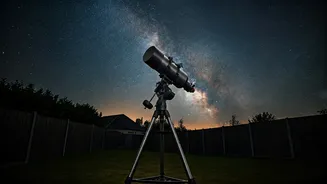
Initially, the prospect of astrophotography from a heavily light-polluted suburban backyard in the U.K. seemed daunting. Living in Nottingham, where streetlights
obscure fainter stars, and with a limited sky view due to surrounding houses and trees, the dream of capturing deep-sky objects felt out of reach. However, upon setting up the Vaonis Vespera Pro, expectations were quickly surpassed. Witnessing the delicate structures of the Veil Nebula materialize on a phone screen, tinged with vibrant reds, was a revelation. The telescope effortlessly began collecting light, making an object 2,100 light-years away feel remarkably close. This initial encounter set the stage for a surprising journey into capturing the universe from an unexpected vantage point.
Nebula Wonders Revealed
The Vespera Pro excels at capturing the intricate beauty of nebulas, transforming faint celestial clouds into stunning displays of color and detail. Even with just an hour or two of exposure, remarkable images emerged, automatically stacked by the telescope. For targets like the North America Nebula, a dual-band filter was employed to accentuate hydrogen emissions, enhancing contrast against the pervasive suburban glow. The Veil Nebula, a vast expanse 110 light-years across, was a primary focus, with specific sections like NGC 6960 (Witch's Broom) and NGC 6992 imaged with exposures of 53 and 63 minutes respectively. Similarly, the North America Nebula, approximately 1,800 light-years away, was captured over multiple nights using 4.25 hours of exposure time, showcasing its impressive size relative to the full moon.
Galactic Encounters Up Close
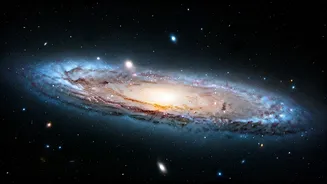
The capabilities of the Vespera Pro extend to capturing distant galaxies, offering surprising detail even within limited observation windows. The Andromeda Galaxy (M31), our nearest major galactic neighbor at 2.5 million light-years, was captured in just 20 minutes, revealing its dusty spiral structure. This was particularly impressive given its apparent size in the sky, which can span up to six times the width of the full moon. Another target, the Triangulum Galaxy (M33), a significant star-forming hub located roughly 3 million light-years away, was imaged over several nights, accumulating a total exposure time of about 3 hours. These galactic observations highlight the telescope's power in overcoming light pollution to reveal cosmic structures.
Star Clusters Shine Bright
For quicker imaging sessions, star clusters proved to be excellent and rewarding targets with the Vespera Pro. Even brief exposure times were sufficient to resolve impressive details. The Hercules Cluster (M13), approximately 25,000 light-years away, was captured in a 12-minute exposure, showcasing its dense population of about 100,000 stars. The Double Cluster in Perseus, a pair of open clusters (NGC 869 and NGC 884) around 7,500 light-years distant, was also imaged with a modest 20-minute exposure. Finally, the Pleiades (M45), a bright open cluster only 445 light-years away and often visible to the naked eye, was imaged over a couple of nights with a total exposure of 2.7 hours, demonstrating the telescope's versatility for various celestial objects.
Lunar and Solar Views
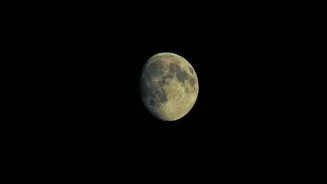
Beyond deep-sky objects, the Vespera Pro offers exceptional views of our closest celestial neighbors, the Moon and the Sun. The Moon, observed through its various phases, revealed incredible detail in its craters and lunar terrain, far surpassing naked-eye visibility. The dedicated Moon Mode in the app provides a live, refreshing view, offering a near real-time experience. Similarly, the Sun became a favorite target with its dedicated solar filter and viewing mode. This mode also provides a live, constantly updating feed, allowing for easy observation of the Sun's dynamic surface. An image captured on August 29, 2025, clearly showed prominent sunspot regions, demonstrating the telescope's dual capabilities for both night and day astronomical observation.
Overcoming Light Pollution
The author's backyard sky is classified as Bortle 7-8, indicating significant light pollution that typically limits naked-eye viewing to a few hundred stars and makes capturing faint objects extremely challenging. Heavy light pollution significantly degrades contrast and washes out subtle details, presenting a major hurdle for astrophotography. The surprising success with the Vaonis Vespera Pro demonstrated that these limitations are not insurmountable. The telescope's ability to gather light over time and its smart processing capabilities effectively countered the detrimental effects of light pollution. This experience fundamentally shifted the perception that deep-sky astrophotography was impossible from such a location, revealing the universe's splendor even from a constrained suburban environment.