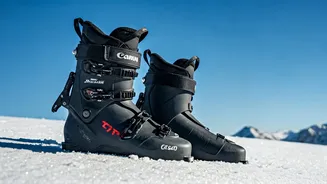








What to Consider
Selecting the right backcountry ski boots is essential for a safe and enjoyable experience. Several factors should be considered, including the type of
skiing, the skier's ability, and the specific terrain. The fit is the most crucial aspect. Boots must fit snugly but comfortably to avoid pressure points, blisters, and foot fatigue. Consider the boot's flex, typically ranging from soft to stiff, affecting how responsive the boot is, where softer flex is ideal for touring. The boot's weight is important, as lighter boots are better for long uphill climbs, whereas downhill performance hinges on stiffness. Features like walk modes, range of motion, and sole compatibility with bindings are important considerations. Reviewing the boots will ensure the right choice is made to accommodate the needs of each skier and desired performance on the mountain.
Fit & Comfort
Proper fit is the most critical element when selecting backcountry ski boots, which impacts both comfort and performance. Boots that don't fit properly can lead to a variety of issues, including blisters, pressure points, and compromised control. To get a good fit, measure your foot length and width carefully, taking into consideration the sock thickness you typically wear when skiing. Some boots offer custom molding capabilities to fine-tune the fit. It is vital to try on different models and sizes, and to walk around in them, to get a sense of how they feel. Pay attention to how the boot wraps around your ankle and the amount of room available in the toe box. Any pressure points or excessive movement should be addressed. Remember, the right fit enhances both the comfort and the performance of the backcountry experience, allowing skiers to enjoy the sport to the fullest.
Flex & Performance
The flex of a backcountry ski boot directly influences performance. Boot flex refers to the stiffness of the boot's shell and how it responds to the skier's movements. Softer flex boots are generally favored for touring because they provide greater flexibility, facilitating longer strides and efficient ascents. A softer flex allows for more comfortable walking and climbing. Stiffer flex boots are better suited for downhill performance as they deliver better power transfer to the skis, leading to enhanced control and responsiveness, especially at high speeds and challenging terrain. The choice of flex depends on the skier's ability, the type of terrain, and personal preferences. Beginners often find that a softer flex is easier to manage, whereas advanced skiers, who push the limits, often prefer stiffer boots. Selecting the correct flex ensures better control and a more enjoyable skiing experience.
Weight & Mobility
Weight and mobility are two critical aspects of backcountry ski boots, particularly for those who frequently venture into the backcountry. Lighter boots are preferable for uphill travel, reducing fatigue and allowing for more efficient ascents. Every gram counts when you're skinning uphill for hours. Boots with a greater range of motion improve the ease of walking, which makes navigating varied terrain less challenging. Features like walk modes, which allow the cuff of the boot to move more freely, enhance the comfort. Choosing the right balance between weight, mobility, and downhill performance depends on the type of backcountry skiing you will be doing. If your excursions involve a lot of climbing, focus on lighter boots. If downhill performance is more of a priority, you might choose a slightly heavier boot with a stiffer flex.
Compatibility with Bindings
Backcountry ski boots are designed to work with various binding systems, so it's essential to ensure compatibility. The two main types of backcountry ski bindings are tech bindings and alpine touring bindings. Tech bindings use pins that fit into holes in the boot toe, making them very efficient for climbing. These bindings are compatible with tech-compatible boots. Alpine touring bindings often use a frame system that attaches to the boot at the toe and heel. These bindings are commonly used with boots that have alpine soles. Before purchasing boots, check to ensure they are compatible with your bindings. If you are upgrading your bindings, check that your new boots are also compatible. Doing this prevents safety concerns. Confirming this compatibility enhances your safety and overall skiing enjoyment, making every backcountry adventure smoother and more fun.