


Countdown Commences
The critical two-day countdown for the Artemis 2 mission, destined to circle the moon, officially began on March 30. NASA officials announced that no significant
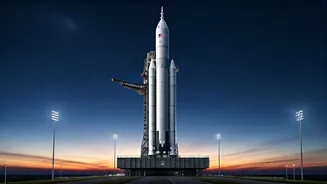
obstacles have emerged, paving the way for the scheduled launch. The countdown clock was initiated at 4:44 p.m. Eastern Time. The launch window is slated to open on April 1, spanning two hours and commencing at 6:24 p.m. Eastern Time from Launch Complex 39B. Prior to this, mission managers convened and gave the go-ahead to start the 49-hour and 40-minute countdown. This decision followed a thorough review confirming the optimal condition of the Space Launch System rocket, the Orion spacecraft, and all associated ground systems. According to Charlie Blackwell-Thompson, NASA's Artemis launch director, all indicators point to an exceptionally positive status for the mission, a sentiment she shared during a briefing shortly after the countdown's commencement.
Smooth Sailing Operations
Since rolling back to the launch pad on March 20 for essential repairs to a helium line and other necessary maintenance within the Vehicle Assembly Building, operations have proceeded remarkably smoothly. Blackwell-Thompson highlighted that the activities at the launch pad have been exceptionally efficient, with the team consistently meeting or even exceeding schedule targets. A planned spare 'weather day' was not required, allowing many personnel to take a well-deserved day off on March 29. The minor issues that did arise were readily addressed, such as repairing one of the three redundant pilot lights on a flare stack used for safely burning off excess hydrogen, and replacing malfunctioning monitors within a spare console located in the launch control center. Blackwell-Thompson characterized these as 'welcomed issues,' indicating a high level of confidence in the overall readiness for the upcoming days.
Weather Watch
While most aspects are under NASA's control, the weather remains an unpredictable factor. The Space Force's 45th Weather Squadron's forecast projects an 80% probability of favorable weather conditions for the April 1 launch attempt. The primary weather concern identified is the presence of cumulus clouds. However, Blackwell-Thompson expressed optimism, citing the two-hour launch window as a significant advantage. This extended period provides flexibility, allowing for adjustments should initial weather conditions prove unfavorable. With an 80% chance of acceptable weather within this two-hour window, she feels confident about the mission's prospects. The initial stages of the countdown will focus on powering up the SLS and Orion, along with comprehensive system checks.
Fueling Preparations
A pivotal milestone approaching approximately 10 hours before liftoff is the commencement of fueling for the Space Launch System (SLS) rocket. John Honeycutt, chair of the Artemis 2 mission management team, acknowledged potential public concern regarding the fueling process, referencing past tests where leaks were observed. However, he conveyed strong confidence due to the installation of new liquid hydrogen seals. The efficacy of these replacements was rigorously verified during a second wet dress rehearsal conducted in February. Engineers are diligently investigating the root cause of the earlier leakage issues, with the prevailing theory pointing to Teflon in the seals experiencing deformation under prolonged load. Given the short duration since the installation of the new seals, they anticipate this problem will not manifest significantly.