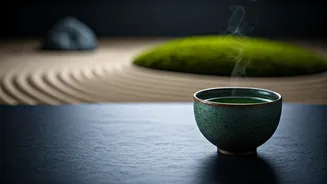








Shikata Ga Nai: Embrace What Is
Many overthinking cycles stem from an inability to accept past events. We endlessly replay missed chances or regrettable conversations, wishing we could
alter the unchangeable. The Japanese concept of 'shikata ga nai,' roughly translating to 'it cannot be helped,' encourages a profound acceptance of circumstances beyond our control. This isn't about apathy but a mature recognition that some situations are simply outside our influence. By ceasing to battle against what is already done, we reclaim immense mental energy, which can be incredibly soothing for a mind caught in repetitive loops. This philosophy liberates us from the exhausting pursuit of controlling the uncontrollable, fostering a more peaceful state of being.
Wabi-Sabi: Beauty in Imperfection
The relentless pressure for flawlessness often fuels overthinking, making us scrutinize every word and action. Wabi-sabi, a Japanese aesthetic philosophy, offers a powerful antidote by celebrating imperfection, impermanence, and the beauty of the incomplete. Think of a beloved, slightly chipped teacup or a well-worn wooden bench; their character lies in their flaws. When we apply this to life, awkward conversations, changed plans, or minor errors are no longer seen as failures but as integral textures of our human experience. This perspective gently loosens the grip of perfectionism, allowing us to be more forgiving of ourselves and others, thereby reducing the anxious internal monologue.
Ichigo Ichie: Cherish the Moment
Overthinking often pulls us away from the present, anchoring us in past regrets or future anxieties. The principle of 'ichigo ichie,' originating from the Japanese tea ceremony and meaning 'one time, one meeting,' reminds us that each moment is unique and will never recur identically. This profound realization encourages a shift from mental rehearsal to genuine experience. When we truly grasp that this very conversation, this particular cup of tea, this exact moment is singular, our focus naturally turns to appreciating it. A mind fully engaged in the present has significantly less capacity for the incessant internal chatter that defines overthinking.
Ma: The Power of Space
In our hyper-connected world, constant stimulation from devices and information leaves little room for mental quiet. The Japanese concept of 'ma' highlights the significance of emptiness and pause—the space between musical notes, the silence between words, the unadorned areas in a room. Just as these voids give form and harmony to music and design, intentional pauses offer vital respite for the mind. Without these moments of stillness, thoughts can accumulate endlessly, leading to an overthinking spiral. By consciously creating pockets of quiet—a silent walk, deep breaths, or a decluttered environment—we provide our minds the essential space they need to reset and find equilibrium.
Kaizen: Embrace Gradual Growth
The desire for immediate clarity and perfect outcomes can trap us in overthinking, as we analyze every possibility when certainty is elusive. 'Kaizen,' the philosophy of continuous improvement, offers a more patient and sustainable approach. Instead of demanding instant solutions, kaizen advocates for small, consistent steps forward. This focus on incremental progress helps the mind adapt to change gradually, organizing thoughts and actions in a manageable way. By shifting from the pressure of achieving perfection overnight to the steady practice of making small improvements, we can alleviate the anxiety associated with complex problems and foster a sense of steady advancement.
Gaman: Cultivate Inner Resilience
Discomfort, uncertainty, and emotional pain can be significant drivers of overthinking as the mind seeks to escape these unpleasant feelings. 'Gaman' represents the Japanese ideal of enduring difficult situations with quiet strength, dignity, and emotional composure. It doesn't advocate for suppressing emotions but rather for developing a resilient inner core. This philosophy encourages us to remain steady, acknowledging that not every uneasy feeling requires an immediate fix. By learning to sit with discomfort without being overwhelmed, we prevent our minds from spiraling into endless analysis, allowing difficult emotions to pass naturally with time and space.