

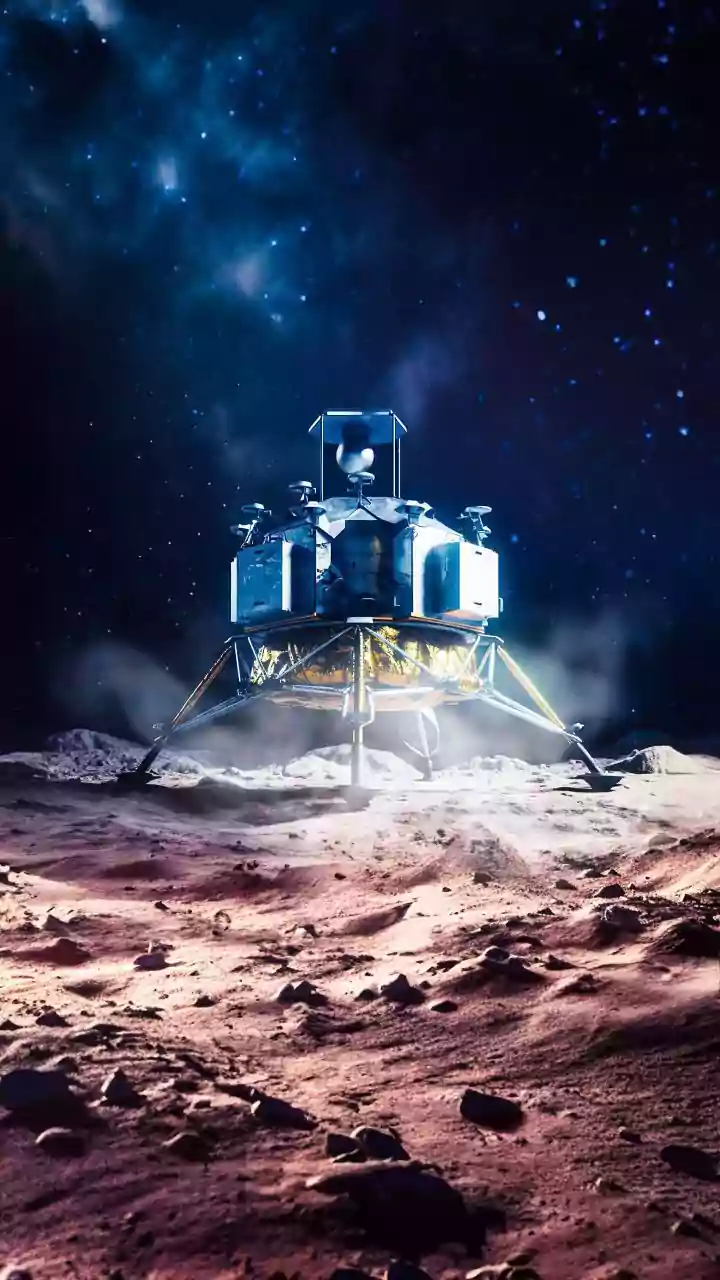





New Satellite Designs
A significant evolution is underway in satellite manufacturing, spearheaded by Apex, a Los Angeles-based company. They are now focusing on constructing
substantially larger and more robust spacecraft, indicating a growing industry trend towards energy-intensive applications. These ambitious projects include the development of advanced missile defense systems and the establishment of orbital computing capabilities. Apex has officially announced the creation of two distinct variants of their Comet satellite bus: the Comet Mini and the Comet XL. According to Ian Cinnamon, co-founder and chief executive, these new models are specifically engineered to accommodate "the most demanding next-generation payloads that require higher power and more mass." This expansion marks a critical step in their roadmap, with a target readiness timeline set for 2028. The company's strategic vision prioritizes enhancing the platform's capacity to support increasingly complex technological requirements, moving beyond the capabilities of previous satellite generations.
Meeting Demanding Payloads
The recently unveiled Comet satellite platform by Apex arrives in two distinct configurations to cater to a range of launch vehicle capabilities and mission needs. The Comet Mini is meticulously designed for integration with five-meter fairings, such as those found on a Falcon 9 rocket. In contrast, the larger Comet XL is being developed with super-heavy lift vehicles like Starship in mind. Both variants benefit from Apex's established work on their Aries and Nova platforms, enabling them to leverage a vertically integrated supply chain. This integration is key to significantly reducing the cost associated with delivering substantial power and mass into orbit. Consequently, Apex is well-positioned to satisfy the escalating market demand for both dedicated orbital data centers and high-priority government missions that necessitate advanced satellite capabilities. This dual-variant approach underscores Apex's commitment to providing scalable and adaptable solutions for the evolving satellite industry.
Orbital Computing & Defense
Across the broader aerospace industry, a significant push is underway to explore and implement orbital data centers. These innovative systems aim to process data directly in space, rather than relying solely on ground-based infrastructure. This shift necessitates satellites equipped with substantially more onboard power to continuously operate complex processors, effectively manage generated heat, and efficiently transmit vast quantities of data back to Earth. Simultaneously, the Pentagon's ambitious Golden Dome missile defense architecture is fueling a surge in interest for satellites capable of hosting interceptors. Such spacecraft must be engineered to support continuous sensing operations, real-time tracking of targets, and rapid command-and-control functionalities, all while managing and deploying interceptor payloads. Both of these cutting-edge applications are driving a fundamental evolution in satellite design, pushing for greater power generation and increased mass capacity—areas where traditional small satellite platforms have historically faced limitations.
Scaling Up Capabilities
Apex's current satellite offerings, comprising the Aries, Nova, and the initial Comet model, were previously designed to accommodate payloads ranging from approximately 100 to 500 kilograms. The introduction of the Comet Mini represents a significant leap, engineered for considerable flexibility in launch configurations. In a stacked arrangement, it is projected that up to 16 satellites, each carrying payloads of 450 kilograms, could be launched via a Falcon 9. Alternatively, eight satellites, each capable of carrying 1,000 kilograms, could be deployed. Furthermore, custom configurations have the potential to support payloads weighing as much as 3,000 kilograms, according to company statements. These advanced spacecraft are slated to generate around 20 kilowatts of power, a fourfold increase compared to the output of the current Comet platform. Looking ahead, the Comet XL variant promises even greater capacity, tailored for deployment on super-heavy lift vehicles like Starship, with an anticipated peak power generation of up to 100 kilowatts. Apex has indicated that more detailed specifications for the Comet XL configuration will be released in the near future.