





Western Weaves & Dyed Dreams
Western India excels in diverse dyeing and weaving techniques. Rajasthan's Bandhani, characterized by its vibrant, fluid tie-dye patterns, evokes the spirit
of the desert. In contrast, Gujarat presents the Patola, a complex double-ikat weave demanding months of meticulous craftsmanship, showcasing mathematical precision. Maharashtra's Paithani silk sarees are renowned for their luxurious feel and distinctive peacock motifs on the pallu. Goa contributes the Kunbi saree, a simple, breathable cotton garment with red checks, celebrating coastal tribal traditions. Moving inland, Madhya Pradesh offers the incredibly light and airy Chanderi fabric, a perfect choice for warmer climes. Nearby, Chhattisgarh's Kosa Silk provides a unique, slightly coarse texture adorned with traditional tribal art, adding a different dimension to the region's textile offerings.
Eastern Narratives & Textural Tales
The eastern regions of India are celebrated for their storytelling through textiles and their appreciation for natural textures. West Bengal's Baluchari sarees are veritable storybooks, with their pallus intricately woven with scenes from ancient epics like the Ramayana and Mahabharata. Bihar's Bhagalpuri Tussar, known for its eco-friendly production and rustic finish, offers a versatile drape suitable for both professional and social settings. Jharkhand's Tribal Tussar sarees feature designs deeply inspired by local tribal art, while Odisha's Sambalpuri Ikat is admired for its distinctive tie-dye technique, creating hazy, mesmerizing patterns that are deeply connected to natural motifs. These sarees are not just garments but wearable art that carry profound cultural narratives.
Northeastern Intricacies & Heritage
Northeast India is a treasure chest of sustainable and intricate textile artistry. Assam is famed for its golden Muga Silk, a legendary fabric that gains luster with each wash, becoming more brilliant over time. Meghalaya's Eri Silk, often called 'peace silk' due to its ethical production, offers a beautiful matte finish and excellent thermal regulation. Arunachal Pradesh's Apatani weaves and Sikkim's Lepcha sarees bring minimalist, earthy tribal stripes, seamlessly integrating into modern fashion. Nagaland's Naga Motif drapes showcase breathtaking geometric clan patterns, reflecting distinct community identities. Mizoram's Puan-inspired sarees feature tight weaves and bold stripes, while Tripura's Risa-inspired fabrics display unique tribal elements. Manipur's Moirang Phee cotton sarees stand out with their delicate, temple-like border motifs, adding a touch of architectural grace.
Northern Elegance & Mountain Crafts
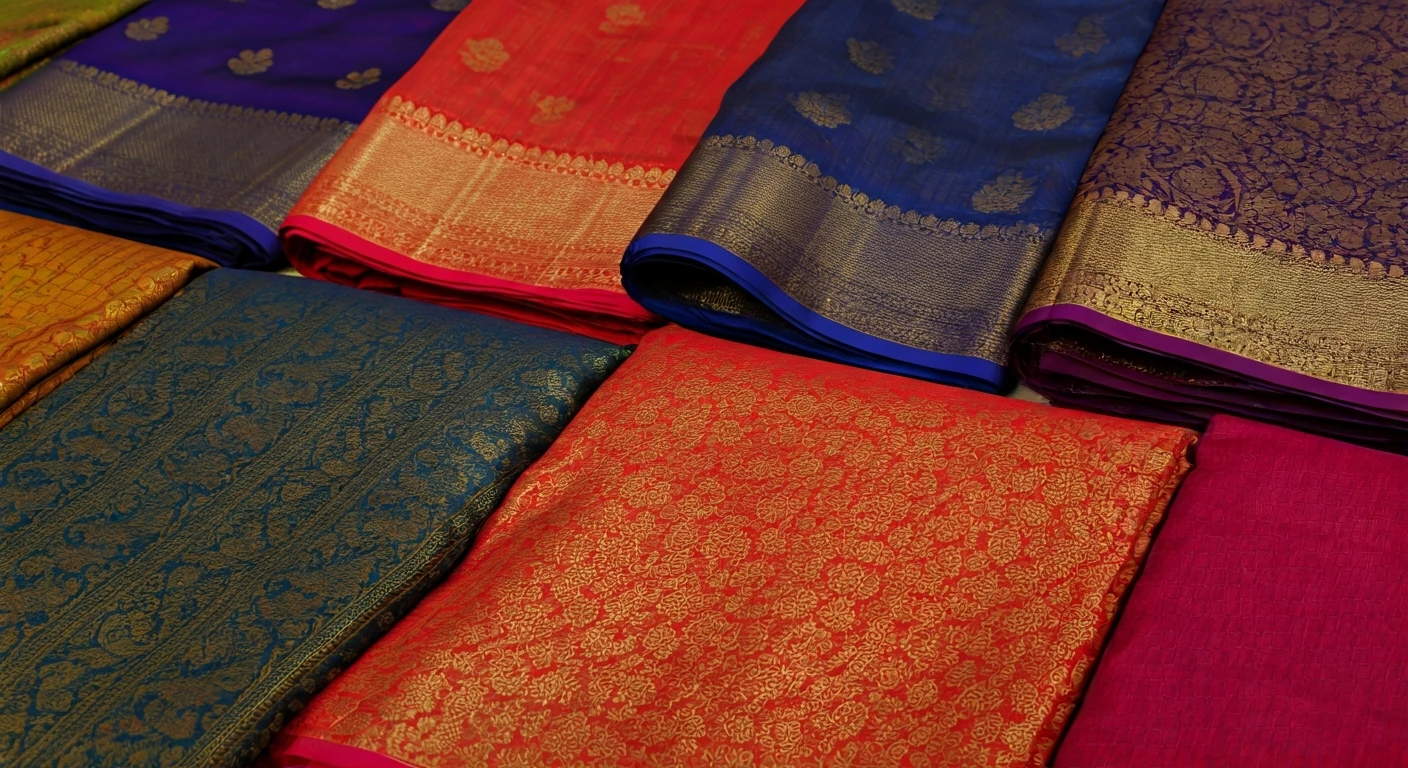
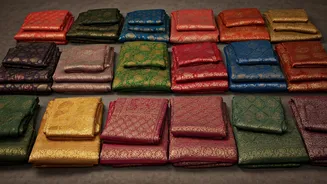
Textiles from Northern India artfully blend regal heritage with the practicalities dictated by mountainous terrains. Uttar Pradesh is home to the illustrious Banarasi silk, richly adorned with intricate gold and silver floral brocades that exude opulence and command attention. In stark contrast, Punjab's Phulkari sarees burst with color and joy, featuring vibrant, densely embroidered floral patterns that are a testament to celebratory artistry. Haryana offers the Resham Dhuria, a comfortable yet festive weave that combines silk embroidery on soft cotton. Further north, Himachal Pradesh's Kullu Patti sarees present striking geometric borders, often in vivid colors, set against wool or cotton bases, reminiscent of shawl designs. Uttarakhand's Panchachuli weaves provide a more subtle elegance, crafted with fine detailing by women in the Himalayan region, embodying understated beauty.
Southern Architectural Drapes
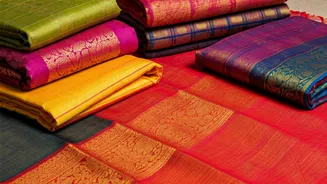
The sarees of South India are often described as architectural marvels, showcasing distinct weaving styles and luxurious materials. Tamil Nadu's Kanjeevaram remains a pinnacle of Indian textiles, meticulously woven from pure mulberry silk and characterized by its rich zari borders inspired by temple architecture. Kerala offers the Kasavu, a symbol of soft elegance, typically a crisp white cotton saree edged with radiant gold. Karnataka's Ilkal sarees are instantly identifiable by their unique red 'tope teni' pallu, a striking contrast to the main body. Andhra Pradesh's Uppada Jamdani is a delicate marvel of zari work, producing a beautifully breathable fabric. Rounding out the South, Telangana's Pochampally Ikat is celebrated for its exceptionally smooth silk-cotton blend and its precise, sharp geometric patterns, a hallmark of the region's ikat tradition.