





Epsom Salt Explained
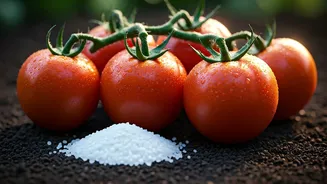
Epsom salt, scientifically known as magnesium sulfate, is often discussed as a helpful additive for tomato cultivation. The core appeal lies in its magnesium and
sulfur content, both vital micronutrients that play a significant role in a plant's journey from seedling to fruit-bearing maturity. However, the gardening community holds diverse views on its effectiveness, with some championing it as a potent solution and others urging caution. The key takeaway is that when applied with precision and understanding, Epsom salt can indeed contribute positively to tomato growth, but it's not a universal remedy for all cultivation challenges. Its true value emerges when addressing specific soil deficiencies, particularly a lack of magnesium, which is crucial for plants that are heavy feeders or have high magnesium requirements.
Key Plant Benefits
When integrated thoughtfully into a tomato plant's care routine, Epsom salt can offer several advantages. Primarily, it significantly aids in the production of chlorophyll, the green pigment essential for photosynthesis. By supplying plants with the necessary magnesium, Epsom salt helps combat the common issue of yellowing leaves, promoting vibrant, green foliage and a more robust overall plant structure. Furthermore, this nutrient boost enhances the plant's capacity to absorb other critical elements from the soil, such as nitrogen and phosphorus. This improved nutrient uptake is particularly impactful during crucial phases like flowering and fruit development, ensuring that tomatoes receive the sustenance needed for abundant and high-quality fruit yield. While its role in preventing blossom end rot is debated, its contribution to chlorophyll synthesis and nutrient absorption remains a well-regarded aspect of its utility.
Application Guidance
Deciding to supplement your tomato plants with Epsom salt, especially after confirming a magnesium deficiency through soil testing, requires careful execution. Gather your essentials: Epsom salt, a measuring spoon, water, a watering can or spray bottle, and ideally, a soil test kit. Begin by performing a soil test to accurately gauge existing magnesium levels; this step is crucial to avoid unnecessary or excessive application. For soil application, dissolve one tablespoon of Epsom salt into a gallon of water, stirring until fully integrated. This solution should then be poured around the base of each tomato plant, allowing the roots direct access to the nutrients. Alternatively, for quicker absorption, a foliar spray can be prepared by filling a spray bottle with the same solution and misting the leaves. This method is especially beneficial if you observe symptoms of magnesium deficiency directly on the foliage. Regular application, occurring every two to four weeks based on soil analysis and plant observation, can support consistent growth and yield.
Usage Dos and Don'ts
Navigating the use of Epsom salt for tomatoes involves understanding its appropriate frequency and potential pitfalls. Generally, applying an Epsom salt solution every two to four weeks is a reasonable guideline, but always adjust based on your specific soil conditions and plant health. Over-application is a significant concern; too much Epsom salt can disrupt the soil's delicate nutrient balance, potentially hindering rather than helping your plants. This excess magnesium can interfere with the uptake of other vital nutrients, such as calcium and potassium, leading to adverse effects. While some methods involve sprinkling Epsom salt directly around plants, this is typically less efficient and carries a higher risk of uneven distribution. If you opt for sprinkling, use it sparingly and water the area thoroughly to aid dissolution and transport to the root zone. Prioritizing dissolved application ensures better nutrient delivery and minimizes the risk of localized salt concentration, which can damage plant roots.