






Engine Development Woes
Ispace, a pioneering Japanese company focused on lunar exploration, has publicly acknowledged considerable difficulties in the ongoing development of its
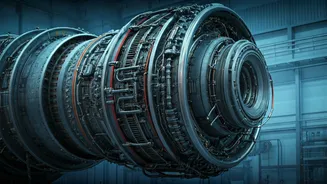
proprietary VoidRunner engine. This advanced propulsion system, a collaborative effort between ispace's U.S. division and U.S. firm Agile Space Industries, was slated to power future lunar landers. However, achieving the necessary performance benchmarks, particularly concerning thrust and fuel efficiency, has proven more protracted than anticipated. These development setbacks have triggered a reassessment of timelines for forthcoming missions, with the company now openly considering the possibility of sourcing an alternative engine to circumvent further delays and ensure progress towards its lunar objectives. The exact nature of the technical impediments remains undisclosed, adding a layer of uncertainty to the projected launch schedules.
Mission Timeline Impact
The complications surrounding the VoidRunner engine are poised to have a direct and substantial impact on ispace's ambitious mission roadmap. Specifically, Mission 3, a lunar farside expedition planned in collaboration with NASA's Commercial Lunar Payload Services (CLPS) program and led by Draper, is now looking at a revised launch window of 2027, a year later than its initial 2026 target. This delay is a direct consequence of the engine's developmental status, which necessitated modifications to the Apex 1.0 lander's design. Furthermore, the ripple effect extends to Mission 4, which is set to utilize a novel Series 3 lander designed in Japan and is currently scheduled for a 2028 liftoff. The successful integration of the VoidRunner engine into this new lander is critical, and its delayed readiness casts a shadow over these future endeavors.
Strategic Contingencies
In response to the evolving engine situation, ispace is proactively exploring contingency plans to mitigate potential disruptions. The company's chief financial officer and executive business director, Jumpei Nozaki, explicitly stated during a recent earnings call that while continuous efforts are underway to enhance and test the VoidRunner, the management is actively discussing and evaluating the adoption of an alternative engine. This strategic backup measure aims to safeguard mission schedules should the current engine development prove insurmountable within the required timeframe. Takeshi Hakamada, the founder and CEO, highlighted Agile Space's expertise in 3D printing, suggesting it facilitates rapid iteration and problem-solving. However, ispace is not solely relying on monitoring; it is actively dispatching engineers to collaborate with Agile's team on-site, underscoring a commitment to both progress and preparedness for unforeseen challenges.
Financial Repercussions
The challenges with the VoidRunner engine have also led to a significant downward revision of ispace's financial projections for the current fiscal year, which concludes on March 31. The company has reduced its forecast for project revenue from 10 billion yen (approximately $64.6 million) to 6 billion yen. This adjustment is primarily attributed to the anticipated delay in revenue generation from Missions 3 and 4, as their associated financial benefits will now likely fall outside the current fiscal period due to the engine-related postponements. Additional minor reductions in projected revenue stem from the unfortunate crash of ispace's Mission 2 lander in June 2025 and the U.S. subsidiary's failure thus far to secure a CLPS task order for a second Apex 1.0 lander mission, designated Mission 5.
Other Initiatives
Despite the propulsion system setbacks, ispace is actively pursuing progress and diversification in other areas of its lunar exploration program. The company is moving forward with Mission 6, a Japanese-built lander slated for a 2029 launch, showcasing continued innovation. Notably, ispace's European subsidiary is contributing to the MAGPIE rover project, an initiative funded by the European Space Agency valued at up to $76 million. Furthermore, ispace secured a significant award from Japan's Space Strategic Fund in January, valued at up to 20 billion yen. This funding will be used to integrate high-precision landing technology, successfully demonstrated on JAXA's Smart Lander for Investigating Moon mission, into Mission 6, enabling a precise landing in the moon's south polar region.