





Black Pepper's Global Reign
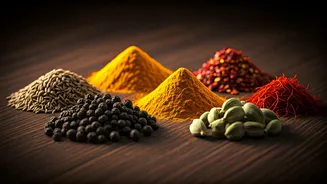
Originating from the lush Malabar Coast of Kerala, black pepper stands as one of history's most influential spices. For millennia, it was the primary source
of heat in Indian cuisine before the advent of chilies. Its immense value led it to be dubbed 'black gold,' attracting ancient Roman traders who braved perilous seas to procure it. In Europe, its worth was so significant that it was once used as a form of currency. The spice begins as green berries on vines, which transform into the familiar wrinkled black spheres upon drying. Indian kitchens skillfully integrate black pepper into a vast array of dishes, including warming rasam, rich curries, flavourful marinades, essential spice blends, and even invigorating herbal infusions. Beyond its culinary prowess, Ayurvedic traditions recognize its digestive benefits and its ability to enhance nutrient absorption.
Turmeric: Golden Health
More than just a culinary ingredient in India, turmeric embodies health, purity, and cherished traditions. This vibrant golden root has been cultivated on Indian soil for over 4,000 years, belonging to the versatile ginger family. After harvesting, it undergoes a process of boiling, drying, and grinding to produce the rich, earthy, and subtly bitter powder that graces nearly every Indian pantry. Its application extends across numerous dishes, from hearty dals and aromatic rice preparations to tangy pickles and savory vegetable creations. However, turmeric's significance transcends mere cooking; it is deeply revered for its potent anti-inflammatory properties. The comforting ritual of 'haldi doodh' (turmeric milk) has soothed generations during times of illness, and its paste has been a time-honored remedy for skin ailments, highlighting its multifaceted role.
Cardamom's Sweet Aroma
Hailing from the verdant Western Ghats, cardamom is celebrated as one of India's most sophisticated spices. These diminutive green pods possess an enchanting aroma, so captivating that a single crushed pod can profoundly elevate an entire dish. Revered for centuries, cardamom was once a highly sought-after luxury item, traded extensively across ancient kingdoms. Its flavor profile is a delightful interplay of sweet, floral, and minty notes, offering a refreshing and cooling sensation that leaves a lasting impression. In Indian culinary practices, cardamom is indispensable in the preparation of exquisite desserts like kheer and gulab jamun, infuses the warmth of masala chai, adds fragrance to festive sweets, and enriches the complexity of aromatic biryanis. Historically, it was also a popular choice for royalty to chew after meals, serving as a natural and fragrant mouth freshener.
Ginger's Zesty Warmth
Ginger has been an integral component of Indian kitchens for thousands of years, believed to have originated in the tropical rainforests of the Indian subcontinent. It has long been cherished for its dual role as both a nourishing food and a potent medicinal agent. Fresh ginger offers a bright, invigorating aroma accompanied by a spicy warmth, while its dried form intensifies in flavor, becoming deeper and subtly sweeter. Its presence in Indian cooking is ubiquitous; it is commonly crushed into curries, added to fragrant chai, incorporated into marinades, pickled for a tangy bite, candied for a sweet treat, and transformed into restorative beverages. The principles of Ayurveda have consistently recognized ginger as a powerful natural remedy, utilized for its efficacy in aiding digestion, combating colds, enhancing circulation, and alleviating feelings of nausea.
Mustard Seeds' Fiery Pop
Mustard seeds, though minute enough to rest on a fingertip, pack an extraordinary punch of flavor. Indigenous to the Indian subcontinent, these small black and brown seeds awaken with a spectacular crackle and pop when introduced to hot oil, releasing a nutty and sharp aroma. They are absolutely fundamental to the vibrant South Indian 'tadka' (tempering), the rich Bengali fish curries, and are a staple in homemade chutneys, tangy pickles, and savory vegetable stir-fries. Historically, mustard was among India's earliest cultivated crops, valued not only for its spicy essence but also for the production of its versatile oil. Its ability to transform simple dishes with its distinctive taste and aromatic release makes it an indispensable element in Indian gastronomy.
Cinnamon's Gentle Sweetness
India's native cinnamon offers a gentle, fragrant, and inherently sweet profile, distinct from its more robust counterparts. Flourishing in specific regions of southern India, this spice has been a cherished ingredient in both sweet and savory culinary creations for centuries. Unlike the stronger cassia variety, Indian cinnamon presents a delicate, layered sweetness that complements rather than overwhelms dishes. It is frequently incorporated into aromatic biryanis, complex curries, foundational masalas, celebratory desserts, and soothing teas. Historically, cinnamon was considered a rare and precious commodity, often reserved for the esteemed kitchens of royalty and featured prominently in significant celebratory feasts, underscoring its esteemed status.