




Cut Evenly
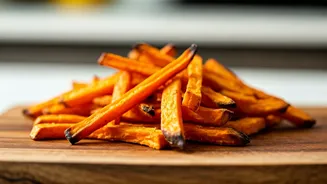
The first essential step is ensuring uniform cuts for your sweet potatoes. This is key to achieving consistent cooking and crispiness. Uneven pieces will
cook at different rates, resulting in some fries being burnt while others remain undercooked. Aim for similarly sized batons, typically around half an inch thick. You can use a mandoline slicer for precision, or a sharp knife for more control. Proper cutting ensures each fry receives the same heat exposure, maximizing the chances for a crispy exterior and tender interior. Uniformity also contributes to a visually appealing final product, enhancing the overall eating experience.
Soak Away Starch
Next up is soaking the cut sweet potatoes in cold water before cooking. This crucial step removes excess starch from the surface, which is a major factor in achieving that coveted crispy texture. Starch can cause the fries to stick together and prevent them from browning properly. Immerse the cut sweet potato pieces in a bowl of cold water for at least 30 minutes, or even longer for better results. During this time, the starch will gradually leach out into the water, leaving you with cleaner fries ready for cooking. Change the water a few times if the water becomes cloudy. Once soaked, drain and pat the fries thoroughly dry before cooking to ensure optimal results.
High Heat is Key
Heat is your best friend when it comes to frying sweet potatoes. Using high heat ensures the outside crisps up quickly while the inside cooks through. Whether you are using an oven or a pan, the cooking temperature should be significantly high. For the oven, preheat it to at least 400°F (200°C) or even higher for optimal crispiness. In a pan, make sure the oil is shimmering before adding the fries. High heat helps to create a Maillard reaction, a chemical reaction that occurs between amino acids and reducing sugars at high temperatures, which is responsible for the lovely brown color and characteristic flavors of the fries. Be attentive and ensure the fries do not burn, adjusting the temperature if necessary.
Don't Overcrowd
Another crucial aspect is to avoid overcrowding the pan or baking sheet. When too many fries are cooked together at once, they tend to steam rather than fry or bake. This happens because the fries release moisture, which then accumulates and prevents proper browning and crisping. Ensure there's enough space between each piece for air to circulate freely. Cook the fries in batches if necessary, so each piece gets adequate exposure to the heat. This step is particularly important when using an oven, as insufficient spacing can dramatically affect the final texture. Overcrowding often leads to soggy fries, thus impacting the entire cooking process.
Season After Cooking
Lastly, for maximum flavor, season your sweet potato fries after they are cooked. Adding salt and other seasonings before cooking can draw out moisture, potentially hindering the crisping process. Instead, wait until the fries are cooked to perfection and have been removed from the heat. This approach helps to preserve the crispiness and allows the flavors to adhere better to the fries' surface. You can sprinkle them with sea salt, black pepper, and your favorite spices like paprika, garlic powder, or even a dash of chili powder. Taste and adjust the seasonings as needed while they are still hot to ensure optimal flavor infusion. This method delivers the ultimate flavor and texture profile, making your fries a delightful culinary experience.