





Lunar Lander's Space Voyage
Blue Origin has achieved a significant milestone in its lunar exploration ambitions with the successful completion of extensive testing for its uncrewed
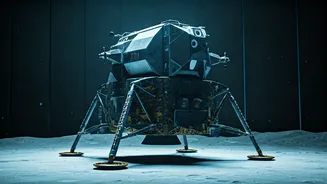
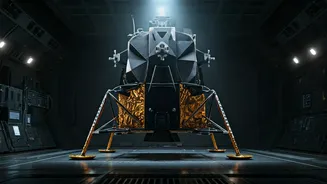
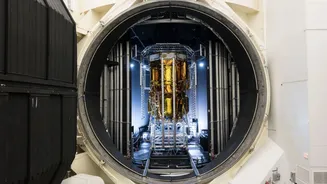
cargo lander, the Blue Moon Mark 1, affectionately nicknamed 'Endurance'. This crucial phase of validation took place within the specialized confines of Thermal Vacuum Chamber A at Nasa’s Johnson Space Center. This facility is designed to replicate the harsh and unforgiving environment of space, subjecting the spacecraft to extreme cold and near-vacuum conditions. The primary objective of this rigorous testing was to unequivocally confirm the lander's structural integrity and operational efficiency when exposed to the same challenges it will encounter on its journey to and presence on the Moon. Engineers meticulously recreated the environmental parameters expected during a lunar mission, from launch through to surface operations. This allowed for a comprehensive assessment of the lander’s thermal control systems, its fundamental construction, and its overall performance, ensuring it is fully prepared for the demands of extraterrestrial travel and deployment.
Unveiling the 'Endurance' Lander
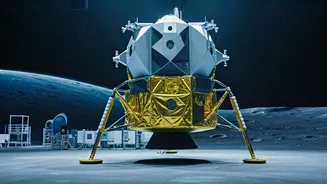
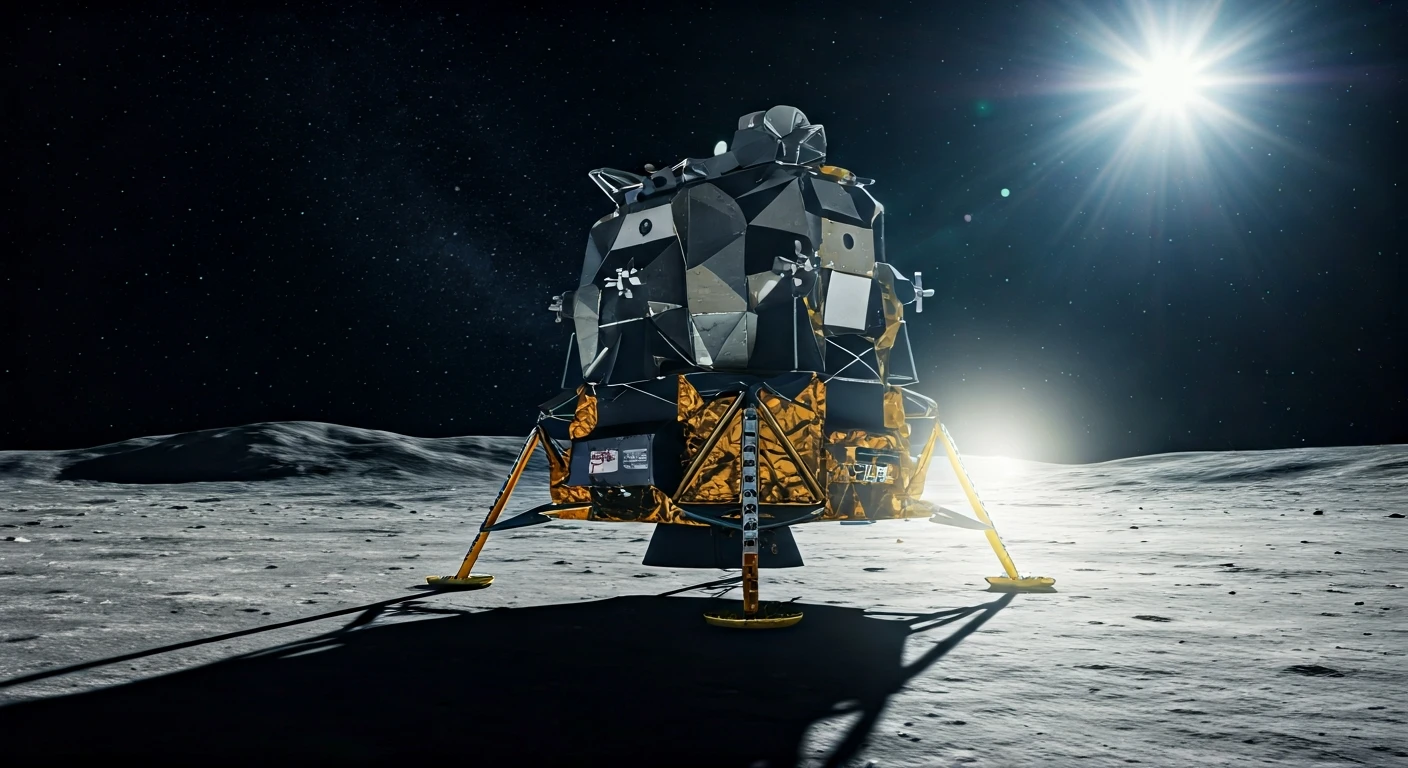
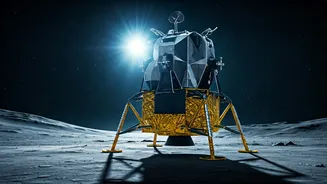
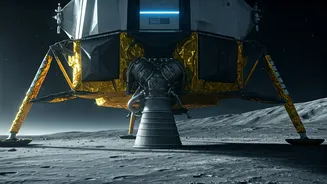
The Blue Moon Mark 1, or 'Endurance', is an unmanned spacecraft specifically engineered for the vital task of delivering essential cargo and equipment to the lunar surface. This uncrewed vehicle is an integral component of the ambitious Artemis program, aiming to establish a sustained human presence on the Moon. The 'Endurance' lander is designed to demonstrate and validate a suite of critical capabilities necessary for a successful lunar landing. These include the precise execution of landing sequences, the efficient utilization of cryogenic propellant systems—a complex and crucial technology for deep space missions—and the autonomous operation of its guidance, navigation, and control systems. The chosen landing site for 'Endurance' is the Moon's south pole, a region of immense scientific interest due to its potential for future lunar bases and the confirmed presence of water ice, a vital resource for supporting extended human expeditions. Beyond its own experimental objectives, 'Endurance' will also carry scientific payloads, such as the Stereo Cameras for Lunar Plume-Surface Studies, which will capture detailed imagery of engine plume interactions with the lunar regolith during descent, and the Laser Retroreflective Array.
Building Blocks for Human Missions
While the Blue Moon Mark 1, 'Endurance', is primarily a cargo mission, its development and testing represent a foundational element for future crewed lunar endeavors. The technologies and operational strategies being refined with 'Endurance' will directly inform the development of Blue Origin’s next-generation lander, the Mark 2. This subsequent spacecraft is being designed with human transport capabilities, intended to ferry astronauts between lunar orbit and the Moon’s surface. The invaluable insights gleaned from 'Endurance's' design, its rigorous testing protocols, and its anticipated operational performance are paramount to enhancing the safety, reliability, and overall mission planning for subsequent human landings. This phased approach ensures that lessons learned from uncrewed missions are systematically integrated into the design and execution of crewed flights, significantly reducing risks and increasing the probability of success for the ambitious goals of the Artemis program and beyond.
Accelerating Lunar Ambitions
The collaborative approach between Nasa and private entities like Blue Origin, formalized through agreements such as the Space Act Agreement, is a powerful catalyst for advancing space exploration. This partnership allows private companies to leverage the extensive resources and expertise provided by the space agency, thereby accelerating development timelines without compromising on the stringent safety standards essential for space missions. With the completion of the critical testing phase, the Blue Moon Mark 1, 'Endurance', moves a significant step closer to becoming an operational asset. Its successful deployment is poised to be a pivotal contribution to the overarching goal of establishing a sustained human presence on the Moon, marking a new era of lunar exploration and utilization.