




A Royal Welcome
Upon arriving in Mandawa after a significant journey from Delhi, visitors to Gulab Haveli are immediately immersed in its unique historical ambiance. The
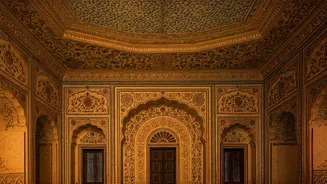
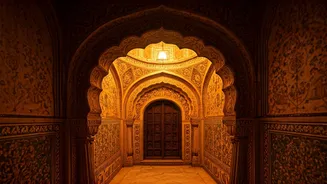
entrance to the rooms is intentionally designed to be low, prompting a symbolic bow of respect, a practice from a bygone era when humility was paramount. This gesture sets the tone for the entire experience within this 150-plus-year-old heritage mansion. The haveli unfolds into a series of serene courtyards, where the air resonates with traditional folk music. Sandstone corridors are adorned with vibrant frescoes that climb every available surface, hinting at the treasures hidden within. Above, intricately painted balconies and a maze of staircases lead to exclusive chambers, including a legendary room completely gilded in gold, making the arduous travel instantly rewarding.
Cinematic Shekhawati Canvas
The Shekhawati region, often hailed as the world's largest open-air art gallery, boasts over 2,000 painted havelis, and Mandawa is a prime example. Even before reaching Gulab Haveli, the town's dusty roads, ancient structures, and colorful murals create a sense of familiarity, as these scenes have graced the silver screen in numerous Indian films and series. Filmmakers are drawn to Mandawa's authentic, unpolished texture, its lived-in feel, and the captivating blend of crumbling frescoes, quiet storefronts, roaming camels, and grand merchant homes. It doesn't resemble a typical tourist hub; rather, it feels like a portal into India's forgotten mercantile past. Gulab Haveli, a meticulously restored 19th-century merchant mansion once owned by the affluent trader Gulab Rai Ladia, stands as the jewel of this historic landscape, seamlessly blending luxury with its authentic soul.
A Labyrinth of Stories
Gulab Haveli transcends its identity as a mere hotel, transforming into an immersive narrative the moment one steps inside. Constructed between the 1850s and 1870s during a peak trading period, this triple-story mansion was the residence of Gulab Rai Ladia, a chief trader whose empire spanned silk, spices, cotton, and opium. Wealthy Marwari merchants of that era engaged in an architectural rivalry, with grander havelis and more elaborate frescoes signifying status. Gulab Haveli still radiates this historical energy, centered around two traditional courtyards. The Mardana, or outer courtyard, served as the hub for business and public interactions, now hosting cultural performances and guest relaxation under festive lights. The Zenana, the inner courtyard once exclusive to women, offers a quieter, more intricate experience with its narrow passages, carved jharokhas, and hidden nooks, contributing to the haveli's labyrinthine charm. Navigating the property is an adventure in itself, with every corner revealing antique seating areas, hidden balconies, and faded floral artworks, each accompanied by a historical anecdote.
The Gilded Splendor
The legendary Gold Painted Room in Gulab Haveli is an experience that surpasses all expectations. Tucked away on an upper floor, this chamber, a lavish wedding gift from Gulab Rai Ladia to his grandson, is a breathtaking display of opulence. Its walls shimmer with intricate gold detailing, and the ceiling is a mesmerizing mosaic of thousands of tiny convex mirrors. Frescoes adorn every surface, depicting mythological narratives, miniature artistry, floral motifs, and even erotic illustrations inspired by the Kama Sutra, befitting its purpose as a nuptial chamber. When illuminated, the room sparkles like a treasure chest, with reflections dancing across every surface. What makes it particularly striking is its intimacy; unlike grand public spaces, this room feels personal and romantic, possessing a theatrical charm unique to its era. The room has been preserved with remarkable fidelity, retaining the texture of time. The trompe l'oeil painted floor, designed to mimic a carpet, remains intact, and the mirrors and frescoes, though softened by age, contribute to its authentic, preserved atmosphere. Adjacent to it lies the Sheesh Mahal, a mirror-adorned space ideal for gatherings, its arches glowing beautifully in the evening light.
Living Among Art
Gulab Haveli offers a distinctive collection of 17 rooms and suites, categorized into Superior, Deluxe, and Luxury options. What truly sets this heritage property apart is its subtle approach to luxury; the restoration emphasizes preserving the haveli's intrinsic character rather than overt opulence. While guests enjoy modern comforts like elegant bathrooms and plush bedding, the original spirit of the mansion remains palpable. Restored frescoes continue to grace the walls, the natural limestone textures are preserved, and antique furnishings coexist harmoniously with contemporary elements. Essential modern amenities, such as wiring and plumbing, were discreetly integrated beneath the floors to maintain the structural integrity and historical aesthetic. Evenings spent in the courtyard, listening to live Rajasthani folk music while sipping refreshments, or watching puppet shows under the soft glow of lanterns, contribute to the haveli's vibrant, living atmosphere.
A Culinary Feast
Rajasthan's culinary heritage is robust, and the Shekhawati thali at Gulab Haveli is a testament to this. The meal arrives as an extensive spread, nearly covering the table with a plethora of traditional dishes. Highlights include _dal-baati_ generously bathed in ghee, smoky _churma_, _ker sangri_ prepared with desert spices, _gatte ki sabzi_, _bajra rotis_, _missi rotis_, a potent spicy lehsun chutney, local vegetables, pickles, _papad_, and cooling _chaas_, culminating in delectable desserts. The food is not tailored for a generic tourist palate but offers a deeply authentic and comforting local experience. At Resham, the haveli's all-day dining restaurant, the menu draws inspiration from Silk Route flavors, featuring regional specialties alongside globally influenced dishes. One might encounter saffron-smoked paneer with rose petal chutney, or savor millet khichda and baklava. The property's bar, Amal, provides a tranquil evening retreat, designed with cozy seating areas and a mezzanine, evoking old Marwari hospitality and offering an ambiance conducive to losing track of time.
Exploring Mandawa's Soul
Mandawa is best appreciated at a leisurely pace. A memorable way to explore is by camel ride through the town's narrow lanes as the sun begins to set, casting a golden hue over everything. From this elevated vantage point, Mandawa appears even more cinematic, with painted havelis glowing warmly, children playing in the alleys, elders conversing outside shops, and walls adorned with frescoes depicting everything from ancient mythology to modern elements like trains and British officials. During guided heritage walks, local guides vividly interpret these paintings, explaining their evolution over time. They highlight how themes shifted from mythology to everyday life, incorporating images of gramophones, telephones, and colonial figures as merchant families traveled. A particularly poignant observation captures the town's essence: Mandawa is a place where religious and cultural barriers dissolve, fostering a strong sense of community and mutual respect, reflected in its remarkably low crime rate. This sense of unity and gentle charm pervades the town, even amidst its architectural grandeur.
Beyond Mandawa's Charm
Gulab Haveli serves as an excellent starting point for exploring neighboring towns within the Shekhawati region. Nawalgarh presents itself as another expansive open-air art gallery, featuring numerous painted mansions, notably the Podar Haveli Museum and Morarka Haveli. Here, frescoes adorn walls, ceilings, gateways, and balconies, illustrating religious figures, merchants, British administrators, and scenes of daily life. Jhunjhunu offers a distinct atmosphere, characterized by its temples, ancient havelis, and the notable Khetri Mahal, which is thought to have inspired Jaipur's iconic Hawa Mahal. The journeys between these towns are as engaging as the destinations themselves, with picturesque drives through mustard fields, encounters with camels crossing highways, impromptu stops at roadside tea stalls, and the unexpected discovery of forgotten havelis emerging from the landscape.
Authenticity Preserved
Many contemporary heritage hotels tend to over-polish their offerings, often feeling too manufactured or overtly focused on conveying a sense of 'royalty.' Gulab Haveli distinguishes itself by eschewing such artificiality. Its walls retain a tangible sense of age, its corridors possess an authentic unevenness, and its frescoes exhibit a natural fading that adds to their character. The wind still flows through the courtyards as it likely has for generations, maintaining an untouched, organic feel. This genuine preservation is what creates a lasting impression. The haveli's charm lies not in its perfection, but in its profound sense of reality, offering an experience that feels deeply rooted and unaltered by time.