
Moonlit Adventures
The Moon, a constant companion in the night sky, offers a perfect starting point for your telescopic explorations. Its proximity and familiar features
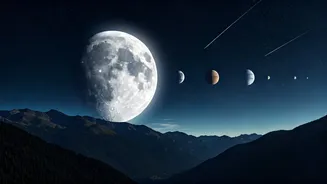
make it easily accessible. Begin by observing the various phases of the Moon, charting its journey from a slender crescent to a full, radiant orb. The January full moon, often called the Wolf Moon, is a prime event. Its dominance in the winter sky provides a brilliant spectacle. Use your telescope to examine the lunar surface's craters, mountains, and valleys, providing an in-depth understanding of its geography. These details become even more pronounced with the changing sunlight angles during the lunar cycle, creating breathtaking shadows that amplify the textures. Remember to check the dates of moon events, including eclipses and conjunctions, for unique viewing opportunities.
Saturn and Jupiter
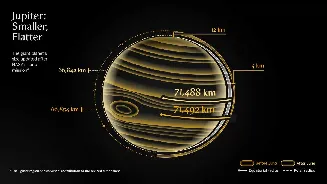
Saturn and Jupiter, two giant planets, always offer spectacular sights through a telescope. Jupiter, with its banded atmosphere and the Great Red Spot, remains a stunning spectacle. The moons of Jupiter, easily visible, perform a mesmerizing dance around the planet. You can observe their movements over a few hours. Saturn, with its magnificent rings, is equally captivating. Its rings, composed of ice particles, appear as a halo. The best viewing periods are often when the planets are at opposition—closest to Earth. These periods are frequently highlighted in skywatching guides. Observing the planets is a great way to improve your telescopic skills, and these visible planets are frequently found in the southern sky after sunset. The planets' positions and movements change, so keep an eye on upcoming sky events to identify the best times to see these planets.
Planetary Alignment Events
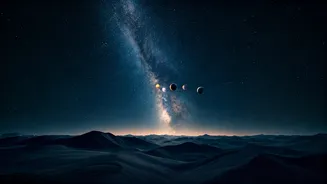
Keep an eye out for planetary alignments and conjunctions, which can make for interesting visuals. These events showcase planets gathering close together in the sky. It is possible to witness the planets' graceful dance across the backdrop of stars. These alignments frequently include the Moon, creating memorable celestial shows. The year 2026 will present many chances for these alignments, which will be visible to the naked eye. Each event offers a unique chance to compare and contrast the planets' appearances and movements, improving your knowledge of the solar system. Observing these alignments calls for precise planning, necessitating consulting sky maps and forecasts to identify the best viewing times and locations. Make a note of the times in your calendar and prepare your telescope for these spectacular shows.
Star Clusters and Nebulas
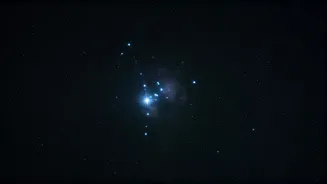
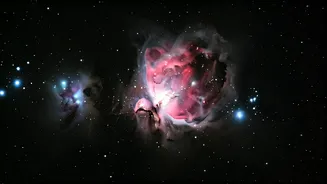
Beyond planets and moons, the night sky is rich with other targets such as star clusters and nebulae. These deep-sky objects can be observed even with a basic smart telescope. Consider starting with the Orion Nebula, a stellar nursery filled with young stars and vibrant colors. With a smart telescope, you can observe this stunning nebula with relative ease. Star clusters, such as the Pleiades, are groups of stars held together by gravity, offering a beautiful display. These objects are best viewed under dark skies, away from light pollution. Using your telescope to explore these objects will help you improve your observing abilities. As you become more familiar, you can look for more challenging objects and increase the level of detail that you can observe in the sky.
Comets and Meteors
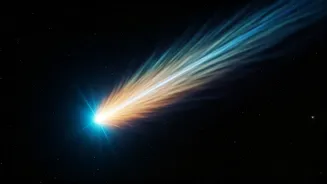
The year 2025 saw several comets. Comets provide a great opportunity to explore the solar system. Spotting a comet requires patience and is a rewarding experience. The comet 3I/ATLAS rose into view and delighted astronomers and skywatchers, offering a stunning celestial spectacle. Another comet, Lemmon, also provided wonderful views. Although the comets are occasionally visible to the naked eye, a telescope will undoubtedly improve your viewing experience. Comet observation allows you to witness the dynamic movements of celestial objects and teaches you about the solar system's transient residents. The comet's appearance, shape, and luminosity may change as it nears the sun. Keeping up with sky-watching reports to identify comets is vital, as is knowing the best times to observe the comets.
Celestial Eclipses
Eclipses are rare, dramatic celestial events that captivate observers and scientists alike. Solar eclipses, where the Moon blocks the sun's light, and lunar eclipses, when the Earth casts a shadow on the Moon, are important events in the sky. They provide unique viewing opportunities. Make sure to use appropriate safety precautions, especially when observing solar eclipses. The year 2026 will offer several opportunities to view these events. Each eclipse is a visual treat and an opportunity to witness astronomical physics. Planning is vital for capturing these occurrences, and knowing the exact times and viewing conditions is important. Telescopes and specialized filters are recommended to see these phenomena. Eclipses often provide incredible photographic opportunities, allowing observers to share their experiences.
Northern and Southern Skies
Different constellations are visible from the Northern and Southern Hemispheres. If you're observing from the Southern Hemisphere, well-known targets such as the Southern Cross are accessible, while the Northern Hemisphere gives you access to other celestial objects. Understanding the seasonal variations in the constellations is critical for stargazing. As the Earth orbits the Sun, the night sky shifts, presenting new stars and constellations. Using sky maps or astronomy apps will help you locate the celestial targets. Knowing which constellations are most visible during the winter months, like Orion, helps you to improve your observing sessions. The changing sky offers a constantly fresh look at space and encourages continuous investigation of the cosmos.
Skywatching Guides
Utilize skywatching guides and astronomy apps to assist with your observations. These resources offer star maps, celestial event calendars, and detailed information about celestial objects. They can help you locate planets and stars, plan your observing sessions, and learn more about the night sky. Skywatching guides can be especially useful for beginners, as they provide easy-to-follow instructions and tips for using your telescope. Numerous websites and mobile applications give you real-time star charts. Make use of these resources to increase your observing skills and maximize your stargazing time. Regularly consult these tools to keep up with the changing positions of the planets and the special astronomical events. These guides will assist in getting the most out of your stargazing experiences.
Setting Up
Setting up your smart telescope properly is essential for successful stargazing. Familiarize yourself with the telescope's functions and components before going outside. Place your telescope on a stable surface, and align the scope correctly, which is required for accurate tracking of celestial objects. Your manual should have detailed instructions on how to set up and calibrate your smart telescope. Take some time to test your telescope during the day to become acquainted with it. Ensure the batteries are fully charged and that the network connection, if applicable, is established before going out into the night. It is important to begin with simple targets such as the Moon to develop your skills. Once you are comfortable with basic operation, you can proceed to the more complex targets.
Planetary Viewing
Focusing on planets can be especially rewarding during certain times of the year. Pay attention to key dates and events to get the best views. For instance, knowing when Jupiter and Saturn are in opposition will help you find the best viewing times. Jupiter and Saturn are often visible in the winter night sky. When planning your observing sessions, keep in mind the positions of the planets. Because planets move over time, using astronomy apps or sky charts to track their locations is essential. Your smart telescope should be capable of providing detailed views of the planets. Observing planets is a great way to explore the solar system. Each planet reveals its particular features, from the bands of Jupiter to the rings of Saturn.