






The Curious Hand Position
Observant travelers often notice flight attendants adopting a specific posture during the most critical moments of a flight: takeoff and landing. This
seemingly peculiar habit, where cabin crew sit on their hands, prompts curiosity among passengers, especially those who are anxious about flying or simply keen to understand the operational nuances of air travel. Far from being an arbitrary action, this is a standard safety protocol implemented universally across airlines. It's known in aviation circles as the "brace position" for flight attendants, a pre-determined stance designed to mitigate the effects of potential impacts during unforeseen emergencies or accidents. This posture is not a cause for alarm for passengers; rather, it signifies that the cabin crew is diligently adhering to established safety procedures, fulfilling their duty to maintain a secure environment for everyone on board.
Brace for Impact
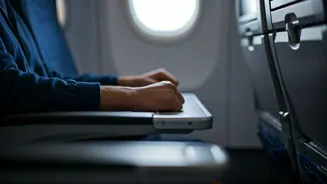
The "brace position" is a fundamental safety technique employed by flight attendants to enhance their ability to withstand potential impact forces. This involves strategically positioning the body, such as by flexing the head and arms and leaning forward, to minimize the risks associated with sudden jolts or abrupt landings. The precise configuration of this brace position can vary, depending on how the flight attendant's seat is oriented and the specific restraint system equipped. A common variation involves sitting on one's hands, a method that effectively secures the arms close to the body, preventing them from flailing and potentially causing injury during turbulence or an emergency landing. This careful positioning is consistently observed during the initial ascent and final descent, phases deemed most critical in flight operations, underscoring the crew's commitment to safety protocols.
Silent Safety Review
Beyond physically bracing for potential incidents, the time spent in the "brace position" during takeoff and landing also serves a crucial mental purpose for flight attendants. While seated and hands secured, cabin crew engage in a silent, internal review – a mental checklist of vital safety elements. This practice ensures they are fully prepared to act swiftly and decisively should any critical situation arise. Key aspects of this review include reaffirming the exact locations of all emergency exits, recalling the procedures for their operation, identifying passengers who might be able to offer assistance in an emergency, mentally rehearsing emergency command phrases, and confirming the accessibility and readiness of essential evacuation equipment. This layered approach, combining physical preparedness with mental readiness, highlights the comprehensive training and constant vigilance of flight attendants.
Passenger Preparedness
While passengers are not required to adopt the same hand-resting posture, understanding the flight attendant's "brace position" offers insight into aviation safety. In specific scenarios, passengers might indeed be instructed to assume a brace position themselves to reduce injury risks, as detailed on the safety cards found in seatback pockets. These cards are invaluable resources that should always be reviewed before takeoff. In the event of a planned emergency, flight attendants will provide explicit instructions on how passengers should brace. However, during unforeseen emergencies, time constraints may prevent such detailed briefings. Therefore, diligently reading the safety card and paying close attention to all crew instructions, even during routine flights, is paramount for passenger preparedness and enhancing overall safety during travel.