



Eastern Narratives & Northeastern Artistry
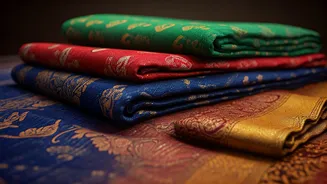
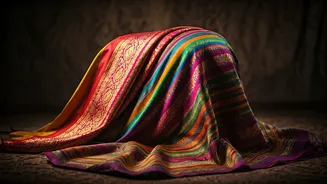
The eastern and northeastern regions of India are renowned for their rich textile traditions, emphasizing storytelling and natural textures. West Bengal's
Baluchari sarees are a visual chronicle, with their pallus vividly illustrating epic tales from the Ramayana and Mahabharata. Bihar's Bhagalpuri Tussar sarees offer an eco-friendly and rustic charm, suitable for both casual and formal settings. Jharkhand's Tribal Tussar and Odisha's Sambalpuri Ikat are characterized by their deep connection to nature, featuring intricate tie-dye patterns. Moving northeast, Assam's Muga Silk is famed for its natural sheen that improves with washing. Meghalaya's Eri Silk, a sustainable 'peace silk,' provides a beautiful matte finish and excellent thermal regulation. Arunachal Pradesh's Apatani weaves and Sikkim's Lepcha sarees showcase minimalist tribal stripes with an earthy appeal. Nagaland's Naga Motif drapes display bold geometric clan patterns, while Mizoram's Puan-inspired sarees are known for their tight weaves and striking stripes. Tripura's Risa-inspired fabrics add distinct tribal elements, and Manipur's Moirang Phee cotton sarees are distinguished by delicate, temple-like border motifs.
Western Dyeing & Central Elegance
Western India is a hub of sophisticated dyeing techniques, showcasing remarkable artistry. Rajasthan's Bandhani sarees are a spectacle of vibrant, fluid tie-dye, reminiscent of the desert landscape. Gujarat offers the Patola, a masterclass in double-ikat weaving, characterized by its meticulous geometric designs that require months of dedicated craftsmanship. Maharashtra's Paithani silk sarees are synonymous with luxury, celebrated for their opulent peacock motifs on the pallus. Goa's Kunbi saree, a breathable red-checked cotton, revives the coastal tribal heritage. Madhya Pradesh presents the Chanderi saree, a lightweight, translucent fabric perfect for warmer climes. Chhattisgarh's Kosa Silk offers a coarser, matte alternative, often embellished with traditional tribal art.
Southern Architectural Weaves
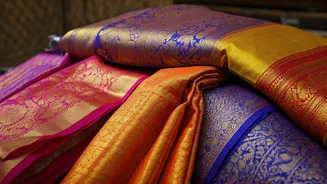
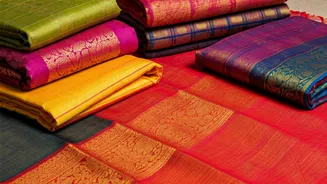
The southern states of India are celebrated for their structurally impressive and intricately woven sarees. Tamil Nadu is home to the Kanjeevaram, a quintessential silk saree known for its pure mulberry silk, rich zari embellishments, and distinctive temple-inspired borders. Kerala's Kasavu saree stands in elegant contrast, a symbol of minimalist sophistication with its crisp white cotton fabric accented by radiant gold borders. Karnataka's Ilkal saree is easily identifiable by its vibrant red 'tope teni' pallu, a unique and striking design feature. Andhra Pradesh contributes the Uppada Jamdani, a delicate saree woven with zari threads that offers a beautiful, airy drape. Telangana concludes the southern exploration with the Pochampally Ikat, renowned for its exceptionally smooth silk-cotton blend and sharp, precise geometric patterns.
Northern Heritage & Mountain Craft
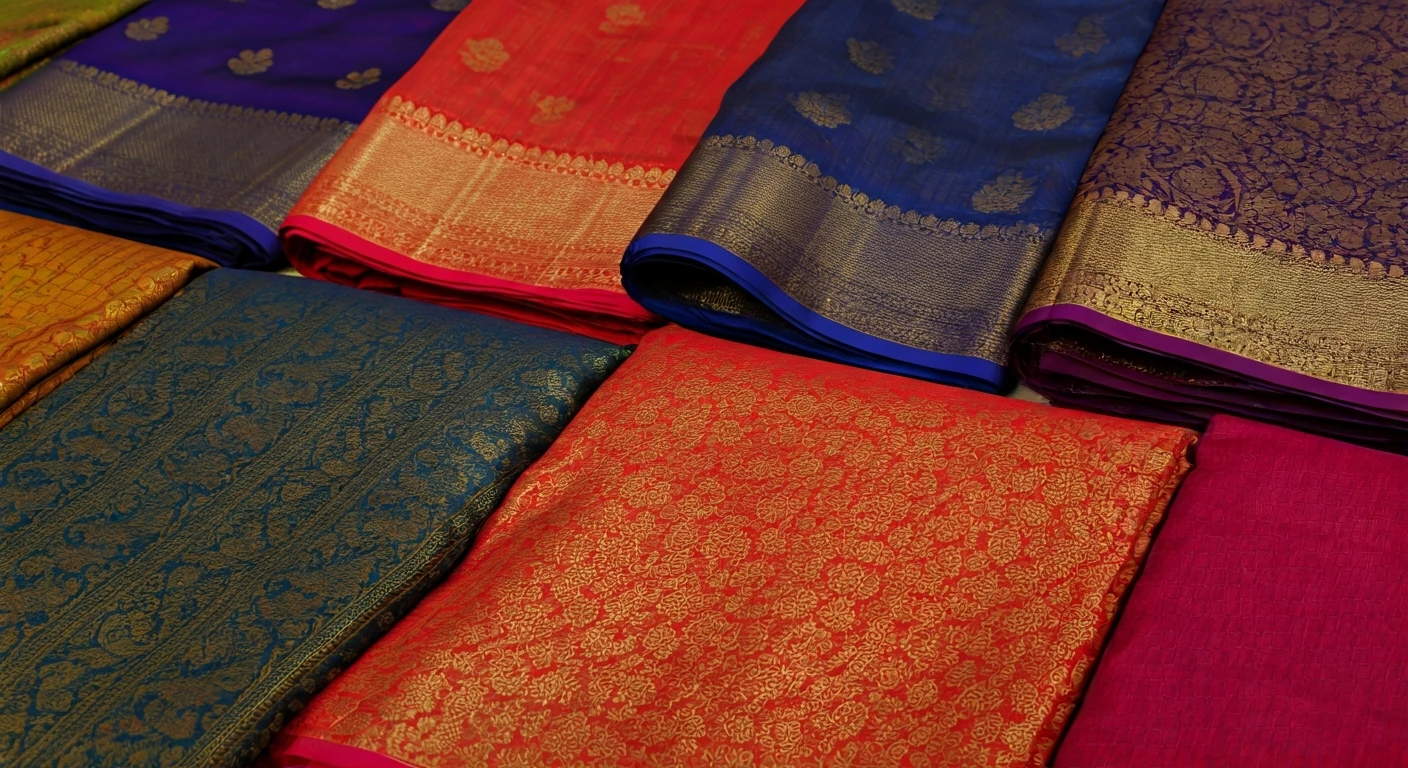
The northern regions of India blend regal heritage with practical mountain craftsmanship in their distinctive sarees. Uttar Pradesh is famed for the Banarasi saree, a heavily brocaded masterpiece adorned with intricate gold and silver floral patterns, exuding undeniable opulence. Punjab offers the Phulkari, a joyous and vibrantly embroidered saree bursting with colorful floral motifs, reflecting a cheerful spirit. Haryana's Resham Dhuria combines the comfort of soft cotton with delicate silk embroidery, creating a celebratory yet wearable drape. In the mountainous terrain, Himachal Pradesh's Kullu Patti sarees feature bold, geometric patterns inspired by traditional shawls, often set against wool or cotton fabrics. Uttarakhand's Panchachuli weaves showcase understated elegance, meticulously crafted by local women in the Himalayas.