




Island Sovereignty Disputes
The Chagos Archipelago, a group of islands located in the Indian Ocean, has been the subject of a long-standing dispute over sovereignty. The United Kingdom
currently administers the islands, which are claimed by Mauritius. A significant point of contention is the presence of the U.S. military base on Diego Garcia, the largest island within the archipelago. This military facility holds strategic importance, leading to intricate geopolitical considerations. Recent diplomatic moves have brought these issues to the forefront, as nations reassess their relationships and strategic objectives within the region. The islands' fate is intertwined with the United States' strategic interests, the UK's territorial claims, and Mauritius' demands for sovereignty. The involvement of the Maldives adds another layer to this intricate situation, making the situation even more complex.
Muizzu's Proposal
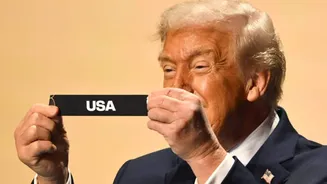
President Mohamed Muizzu of the Maldives put forward a proposal involving the former U.S. President Donald Trump in relation to the Chagos Islands. Though the specifics of the proposition remain private, it reflects the dynamics between the Maldives and the international situation. The offer suggests an attempt at finding a solution to the ongoing territorial dispute, possibly through a strategic alliance. The Maldives' engagement in the dispute underscores its interests and ambitions within the Indian Ocean. This initiative underscores the complex power dynamics and diplomatic calculations involved in the Chagos Islands issue. The Maldivian President’s actions emphasize the multifaceted approach taken by various actors to seek influence and resolve the sovereignty dispute.
US Strategic Interests
The United States' enduring presence on Diego Garcia plays a pivotal role in the geopolitical landscape of the Indian Ocean. The island houses a crucial military base that serves as a strategic hub for operations in the region. The U.S. maintains its stance regarding the Chagos Islands due to the significance of Diego Garcia for its military and strategic interests. The strategic position allows the U.S. to monitor maritime routes and project power across Asia and Africa. The decisions of the United States about the Chagos Islands and its ongoing use of Diego Garcia are heavily influenced by these strategic priorities. Any alterations to this position could have significant repercussions for U.S. influence and strategic capabilities in the region. The security of its base is crucial to the U.S.
Geopolitical Implications
The situation around the Chagos Islands has far-reaching effects on the Indian Ocean's geopolitical landscape. The territorial dispute affects the relationships between the United Kingdom, Mauritius, the Maldives, and the United States. International diplomacy and potential alliances are all involved in the situation. Any shift in the islands' administration or control has the potential to alter the balance of power. The ongoing negotiations reflect a more extensive pattern of geopolitical maneuverings, in which nations strategically seek to protect their interests while engaging in complex diplomatic relationships. The issue extends beyond a mere territorial dispute, involving key security matters and alliances, showing the complex interplay of international relations.
Mauritius' Claims
Mauritius has long asserted its claim to the Chagos Islands, emphasizing the historical and legal basis for its sovereignty. It contends that the United Kingdom's administration of the islands is illegitimate. The nation seeks to regain control of the islands and facilitate the repatriation of Chagossians who were expelled during the establishment of the U.S. military base. International support for Mauritius' stance has grown, with numerous resolutions from various international bodies favoring its claims. The dispute continues in international courts and diplomatic circles, demonstrating Mauritius' determination to reclaim the archipelago. The efforts of Mauritius are focused on the restoration of its sovereignty and on correcting what it considers an injustice from the past.