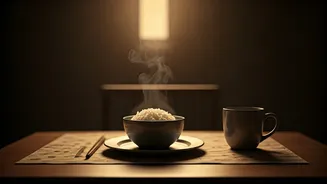








Love's Simple Sufficiency
At its core, the profound Chinese adage, 'With love, water is enough; without love, food doesn’t satisfy,' transcends mere sustenance and delves into the essence
of human connection. It posits that the presence of genuine affection transforms the mundane into the magnificent. Imagine sharing a humble meal of rice and lentils with loved ones, finding unparalleled joy in that moment. Conversely, even the most lavish spread in an opulent setting can feel hollow and isolating if emotional warmth is absent. This proverb distills the fundamental truth that our emotional landscape dictates our perception of satisfaction, proving that human relationships are the ultimate source of fulfillment, far exceeding the fleeting pleasure of material abundance. It underscores that a rich emotional life, nurtured by love, can make even the barest necessities feel like a feast.
The Modern Pursuit of Happiness
In today's fast-paced world, the quest for happiness often resembles a checklist of achievements: accumulating wealth, advancing careers, acquiring larger homes, and planning extravagant holidays. This relentless pursuit can lead to a transactional view of happiness, as if ticking off enough material goals will automatically unlock inner peace. However, real-life experiences frequently contradict this notion. We encounter individuals who possess all the outward markers of success – prestigious jobs, luxurious lifestyles, and high-end possessions – yet feel perpetually drained and emotionally unfulfilled. The critical differentiator often lies in the strength of their emotional bonds. The feeling of being loved and valued profoundly alters our life's experience, making adversity more bearable and ordinary moments imbued with deeper meaning. The solace derived from knowing someone genuinely cares can alleviate stress, demonstrating that emotional security is a far more potent driver of contentment than any material gain.
Moments Over Materialism
The enduring beauty of this proverb lies in its elegant simplicity, equating 'water' with the bare essentials of life. It suggests that when love is present, even the most basic elements can feel entirely sufficient. Life frequently validates this observation through our most cherished memories. When recalling childhood, most people don't recall the most expensive toys, but rather the warmth of family gatherings, festive celebrations, shared laughter during simple activities, or the comfort of homemade meals prepared with affection. The emotional resonance of these moments far outweighs the intrinsic value of the objects themselves. Similarly, in relationships, it is often the subtle, everyday gestures that leave the most lasting impression. Couples fondly remember late-night conversations over tea, thoughtful acts of support during stressful periods, spontaneous chats, shared inside jokes, or simply the quiet companionship after a demanding day. These small acts, devoid of grandiosity, cultivate a sense of warmth and emotional safety that sustains connections over time.
Love's Broad Spectrum
It is crucial to understand that the scope of this proverb extends far beyond romantic partnerships; its wisdom is universally applicable across all forms of human connection. It encompasses the deep bonds of family, the supportive networks of friendships, the commitment of marriage, the nurturing relationship between parents and children, and even the cohesion within close-knit communities. In any setting where individuals feel emotionally secure and accepted, a profound sense of fulfillment flourishes. While a child might quickly outgrow a costly toy, the lasting imprint of a loving and supportive home environment remains. Similarly, elderly parents often cherish shared time and genuine attention more than expensive material gifts. Friendships endure and thrive not on the convenience of circumstances, but on mutual understanding, validation, and a feeling of being truly valued. Ultimately, the fundamental human need for connection surpasses the desire for flawless external conditions.
The Foundation of Well-being
Contemporary psychology increasingly emphasizes the significance of emotional well-being, yet ancient proverbs like this one articulated these truths centuries ago with remarkable clarity. Human beings possess an innate need for emotional security. Feeling loved and supported acts as a powerful buffer against stress, significantly contributing to positive mental health and providing the resilience needed to navigate life's challenges. Scientific evidence further reinforces this, linking strong interpersonal relationships to improved emotional and physical health outcomes. Conversely, even in the lap of material comfort, individuals can experience profound emotional emptiness if their relationships are strained, distant, or emotionally taxing. This directly aligns with the proverb's message: a full stomach provides no solace when the heart feels neglected or starved of affection. The universality of this feeling underscores its profound impact on our overall well-being.
Distinguishing Comfort from Fulfillment
This insightful proverb subtly differentiates between mere comfort and true fulfillment. While financial resources can certainly provide convenience and ease, love offers a deeper emotional peace. A person might reside in an expansive mansion yet experience pervasive loneliness each night, whereas another, living a modest existence, finds profound contentment thanks to the supportive people in their life. Financial stability is undeniably important; life's challenges are amplified without basic security. However, the essence of emotional happiness cannot be wholly substituted by material possessions. The core message is that love infuses life with a meaning that luxury items often fail to provide. It's the intangible quality of connection that enriches our existence in ways that wealth alone cannot.
Social Media's Distorted Lens
The impact of social media has amplified the relevance of this ancient lesson, as platforms often curate an idealized portrayal of 'perfect happiness.' We are bombarded with images of flawless couples, idyllic vacations, pristine homes, and extravagant celebrations. Yet, this digital realm typically showcases only meticulously edited highlights, presenting a facade that belies reality. A relationship that appears glamorous on Instagram can be emotionally draining in everyday life. Conversely, some of the most deeply satisfying and genuinely happy relationships are often the most understated, built upon foundations of patience, mutual comfort, unwavering trust, and consistent, small acts of care. True love frequently manifests in unassuming ways, making it potentially overlooked by those seeking overt displays of affection or perfection.
The Power of Small Gestures
While cinema often romanticizes love with dramatic and cinematic flair, the reality of enduring relationships is typically forged through a series of unassuming, daily actions. These might include thoughtful gestures like saving the last piece of a favorite dessert, a simple call to confirm safe arrival, remembering specific preferences such as how one takes their tea, or offering a patient ear after a difficult day. It also involves providing necessary personal space or creating a calming presence rather than one that induces anxiety. Individually, these actions might appear insignificant, but collectively, they weave a strong tapestry of emotional safety and security. It is this consistent cultivation of emotional well-being, rather than solely grand gestures, that fosters deep and lasting satisfaction within relationships over the long term.
Timeless Wisdom Endures
There is a profound reason why age-old sayings continue to resonate across generations. The fundamental nature of human emotions remains remarkably consistent, even as external circumstances evolve. While technology, fashion, and lifestyles undergo constant transformation, the core human desires for love, comfort, understanding, care, and a sense of belonging remain steadfast. This unchanging human need is why the proverb retains its potent relatability today. Deep down, most individuals recognize the inherent truth it conveys. A simple meal prepared with love inherently tastes better, a modest home filled with warmth feels more joyful, and challenging periods become more manageable when shared with those who genuinely care. Ultimately, this Chinese proverb serves as a gentle reminder, often forgotten in the complexities of modern life, that human existence is not sustained by luxury alone. In the grand scheme of life, love often carries far greater weight than the abundance displayed on any table.