
The Social Context
Laughter is a deeply social phenomenon, far more than just a reaction to something funny. It's a fundamental part of how we interact with others, helping
to build bonds and signal our emotional states. The context in which laughter occurs plays a critical role in determining its appropriateness. When someone laughs at an untimely moment, it often clashes with the expected social norms and conventions of a given situation. This conflict can lead to feelings of awkwardness or even embarrassment, both for the person laughing and those around them. Consider a somber funeral: the serious atmosphere expects respect and grief, making any laughter feel out of place. The violation of these social expectations triggers a dissonance, creating a complex internal experience for those involved.
Emotional Regulation Systems
Our emotional regulation systems are constantly at work, attempting to maintain a balance between our inner experiences and external situations. When faced with stressful, awkward, or even dangerous scenarios, these systems can sometimes malfunction. Laughter might act as a coping mechanism, a way to defuse tension or express discomfort when other emotional responses are suppressed. For instance, in stressful business negotiations, people might resort to nervous laughter to signal their unease or to attempt to soften the atmosphere. This type of inappropriate laughter can also stem from the brain's attempt to reconcile conflicting emotional signals. The situation might trigger sadness, fear, and other intense feelings at once. Laughter, in these circumstances, can provide a momentary relief or a brief escape from the full weight of the situation, even if the person knows, consciously, that it is not appropriate.
Neurological Processes at Play
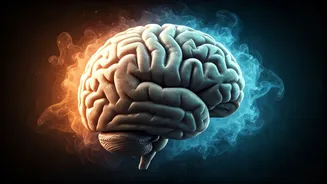
Neurological processes also explain why laughter can be so unpredictable. The brain doesn't always process emotional cues in a perfectly linear fashion. Different regions of the brain are responsible for various aspects of emotional experience and processing. The limbic system, which houses the amygdala and other regions, is associated with emotional responses, whereas the frontal lobes are involved in higher cognitive functions such as rational thought and social judgment. Sometimes, these regions do not synchronize seamlessly. For example, if the amygdala reacts strongly to an emotional stimulus, the frontal lobes might not be able to immediately suppress the resulting response. This desynchronization can result in unexpected outbursts of laughter, particularly when the frontal lobes are occupied with tasks. The brain can sometimes misinterpret situations, leading to unusual or unexpected responses, including inappropriate laughter.
Humor Perception and Misinterpretation
Our brains also use the ability to comprehend humor in surprising ways. Humor is a complex cognitive process that often relies on unexpected twists, contrasts, and incongruities. The brain must quickly process information, identify patterns, and detect deviations from the norm. When a person is stressed, overloaded, or distracted, the brain's ability to accurately interpret humor can be compromised. This can lead to misinterpretations of social cues or misunderstandings of others' intentions. For instance, someone might perceive a serious statement as a joke, triggering laughter when the speaker has no intention of being funny. This misjudgment is especially likely in unfamiliar or stressful contexts. The context and the individual's emotional state contribute in how they interpret humor, often leading to laughter when it is clearly not intended.
Cultural and Individual Differences
Cultural background and individual personality traits shape how people respond to various social settings and their emotional reactions. Different cultures have different norms and expectations regarding when and how it is appropriate to laugh. For instance, in some cultures, laughter might be a more accepted response to grief than in others. Individual differences, too, affect the likelihood of laughing inappropriately. People who are naturally more sensitive to social cues or who have higher levels of empathy might be less prone to such behavior, because they are better at anticipating and aligning their responses with others. Conversely, those with certain personality traits, such as high levels of impulsivity or a tendency to suppress their emotions, may be more likely to experience these types of awkward moments. The interplay of cultural context, personal history, and personality characteristics influences the overall experience and expression of these social and emotional responses.