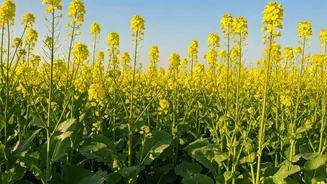

Mustard's Significance
Mustard holds a position of considerable importance within India's agricultural framework. Its significance extends beyond mere crop status, touching upon
aspects such as nutritional value, economic impact, and cultural relevance. As an oilseed crop, mustard plays a critical role in providing essential cooking oil for a vast population, thereby contributing significantly to dietary needs. Moreover, the cultivation and trade of mustard provide livelihood opportunities for a large number of farmers and related stakeholders, influencing rural economies across the nation. Beyond its economic and nutritional benefits, mustard is interwoven into the cultural fabric of many Indian communities, featured in traditional cuisines and agricultural practices. Recognizing its multifaceted importance underlines the necessity of safeguarding mustard production from threats, such as weed infestation, to maintain both food security and the economic well-being of the agricultural sector. Ensuring effective weed management contributes not only to improved yields but also to the overall sustainability of mustard farming, solidifying its role in India's agricultural landscape.
The Weed Menace
Weeds pose a significant challenge to mustard cultivation, impacting its growth, yield, and overall productivity. These unwanted plants compete aggressively with mustard for essential resources, including sunlight, water, and nutrients. This competition leads to a reduction in mustard's ability to thrive, diminishing the crop's yield potential. Furthermore, the presence of weeds can increase the incidence of pests and diseases, which can further damage the mustard plants. Certain weeds might also release allelochemicals into the soil, which can hinder mustard's growth. Manual weeding can be labor-intensive and costly. Farmers often resort to using herbicides to mitigate the issue. However, these weed control methods must be used carefully. Effective weed management strategies are therefore essential to protect mustard crops from the detrimental effects of weeds, ensuring optimal yields and safeguarding the economic viability of mustard farming in India. The weeds' control ensures the farmer can fully realize the crop's potential. Therefore, identifying weed species and timely control measures are necessary.
Countering the Threat
To address the weed threat to mustard crops, farmers and agricultural experts must explore a combination of innovative and traditional solutions. One approach involves implementing integrated weed management (IWM) strategies, which encompass various methods to prevent and control weed infestations. This includes the use of pre-emergence herbicides, which are applied before weeds emerge. Post-emergence herbicides can target weeds after they have sprouted. Besides chemical control, farmers can practice cultural methods such as crop rotation, intercropping, and proper land preparation. Crop rotation involves alternating different crops in a field to disrupt the life cycles of weeds. Intercropping involves growing mustard with other crops that suppress weed growth, utilizing the space more efficiently. Regular field monitoring is also necessary. Timely detection of weed infestations allows farmers to implement control measures promptly. Furthermore, research and development in genetic engineering can lead to the creation of herbicide-resistant mustard varieties. This can help farmers to target weeds more effectively while minimizing the impact on the environment. Embracing these innovative and sustainable strategies is essential to minimize the weed threat. By employing a combination of these approaches, farmers can safeguard their mustard crops, and increase productivity.