






Unlocking Selenium's Potential
For years, selenium has been recognized for its inherent ability to convert sunlight into electricity, a vital characteristic for solar energy applications.
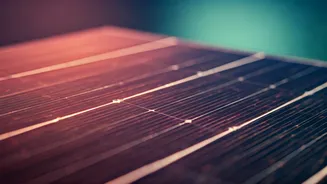
However, despite its promise, achieving high levels of efficiency with selenium has presented a significant hurdle, limiting its widespread adoption in the solar industry. This new processing technique, affectionately termed 'dual annealing', directly addresses these limitations. It ingeniously combines light and heat during the manufacturing phase, creating an environment where selenium crystals can grow larger and more uniformly. Unlike traditional methods that often cause these delicate thin films to fracture, dual annealing promotes structural integrity. The resulting larger, more uniform crystals are crucial as they possess fewer internal defects, which directly translates to improved charge-carrying capabilities. This enhanced performance is what allows the solar cells to achieve unprecedented efficiency levels for selenium-based technologies, marking a pivotal moment in the quest for better solar energy capture.
The Dual Annealing Advantage
The core of this exciting advancement lies in a novel processing method known as dual annealing. This sophisticated technique leverages the synergistic effects of both light and heat applied concurrently during the fabrication of selenium solar cells. The process is designed to guide the growth of selenium crystals in a manner that promotes larger sizes and greater uniformity across the thin film. This is a critical improvement over conventional heat treatments, which frequently lead to the disintegration or cracking of the thin selenium layer. By fostering a more robust and continuous crystal structure, dual annealing minimizes the presence of microscopic imperfections and boundaries that can impede the flow of electrical charge. Consequently, the solar cells treated with this method exhibit superior efficiency in converting photons into usable electricity, reaching efficiency figures previously thought unattainable for selenium.
Durability and Future Prospects
Beyond the immediate gains in efficiency, the new dual annealing technique also demonstrates remarkable promise in terms of long-term durability, a cornerstone for practical solar panel deployment. Experiments revealed that selenium-based solar cells subjected to this advanced processing maintained their performance and structural integrity for over 1,000 hours of continuous operation. This extended period of stability strongly suggests that solar panels incorporating this technology would be robust enough to withstand the rigors of real-world environmental conditions. The inherent properties of selenium further bolster its appeal for future solar energy solutions. It possesses a strong capacity for light absorption, enabling it to function effectively even in very thin layers. This characteristic has the potential to simplify manufacturing processes and reduce material costs. Furthermore, selenium is a relatively abundant element, offering an advantage over some high-performance solar materials that depend on rare or hazardous constituents. Its versatility also extends to specialized applications, including indoor and low-light environments where conventional solar technologies often struggle.